
Benefits of tailored logistics solutions in healthcare
Standardized logistics systems were never designed for the complexity of Southeast Asia’s healthcare sector. Fragmented infrastructure, country-specific regulatory frameworks, and the ever-present risk of temperature excursions make generic outsourcing a liability, not a solution. For supply chain managers at pharmaceutical companies and medical device manufacturers operating across markets like Singapore, Malaysia, Thailand, and Indonesia, the cost of getting logistics wrong goes far beyond financial penalties. It affects product integrity, regulatory standing, and ultimately patient outcomes. This article outlines what truly tailored logistics looks like and why it delivers measurable, compounding value across your operations.
Table of Contents
- What makes a logistics solution truly tailored?
- Operational benefits: From cost savings to enhanced capacity
- Reducing risk: Compliance, product integrity, and cold chain excellence
- Visibility and automation: Uplifting quality, speed, and ROI
- Why the real win is aligning logistics tailoring with organizational complexity
- How Labgistics helps power tailored healthcare logistics across Southeast Asia
- Frequently asked questions
Key Takeaways
| Point | Details |
|---|---|
| Customization unlocks savings | Tailored logistics enable major cost and efficiency improvements, even without new facility spend. |
| Risk reduction is core | Compliance and cold chain customization protect both product and brand from costly failures. |
| Visibility drives value | Real-time shipment tracking and intervention uplift ROI, service, and safety in healthcare supply chains. |
| Local nuance matters | Balancing standardization with local flexibility is essential for optimal performance in Southeast Asia. |
What makes a logistics solution truly tailored?
The phrase “tailored logistics” is used loosely in the industry, but the distinction matters enormously in practice. A solution is genuinely tailored when the entire logistics architecture, from network design to compliance controls to visibility platforms, is engineered around the specific risk profile and regulatory obligations of your products and markets. Choosing a niche 3PL (third-party logistics provider) is not, by itself, tailoring.
As supply chain frameworks note, tailoring is not only about selecting a different 3PL. It means designing an executable network, instrumenting visibility and control, and customizing compliance-safe handling procedures that reflect actual product and market requirements.
Three core pillars define a genuinely tailored healthcare logistics solution:
- Network engineering: Routes, hub locations, and distribution frequencies are mapped around your specific product portfolio and geographic reach, not inherited from a generic template.
- Compliance and cold chain customization: SOPs (standard operating procedures), temperature monitoring, and GDP/GDPMD (Good Distribution Practice for Medical Devices) protocols are built around your products’ specific requirements, not applied as a default.
- Visibility and control infrastructure: Real-time tracking, alert thresholds, and intervention workflows are configured to match your risk tolerance and regulatory obligations.
The table below illustrates the difference between generic and tailored logistics across four critical criteria:
| Criteria | Generic logistics | Tailored logistics |
|---|---|---|
| Risk management | Standardized protocols | Product-specific SOPs and controls |
| Regulatory compliance | Broad GDP alignment | GDP/GDPMD-customized per market |
| Cold chain handling | Fixed temperature ranges | Validated ranges per product class |
| Service continuity | Provider-defined SLAs | Client-defined service level agreements |
“Tailored logistics network design can reduce structural complexity while preserving healthcare service levels, delivering efficiency without compromising on quality or risk management.”
For healthcare operations in Southeast Asia, where safe distribution and compliance requirements vary significantly across borders, this level of specificity is not optional. The pharma logistics challenges of the region, including multi-modal transport dependencies, differing import licensing requirements, and inconsistent cold storage infrastructure, make generic logistics particularly costly.
Operational benefits: From cost savings to enhanced capacity
With the definition established, the practical question becomes: what does tailoring actually deliver in measurable terms? The evidence from network optimization projects across complex, regulated industries is compelling and directly relevant to Southeast Asian healthcare operations.
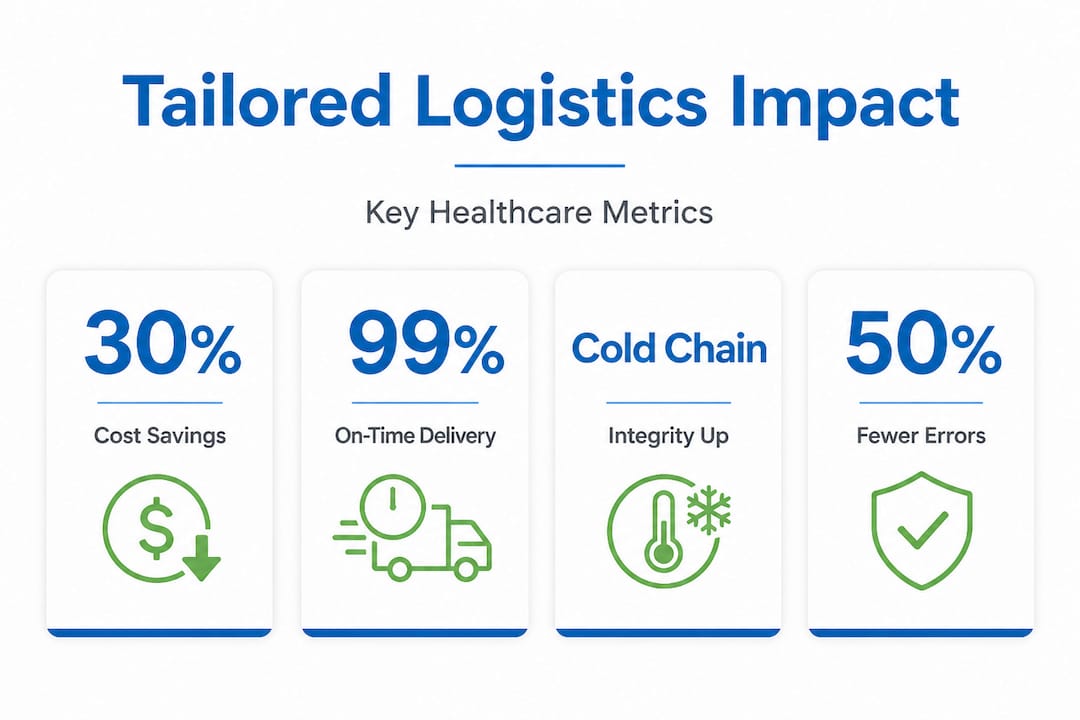
A major network redesign case study in Western Europe demonstrated that logistics redesign enabled €18M in annual savings while fully maintaining service levels, achieved by reducing the number of warehouses and consolidating providers without sacrificing delivery performance. Separately, data-driven logistics masterplanning has been shown to unlock extra storage capacity and reduce labor costs without new capital expenditure on facilities.
The ROI chain for tailored healthcare logistics typically follows this progression:
- Network consolidation reduces structural costs. Fewer warehouses, fewer providers, and rationalized transport lanes directly lower fixed and variable operating costs.
- Workflow accuracy reduces rework and waste. Customized SOPs and validated handling procedures cut errors, rejections, and the administrative burden of managing non-conformances.
- Process redesign unlocks hidden capacity. Reconfiguring storage layouts, pick-and-pack sequences, and inventory management protocols can yield 20 to 30 percent additional throughput from existing footprint.
- Faster speed-to-value. Optimized workflows reduce order cycle times, which is particularly important for urgent pharmaceutical replenishment and medical device delivery in hospital supply chains.
The table below summarizes indicative performance improvements commonly observed in tailored logistics transformations:
| Performance dimension | Before tailoring | After tailoring |
|---|---|---|
| Number of warehouse locations | Multiple, fragmented | Consolidated, optimized |
| Storage capacity utilization | 60 to 75% | 85 to 95% |
| Labor cost per unit handled | High, variable | Reduced, consistent |
| Order accuracy rate | 97 to 98% | 99.5%+ |
Pro Tip: You do not always need a new facility to gain significant capacity. Process redesign, slotting optimization, and workflow sequencing within an existing distribution center can frequently deliver the same throughput gains as a physical expansion, at a fraction of the cost and timeline.
In Southeast Asia specifically, where warehouse real estate in major pharmaceutical hubs like Singapore is expensive and expansion timelines are long, this operational leverage is especially valuable. For practical inventory management tips applicable to the regional context, the combination of process redesign and better demand visibility consistently outperforms the alternative of simply adding more space or providers. The smart logistics solutions that deliver lasting results are those engineered around your actual operational complexity, not industry averages.
Reducing risk: Compliance, product integrity, and cold chain excellence
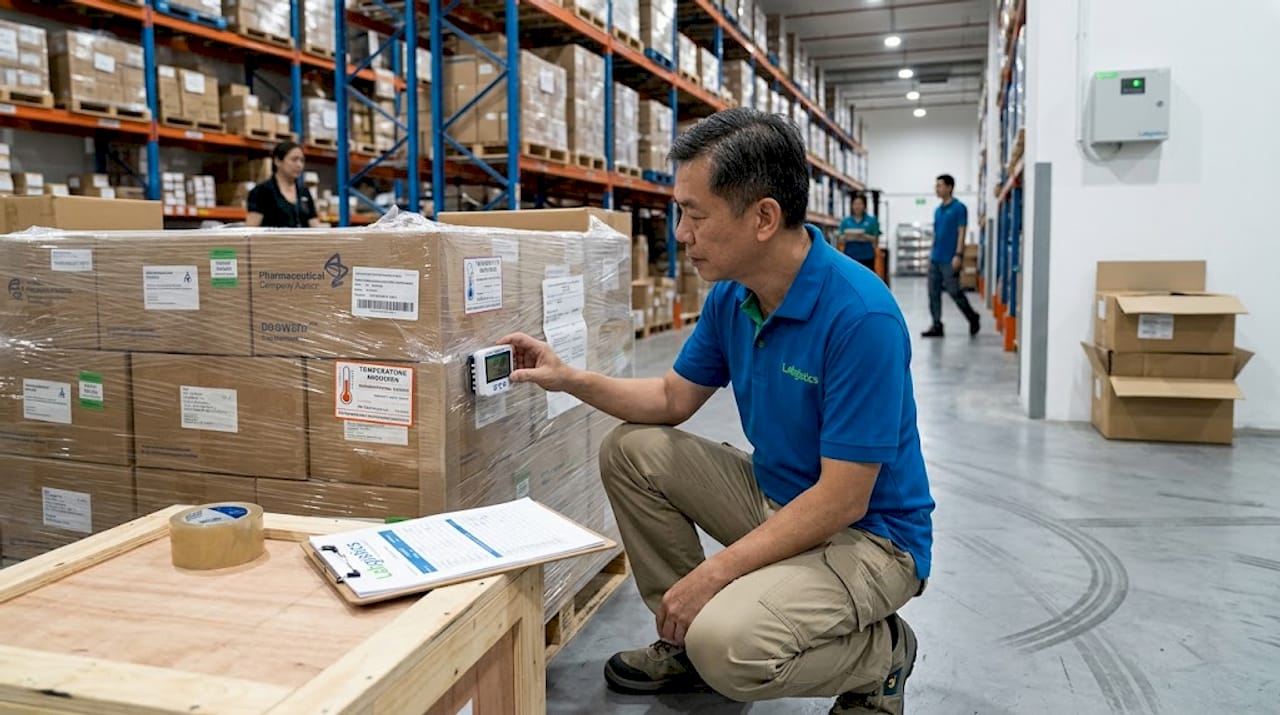
Direct cost and efficiency gains matter, but for pharmaceutical and medical device supply chains, risk management and regulatory compliance carry equal weight. A single temperature excursion on a biologic shipment or a GDP audit failure can result in product recalls, regulatory sanctions, and significant reputational damage. Tailored logistics addresses these risks at the protocol level, not as an afterthought.
Effective cold chain management for healthcare products requires maintaining validated temperature ranges throughout the entire distribution journey. For most pharmaceuticals, this means precise adherence to 18 to 25°C for ambient products and 2 to 8°C for refrigerated biologics and vaccines. Tailored cold chain logistics significantly reduces product integrity and compliance risk through GDP/GDPMD protocols, validated packaging configurations, and real-time temperature monitoring with documented excursion response procedures.
The top risks in pharmaceutical and medical device logistics, and how tailored solutions address them, include:
- Temperature excursions: Addressed through validated packaging, qualified vehicles, calibrated monitoring devices, and pre-defined corrective action protocols triggered by real-time alerts.
- Regulatory gaps across markets: Mitigated through country-specific compliance mapping, in-country licensing support, and documentation workflows aligned to each national health authority’s requirements.
- Data loss and chain-of-custody failures: Prevented through digital track-and-trace platforms that maintain an unbroken audit trail from manufacturer to end-point delivery.
- Handling errors for sensitive products: Reduced through staff qualification programs, product-specific handling SOPs, and segregated storage for high-value or high-risk items.
- Cross-contamination and product mix-ups: Eliminated through dedicated storage zones, barcoded lot tracking, and systematic quarantine management.
Pro Tip: Do not wait for an excursion to test your corrective action protocol. Build regular temperature mapping exercises and simulated alert response drills into your quality management calendar. Qualified staff who have practiced the response process resolve real incidents faster and with fewer compliance implications.
For cold chain compliance in SE Asia, the regulatory environment is increasingly rigorous. Singapore’s Health Sciences Authority, Malaysia’s Pharmaceutical Services Programme, and Thailand’s Food and Drug Administration all maintain GDP and GDPMD inspection frameworks that demand documented, validated cold chain controls. Being audit-ready for GDP and GDPMD inspections requires continuous calibration records and a logistics partner whose infrastructure is already built to inspection-ready standards, not one that retrofits compliance before audits.
Visibility and automation: Uplifting quality, speed, and ROI
Risk and compliance management are foundational pillars, but next-level performance in healthcare logistics depends on robust visibility and targeted automation. These are not technology investments for their own sake. When configured to match your specific product flows and risk thresholds, they generate measurable returns in quality, service speed, and financial performance.
Device-based monitoring and real-time platforms enable better intervention and ROI by giving logistics teams the data they need to act before problems escalate into compliance events or product losses. The three most impactful visibility and automation levers for healthcare supply chains are:
- Real-time shipment tracking: Continuous location and condition monitoring for temperature-sensitive shipments allows proactive rerouting or intervention when environmental or transit conditions deviate from validated parameters.
- Control-tower-enabled interventions: A centralized visibility platform that aggregates data across carriers, lanes, and storage locations allows qualified personnel to identify and resolve exceptions before they affect product integrity or delivery timelines.
- Automated dispensing and inventory management: In hospital pharmacy and medical device distribution settings, automated dispensing cabinets and barcode-driven picking systems eliminate manual errors and accelerate order fulfillment.
“Tailored automation in hospital pharmacy settings achieved measurable workflow gains and ROI within a single year, with error reduction and efficiency improvements demonstrating that automation matched to operational complexity pays back far faster than generic implementations.”
Consider a practical scenario in medical device distribution across Southeast Asia. A regional distributor managing orthopedic implants across five markets faces significant challenges with consignment tracking, expiry date management, and country-specific labeling compliance. A tailored visibility platform, integrated with barcode scanning at each handling touchpoint and connected to a control tower that monitors transit conditions and customs status in real time, reduces the distributor’s order error rate, shortens clearance times, and provides the documented chain-of-custody records required by each national regulator. None of this is achievable with a generic tracking solution that was not configured to the product type, regulatory requirements, or geographic complexity involved.
Ensuring logistics security across these platforms is equally important. High-value pharmaceutical and medical device shipments are targeted for diversion and counterfeiting across the region, and visibility infrastructure must include access controls, tamper-evident packaging verification, and secure data management to protect both product and chain-of-custody integrity.
Why the real win is aligning logistics tailoring with organizational complexity
There is a perspective worth sharing that most thought leadership on logistics optimization overlooks: consolidation and standardization are not always the right answer, and in Southeast Asia, pursuing them without sufficient nuance can create more risk than they eliminate.
The case for consolidating warehouses and standardizing processes is well supported. Consolidating providers and standardizing processes must balance local flexibility with efficiency, and the efficiency gains from consolidation are real. But the organizations that extract the most sustained value from tailored logistics are not those that consolidate the most aggressively. They are the ones that correctly identify which parts of their operation benefit from standardization and which parts require deliberate local variation.
In Southeast Asia, last-mile delivery in secondary cities, in-country controlled substance licensing, and supply surge handling during public health events all require local execution capacity that centralized, standardized models cannot reliably provide. A regional pharmaceutical company that consolidates all distribution through a single Singapore hub, for example, may gain cost efficiency on primary lanes but lose the in-country agility needed to respond to a localized supply disruption in Indonesia or Vietnam.
The better model is centralized planning with decentralized execution. Standardize the data infrastructure, compliance frameworks, and reporting protocols at the regional level. But preserve local 3PL relationships, last-mile flexibility, and country-specific handling capabilities where they genuinely protect service continuity and regulatory standing.
What most supply chain leaders miss when over-standardizing is the relationship between operational complexity and logistics fit. Tailoring is not about cost or compliance in isolation. It is about matching your logistics architecture to the actual complexity profile of your product portfolio, your customer base, and your regulatory obligations across each market you serve. For deeper context on safeguarding SEA supply chains, the principle holds consistently: fit matters more than formula.
How Labgistics helps power tailored healthcare logistics across Southeast Asia
For healthcare supply chain managers and decision-makers who want to move from insight to implementation, Labgistics Asia offers end-to-end tailored logistics solutions designed specifically for pharmaceutical and medical device operations across Southeast Asia.
With over 20 years of regional experience, Labgistics brings together fully accredited distribution centers, GDP/GDPMD-compliant cold chain infrastructure, and regulatory support that covers product registration, import licensing, and in-country market access. Whether your priorities are logistics risk management solutions, optimizing transportation management outcomes, or building a resilient cold chain logistics network that meets the inspection standards of every market you operate in, Labgistics provides the infrastructure, expertise, and compliance documentation to support your goals. Connect with the Labgistics team to map a logistics solution built around your specific complexity profile and regional ambitions.
Frequently asked questions
What does a tailored logistics solution actually involve for healthcare?
It means designing the logistics network, workflows, and compliance protocols around the specific needs, risks, and service levels of a healthcare business. As tailoring frameworks clarify, this goes well beyond selecting a different 3PL and includes customizing compliance-safe handling and executable network design.
How can logistics tailoring reduce costs if it seems more customized?
Customization reduces duplication, rework, and unnecessary infrastructure. Network redesigns have enabled €18M in annual savings with fewer warehouses and providers while fully maintaining healthcare service performance.
Why is real-time visibility so critical for pharmaceutical logistics?
Real-time monitoring enables early intervention for temperature or delivery issues before they escalate into compliance failures or product losses. Device-based monitoring and round-the-clock control-tower processes materially improve outcomes and financial returns.
Is automation really worth the investment for medical supply chains?
Yes, when tailored to operational complexity, automation delivers rapid payback. Automated dispensing in hospital settings has achieved measurable ROI within a single year, with significant efficiency gains and error reduction across pharmacy and distribution workflows.
Recommended
- Optimize healthcare transportation management for better outcomes
- Smart 3PL Warehouses and Inventory Management | Labgistics
- Business support in healthcare logistics: key functions explained
- Pharma Logistics, Cold Chain Logistics & Warehousing | Labgistics