
A single temperature deviation during transit can render an entire shipment of vaccines unusable. One missing regulatory document can halt a cross-border pharmaceutical delivery for days. These are not hypothetical risks; they are operational realities that pharmaceutical companies and healthcare providers across Southeast Asia face regularly. Pharma logistics is not simply about moving products from one location to another. It is a precision-driven discipline that directly determines patient safety, product efficacy, and regulatory standing. This article covers cold chain management, compliance frameworks, regional challenges, and the strategic decisions that separate resilient supply chains from vulnerable ones.
Table of Contents
- Why logistics is vital in pharma: Beyond transportation
- Core methodologies: Cold chain management and technology
- Regulatory compliance and certification: Navigating SEA requirements
- Overcoming region-specific challenges: Infrastructure, risk, and growth
- Why logistics strategy is Southeast Asia pharma’s ultimate differentiator
- Partner for resilient, compliant pharma logistics in Southeast Asia
- Frequently asked questions
Key Takeaways
| Point | Details |
|---|---|
| Product integrity protects patients | Rigorous logistics prevent temperature excursions and regulatory breaches, directly safeguarding patient health. |
| Cold chain technology is essential | Real-time monitoring and validated packaging keep pharma products stable across complex supply chains. |
| Compliance demands expertise | Meeting diverse regional standards requires certified partners and harmonized quality systems. |
| Strategy drives resilience | Blending process discipline with agile risk management turns logistics into a true business advantage. |
Why logistics is vital in pharma: Beyond transportation
In the pharmaceutical sector, logistics failures carry consequences that no other industry faces at the same scale. A delayed shipment of ambient-temperature tablets is a commercial inconvenience. A delayed or temperature-compromised shipment of biologics or vaccines is a public health event. The difference lies in the nature of the products and the populations depending on them.
Pharmaceutical logistics, as Vietnam’s logistics supply chain analysis confirms, ensures product integrity, compliance, and timely distribution across complex supply chains where patient safety is non-negotiable. A failure at any node, whether storage, transport, or documentation, can trigger costly recalls, regulatory sanctions, and irreversible damage to brand credibility.
Southeast Asia presents a uniquely demanding environment. The region spans multiple regulatory jurisdictions, varies widely in infrastructure quality, and subjects products to extreme tropical heat and humidity throughout the distribution chain. Countries such as Vietnam, Indonesia, and the Philippines each operate under distinct approval systems, storage requirements, and import protocols.
“Effective pharma logistics in Southeast Asia demands more than temperature control. It requires a systems-level approach that aligns process, technology, and regulatory intelligence at every stage.”
Understanding cold chain and compliance as integrated disciplines, not separate functions, is the first step toward building a reliable distribution network. The scope of what pharma logistics actually covers goes well beyond transportation:
- Temperature-controlled storage across chilled, ambient, and frozen classifications
- Regulatory documentation including import permits, certificates of analysis, and GDP records
- Last-mile delivery to hospitals, clinics, and pharmacies under validated conditions
- Inventory management with expiry tracking, batch traceability, and FEFO (first expiry, first out) controls
- Handling of controlled substances and radioactive or biohazardous materials under special protocols
These pharma logistics challenges are not obstacles to be minimized. They are the defining framework within which every operational decision must be made.
Core methodologies: Cold chain management and technology
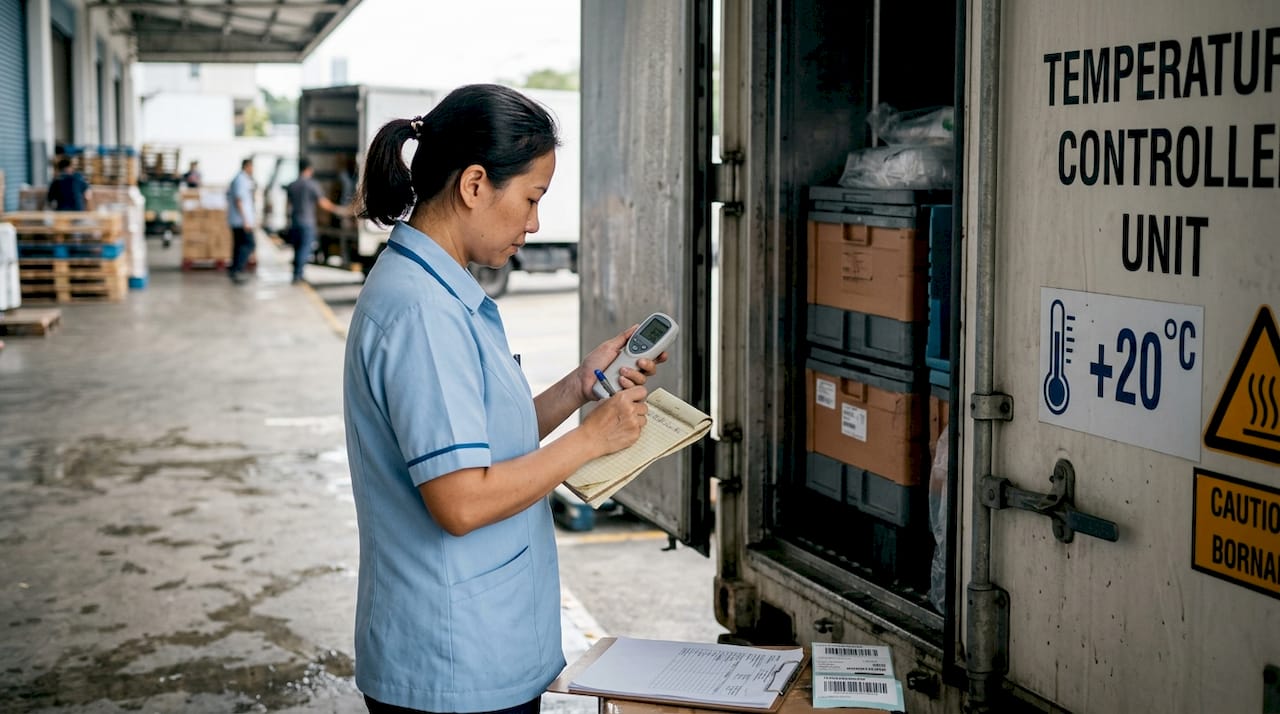
Having established logistics’ criticality, the practical methodologies that maintain integrity throughout the pharma supply chain come into focus. Cold chain management is the discipline of keeping temperature-sensitive pharmaceuticals within validated temperature ranges from the point of manufacture through to the point of dispensing.
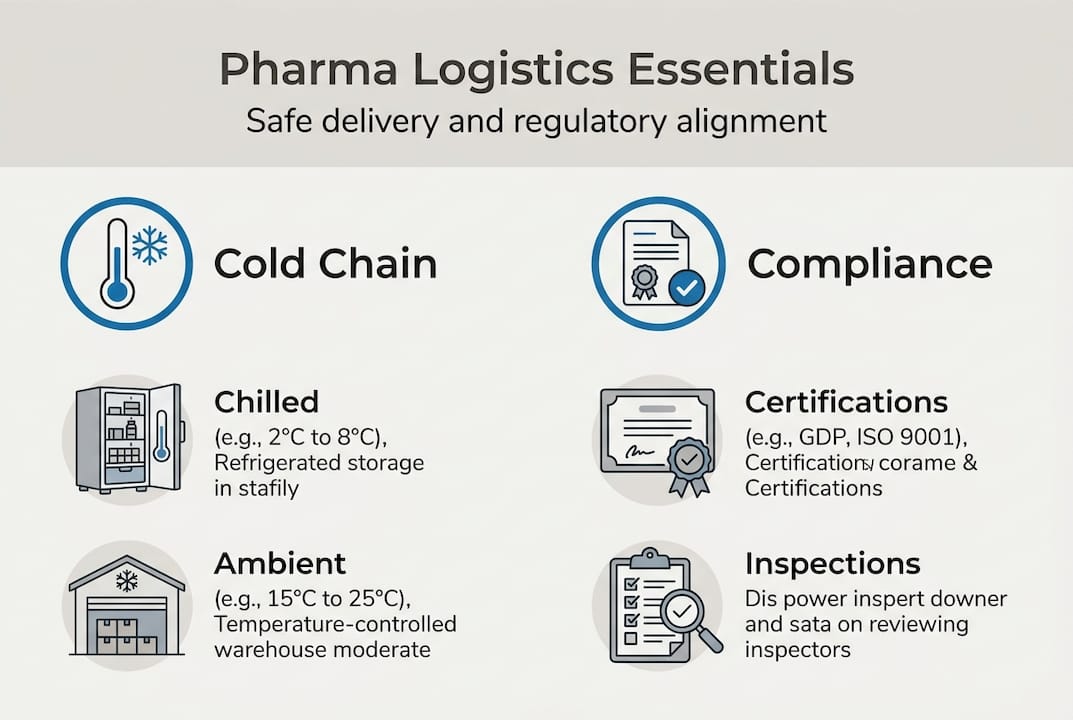
The three standard classifications are: chilled (2 to 8°C) for vaccines, biologics, and certain diagnostics; controlled ambient (15 to 25°C) for most oral solid dosage forms and some devices; and frozen (below -18°C) for advanced therapies and some plasma-derived products. Cold chain benchmarks from the Vietnamese pharmaceutical sector confirm these ranges as foundational standards that logistics providers must meet through validated packaging and calibrated equipment.
| Temperature range | Product types |
|---|---|
| 2 to 8°C (chilled) | Vaccines, biologics, insulin, diagnostics |
| 15 to 25°C (ambient) | Oral tablets, capsules, some medical devices |
| Below -18°C (frozen) | Plasma products, advanced cell therapies |
The technologies enabling why cold chain matters in practical terms have advanced significantly. IoT sensors provide continuous monitoring. Real-time data loggers record temperature excursions with timestamps and GPS coordinates. Temperature-mapped vehicles ensure that every zone of a refrigerated truck meets the required specification, not just the sensor location. These systems generate the audit trails that regulators expect during GDP inspections.
A robust cold chain execution follows a structured sequence:
- Validate packaging using stress-testing protocols that simulate worst-case transit conditions
- Qualify storage facilities through temperature mapping studies conducted across seasonal extremes
- Deploy real-time monitoring with automated alerts calibrated to act before excursions become deviations
- Document every transfer with chain-of-custody records that capture time, temperature, and responsible party
- Review and audit all SOPs (standard operating procedures) at defined intervals to capture process drift early
Pro Tip: Packaging validation is often treated as a one-time activity. In Southeast Asia’s variable climate, revalidation after any change in route, season, or packaging supplier is essential to maintaining distribution compliance.
For companies exploring eco-friendly cold chain solutions, advances in passive thermal packaging and phase-change materials are making it possible to reduce energy consumption without compromising temperature control.
Regulatory compliance and certification: Navigating SEA requirements
After discussing technology and process, the regulatory frameworks governing pharma logistics deserve equal attention. Across Southeast Asia, pharmaceutical companies must satisfy a layered set of national and international standards that govern how products are stored, transported, and distributed.
The key standards that any compliant operation must address are well documented in the GDP guide for pharmaceutical distribution:
- GDP (Good Distribution Practice): Governs the entire distribution process from manufacturer to end user
- GSP (Good Storage Practice): Sets requirements for warehouse conditions, equipment, and personnel
- WHO Annex 5: The international benchmark for temperature-controlled distribution
- ICH Q1A: Stability testing guideline that informs storage condition requirements
- IATA CEIV Pharma: Certification for air cargo handlers managing pharmaceutical shipments
The regulatory landscape varies meaningfully across the region:
| Country | Key regulatory body | Notable requirement |
|---|---|---|
| Singapore | HSA | GDP compliance mandatory for licensed wholesalers |
| Vietnam | DAV (Drug Administration of Vietnam) | Strict local registration; cold chain documentation required |
| Indonesia | BPOM | GMP and GDP certifications; import licenses per product |
| Thailand | FDA Thailand | GDP-aligned SOPs; product-specific storage approvals |
“Facilities that achieve dual certification, such as GDP and IATA CEIV Pharma, set the operational benchmark for multinational pharma companies seeking reliable distribution partners in Asia.”
For global firms entering Southeast Asia, the practical path to compliance involves three layers: engaging regulatory services early in the market entry process, partnering with locally licensed 3PLs, and aligning internal quality management systems to WHO or ICH standards. The business support functions that experienced logistics partners provide, including dossier preparation, product registration support, and import documentation, are often what determines whether a product reaches market on schedule or not.
Steps to achieve and maintain compliance in Southeast Asia include:
- Certify all 3PL partners against GDP and GSP before engagement
- Implement real-time monitoring systems that generate regulator-ready audit logs
- Conduct annual internal audits and biannual third-party audits of facilities
- Maintain harmonized QMS (quality management system) documentation across all markets
- Train personnel to local regulatory expectations, not just global SOPs
Overcoming region-specific challenges: Infrastructure, risk, and growth
With an understanding of compliance, technology, and core methodologies, the practical question remains: how do companies handle the day-to-day realities and market pressures specific to Southeast Asia?
The scale of opportunity is significant. Vietnam’s pharma market is projected to reach USD 16 to 17 billion by 2026 at an 8 to 10% CAGR. APAC healthcare logistics was valued at USD 17.6 billion in 2022 and is projected to reach USD 29.5 billion by 2030, growing at a 7.1% CAGR. These figures reflect a market that demands logistics infrastructure capable of scaling alongside demand, without sacrificing compliance.
Yet cold chain innovation strategies in 2025 and beyond must contend with real limitations. Rural infrastructure in Vietnam and Indonesia still presents significant gaps in cold storage capacity. Regulatory fragmentation means a product cleared in Singapore requires separate registration processes in Thailand and Vietnam. Tropical heat accelerates product degradation when cold chain integrity breaks, even briefly.
Transportation mode selection adds another layer of complexity. Air freight offers speed and controlled environments, making it the default for high-value, time-critical biologics moving through hubs like Singapore. Sea freight is more cost-effective and carries a lower carbon footprint, but cold chain technologies enabling sea freight success show that longer transit times and port delays require more robust passive packaging and monitoring. Road transport is essential for last-mile delivery but carries the highest exposure to ambient temperature risk.
Effective mitigation strategies for supply chain risks in Southeast Asia include:
- Multi-sourcing from qualified manufacturers to avoid single-supplier dependency
- Buffer stock management calibrated to seasonal demand and climate risk cycles
- AI-driven route optimization to minimize transit time and temperature exposure
- FMEA (Failure Mode and Effects Analysis) applied systematically to logistics workflows
- Seasonal climate mapping integrated into distribution planning calendars
Pro Tip: In markets with developing cold chain infrastructure, investing in tech-enabled, certified 3PLs is not a premium option. It is the only reliable path to consistent compliance and product integrity at scale. Explore AI in cold chain logistics to understand how data-driven tools are reshaping risk management across the region.
Why logistics strategy is Southeast Asia pharma’s ultimate differentiator
Conventional boardroom thinking tends to treat logistics as an operational cost center, a back-end function to be standardized and minimized. This view is not just outdated. In Southeast Asia’s pharmaceutical market, it is actively harmful.
The companies that consistently outperform on both cost efficiency and regulatory compliance are the ones that treat logistics as a living, adaptive system. They integrate supply chain considerations from product design through clinical trial distribution through to commercial last-mile delivery. They map risk continuously, not just during annual reviews. And they build relationships with smart logistics solutions providers who understand the local regulatory, climatic, and infrastructural context.
The uncomfortable truth is that many market entry failures and compliance penalties in Southeast Asia trace back not to product quality issues but to logistics strategy gaps. Choosing the wrong 3PL, underestimating rural cold chain limitations, or failing to align documentation to local regulatory formats can unravel months of commercial preparation. Strategic agility, built on the right partnerships and continuous risk intelligence, is the real competitive advantage.
Partner for resilient, compliant pharma logistics in Southeast Asia
Turning these insights into operational strength requires a logistics partner that combines regional expertise with proven technical capability. Labgistics Asia brings over 20 years of specialized experience in pharmaceutical and healthcare logistics across Southeast Asia, with fully accredited distribution centers, real-time monitoring infrastructure, and regulatory support that spans product registration through to last-mile delivery.
Whether your priority is regional cold chain expertise, AI-driven pharma logistics, or comprehensive business support in pharma logistics for new market entry, Labgistics offers the integrated solutions your supply chain demands. Connect with our team to discuss how we can support your distribution strategy across the region.
Frequently asked questions
What are the typical temperature ranges required in pharma logistics?
Pharma logistics requires chilled (2 to 8°C) for vaccines and biologics, controlled ambient (15 to 25°C) for most oral solid products, and frozen (below -18°C) for advanced therapies. These standard temperature ranges must be validated and maintained across every stage of the distribution chain.
Which certifications are essential for compliant pharma logistics in Southeast Asia?
GDP, GSP, WHO Annex 5, ICH Q1A, and IATA CEIV Pharma are the core certifications required for compliant warehouse, transport, and 3PL operations. The GDP certification guide outlines the specific requirements that each certification addresses within the distribution chain.
How can companies manage multiple regulations across Southeast Asian countries?
Companies should align their quality management systems to WHO or ICH standards as a baseline, then layer in country-specific requirements through qualified local 3PL partners. Regulatory fragmentation across SEA countries makes harmonized QMS documentation and local import expertise essential for consistent compliance.
What logistics strategies help minimize disruptions in Southeast Asia?
Multi-sourcing, buffer stocks, AI-driven route optimization, and seasonal climate mapping are the most effective tools for reducing supply chain disruptions. Cold chain innovations in 2025 and beyond are making these strategies increasingly precise and data-driven across the region.