
The role of logistics in clinical trials is defined as the end-to-end management of investigational product delivery, storage, and handling across every phase of a trial’s lifecycle. Clinical supply chain management accounts for 15–25% of total trial costs, depending on trial complexity and regional demands. That figure alone signals how much financial and operational risk sits inside logistics decisions. Logistics-related failures cause approximately 20% of clinical trial postponements worldwide. For clinical research professionals, understanding logistics not as a support function but as a primary driver of trial success is the starting point for better outcomes.
What are the main logistical functions and challenges in clinical trials?
Clinical trial logistics in research covers far more than moving boxes from one site to another. The clinical supply chain includes forecasting, inventory management, temperature-controlled storage, customs clearance, product labeling, and last-mile delivery to investigational sites. Each function must meet GxP standards and country-specific regulatory requirements simultaneously.
Key logistical functions in clinical trials:
- Demand forecasting: Predicting investigational product quantities based on enrollment projections and protocol amendments
- Temperature-controlled storage: Maintaining validated cold chain conditions from manufacturer to site, including 2°C–8°C, ambient, and frozen ranges
- Customs and import clearance: Managing country-specific import permits, import licenses, and documentation for investigational medicinal products
- Product labeling and kitting: Preparing trial-specific labels that meet local regulatory requirements and blinding protocols
- Real-time shipment tracking: Monitoring location and environmental conditions throughout transit to preserve data integrity
Clinical supply chains face high unpredictability that commercial pharmaceutical distribution does not. Enrollment rates shift, sites activate at different speeds, and batch sizes are small. These variables demand flexible, data-driven planning rather than fixed distribution schedules.
Top logistical challenges in clinical trials:
- Temperature excursions during transit that compromise investigational product integrity
- Customs delays that disrupt site supply and affect dosing schedules
- Enrollment unpredictability that creates either overstocking or critical shortages at sites
Pro Tip: Engage your logistics partner during protocol design, not after site activation. Early cross-functional planning between clinical, regulatory, and supply chain teams prevents the most costly protocol amendments.
How does cold chain logistics impact clinical trial success?
Cold chain logistics is the controlled management of temperature-sensitive investigational products from point of manufacture to the trial site. Biologics, cell and gene therapies, and advanced therapy medicinal products all require strict temperature control throughout transit and storage. A single excursion can invalidate an entire batch and set a trial back by months.
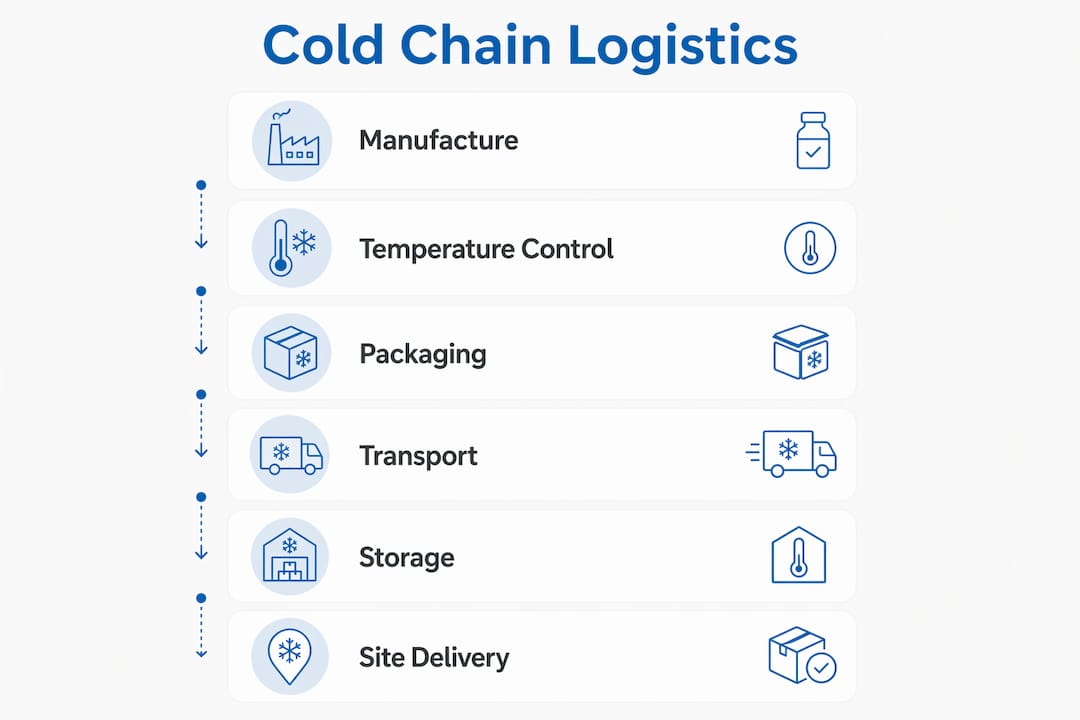
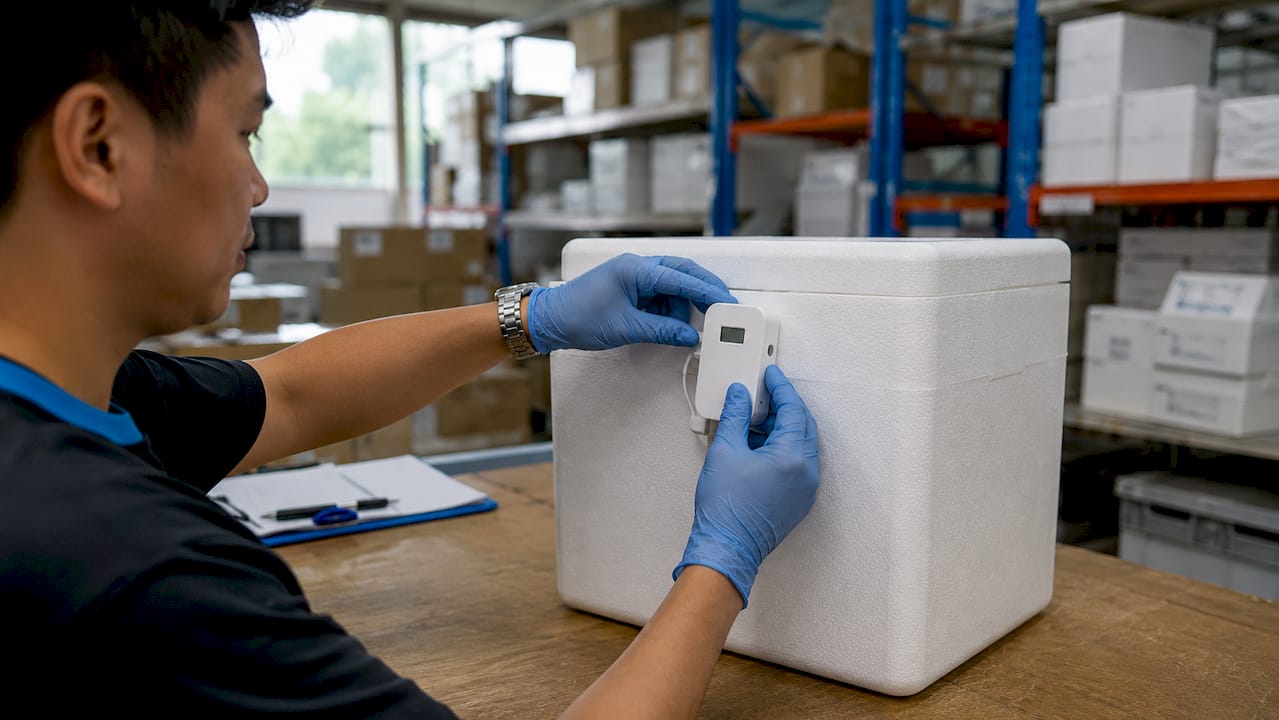
Temperature excursions during transit can ruin entire batches, making cold chain compliance non-negotiable for any trial involving biologics or temperature-sensitive compounds. Validated thermal packaging, qualified shipping lanes, and IoT-enabled real-time monitoring are now standard practice. These tools generate the data audit trail that regulators require to confirm product integrity at the point of administration.
The table below shows common cold chain solutions used in clinical trial supply chains and their typical temperature ranges:
| Cold chain solution | Typical temperature range | Common use case |
|---|---|---|
| Passive insulated shipper | 2°C–8°C | Biologics, vaccines, protein-based therapies |
| Dry ice packaging | -20°C to -80°C | Frozen plasma samples, cell therapies |
| Liquid nitrogen container | Below -150°C | Cryopreserved cell and gene therapy products |
| Ambient-controlled shipper | 15°C–25°C | Small molecules, oral solid dosage forms |
For trials operating across Southeast Asia, cold chain logistics in the region presents specific challenges including high ambient temperatures, multi-leg air freight routes, and variable customs processing times. Qualified 3PL providers with validated distribution centers and calibrated temperature monitoring equipment are critical partners in this environment.
Pro Tip: Build redundancy into your cold chain plan. Always designate a secondary qualified depot and a backup courier lane before the trial begins. Waiting until an excursion occurs to find alternatives costs far more than the contingency plan itself.
Labgistics provides detailed guidance on handling temperature-sensitive shipments across healthcare supply chains, including the qualification protocols and documentation requirements that clinical teams need.
What modern strategies and technologies are shaping clinical trial logistics?
Clinical logistics is now a strategic discipline that drives trial predictability, operational confidence, and supply flexibility. The shift from reactive to predictive logistics is the defining change in clinical supply chain management over the past five years. Sponsors and contract research organizations that treat logistics as a strategic input from day one consistently outperform those that bolt it on after protocol finalization.
AI-enabled digital supply chains move trials from reactive to predictive processes by enabling proactive issue detection and multi-vendor orchestration. EY’s analysis of clinical supply chains confirms that AI and automation reduce manual touchpoints and shift decision-making from incident response to risk prevention. This matters most during enrollment ramp-up, when supply demand is hardest to predict.
Technology-driven benefits for clinical trial supply chains:
- Predictive demand modeling: AI tools analyze enrollment velocity and protocol complexity to generate dynamic supply forecasts
- Real-time visibility platforms: Digital dashboards consolidate shipment status, temperature data, and customs clearance across all sites and vendors
- Automated exception management: Systems flag deviations immediately, reducing the time between excursion detection and corrective action
- Integrated data environments: Shared platforms between sponsors, CROs, and 3PL providers reduce communication lag and improve accountability
Strategic best practices for modern clinical logistics:
- Consolidate vendor management under a single logistics orchestrator to reduce fragmentation across courier, depot, and labeling providers
- Use supply chain mapping to identify single points of failure before trial launch
- Align logistics KPIs with clinical milestones so supply performance is measured against trial outcomes, not just delivery metrics
Decentralized clinical trials add another layer of complexity. When investigational products ship directly to patients at home, the logistics network must extend to residential addresses while maintaining chain of custody, temperature compliance, and regulatory documentation. Integrated digital tools and shared data environments are the only practical way to manage that level of distribution complexity without increasing risk.
What practical steps can clinical trial teams take to optimize logistics?
Optimizing logistics in clinical research requires deliberate integration across clinical, regulatory, and supply chain functions from the earliest stages of trial planning. The teams that achieve the best supply performance treat logistics as a protocol design input, not an execution afterthought.
-
Integrate logistics expertise during protocol design. Logistics professionals can identify regulatory requirements, import restrictions, and cold chain constraints before they become protocol amendments. This prevents the most expensive delays.
-
Activate sites in coordination with supply readiness. Site activation should not proceed until the local depot is qualified, import permits are in place, and the courier lane is validated. Premature activation creates supply gaps that affect patient dosing.
-
Isolate logistics tasks from clinical staff in decentralized trials. Separating logistics from clinicians in decentralized settings improves patient safety and maintains data quality. Clinicians should focus on patient care, not shipment tracking or returns management.
-
Monitor key performance metrics continuously. Track on-time delivery rates, cold chain excursion frequency, customs clearance lead times, and depot inventory accuracy. These metrics surface risk before it becomes a protocol deviation.
-
Establish clear accountability across all vendors. Unified oversight and early integration of logistics with clinical and regulatory teams, as Parexel’s GxP logistics framework demonstrates, reduces delays and rework. Assign a single point of contact for logistics escalations across the entire supply network.
-
Plan for enrollment variability with flexible supply agreements. Negotiate supply agreements that allow batch size adjustments and depot replenishment triggers based on actual enrollment data rather than fixed projections. This prevents both overstocking and critical shortages.
Pro Tip: Establish a shared communication protocol between your logistics, clinical operations, and regulatory affairs teams before the trial starts. Unclear accountability at the interface between these functions is where most supply failures originate.
Tailored logistics solutions in healthcare consistently reduce postponements and improve supply continuity compared to generic distribution arrangements. The specificity of clinical trial requirements demands partners who understand GxP, temperature validation, and country-specific import regulations.
Logistics as strategy, not overhead
The clinical research industry spent years treating logistics as a cost center to be minimized. That framing is wrong, and the evidence is clear. When logistics-related failures drive 20% of trial delays, the cost of under-investing in supply chain expertise far exceeds the cost of getting it right from the start.
What I have observed consistently is that fragmented vendor management is the single most common source of avoidable supply failures. Sponsors who work with five separate vendors for labeling, storage, courier, customs, and returns management spend enormous time managing interfaces rather than managing risk. Consolidating under a qualified logistics partner with end-to-end visibility changes the operational dynamic entirely.
The future of clinical trial logistics sits at the intersection of digital visibility, predictive analytics, and collaborative ecosystems between sponsors, CROs, and 3PL providers. The trials that will complete on time and on budget in the next decade are the ones where logistics is treated as a strategic discipline from day one. The technology exists. The question is whether clinical teams will integrate it early enough to matter.
— Brandcore
Pharma logistics expertise for clinical trial compliance
Clinical trial teams working across Southeast Asia need a logistics partner with validated infrastructure, regulatory expertise, and proven cold chain capabilities.
Labgistics brings over 20 years of experience in pharmaceutical logistics across Southeast Asia, with fully accredited distribution centers, calibrated temperature monitoring systems, and regulatory support for product registration and import compliance. Whether your trial involves biologics requiring 2°C–8°C storage, cryopreserved cell therapies, or ambient-controlled small molecules, Labgistics provides the end-to-end supply chain management that clinical research demands. Explore Labgistics’ pharma logistics and compliance solutions to see how specialized healthcare logistics supports trial efficiency and regulatory adherence across the region.
Key takeaways
Logistics is the primary operational risk factor in clinical trials, and integrating it as a strategic discipline from protocol design through trial completion is the most effective way to protect timelines, data integrity, and patient safety.
| Point | Details |
|---|---|
| Logistics drives trial costs and delays | Clinical supply chain management accounts for 15–25% of trial costs and causes 20% of global trial delays. |
| Cold chain compliance is non-negotiable | Temperature excursions can invalidate entire batches; validated packaging and real-time monitoring are standard requirements. |
| Early integration prevents the most costly failures | Engaging logistics expertise during protocol design prevents protocol amendments and site activation delays. |
| Digital tools shift logistics from reactive to predictive | AI-enabled visibility platforms and shared data environments reduce manual errors and improve supply forecasting. |
| Decentralized trials require logistics isolation | Separating logistics tasks from clinical staff in decentralized settings protects patient safety and data quality. |
FAQ
What is the role of logistics in clinical trials?
Logistics in clinical trials manages the delivery, storage, and handling of investigational products and ancillary supplies across every trial phase. It directly affects trial timelines, regulatory compliance, and the integrity of investigational products administered to participants.
Why does cold chain logistics matter in clinical research?
Cold chain logistics preserves the efficacy of temperature-sensitive biologics and advanced therapies from manufacturer to trial site. A single temperature excursion during transit can invalidate an entire batch and delay a trial by months.
How much of a clinical trial budget goes to logistics?
Clinical supply chain management accounts for 15–25% of total trial costs, depending on trial complexity and the cold chain and regional distribution requirements involved.
What are the biggest logistical challenges in clinical trials?
The three most common challenges are temperature excursions during transit, customs and regulatory delays, and enrollment unpredictability that creates supply imbalances at investigational sites.
How do decentralized clinical trials change logistics requirements?
Decentralized trials extend the supply chain to patient homes, requiring direct-to-patient delivery with maintained chain of custody, temperature compliance, and full regulatory documentation. Isolating logistics tasks from clinicians in this model is critical for maintaining data quality and patient safety.