
How to Handle Temperature-Sensitive Shipments in Healthcare
Temperature-sensitive shipment handling is defined as the systematic application of validated packaging, calibrated monitoring, and documented procedures to maintain pharmaceutical and biological products within their required temperature ranges throughout the entire supply chain. In healthcare logistics, this practice is formally governed by Good Distribution Practice (GDP) standards and IATA Perishable Cargo Regulations (PCR). Cold chain failures affect 20% to 30% of temperature-sensitive goods in transit, translating to over $35 billion in annual pharmaceutical losses globally. For logistics managers overseeing vaccines, biologics, or cell and gene therapies across Southeast Asia, the margin for error is zero. This guide covers every critical layer of cold chain logistics management, from temperature range determination to SOP development.
How to handle temperature-sensitive shipments: core requirements by product type
The first step in any temperature-sensitive product handling guide is identifying the exact temperature band your product requires. Pharmaceutical and biological products fall into four primary categories, each with distinct handling implications.
- Refrigerated (2°C to 8°C): Vaccines, insulin, monoclonal antibodies, and most liquid biologics. This is the most common range in healthcare cold chain logistics.
- Frozen (minus 15°C to minus 25°C): Frozen injectables, certain plasma products, and some diagnostic reagents.
- Ultra-cold (minus 60°C to minus 80°C): mRNA-based vaccines and advanced cell and gene therapies. These require specialized dry ice or liquid nitrogen systems.
- Controlled room temperature (15°C to 25°C): Certain oral medications and medical devices that are still temperature-sensitive but do not require refrigeration.
Even minor deviations carry serious consequences. A 2°F rise in temperature can halve the shelf life of sensitive healthcare products through humidity-driven degradation. This means a shipment that appears visually intact may already be clinically compromised. For biologics and gene therapies, the shift from financial loss to patient safety risk is direct and immediate.
Mixed loads present a particular challenge. When a single shipment contains products with different temperature requirements, separate validated compartments or packaging systems are mandatory. Consulting manufacturer-issued stability data and regulatory thresholds before finalizing any shipment configuration is not optional. It is the baseline for GDP compliance.
Pro Tip: Always request the Mean Kinetic Temperature (MKT) calculation from your manufacturer or quality team before accepting a temperature excursion as a pass or fail. MKT accounts for the cumulative thermal effect over time, not just peak temperature, and gives a far more accurate picture of product viability.
Which packaging solutions protect product integrity during transit?
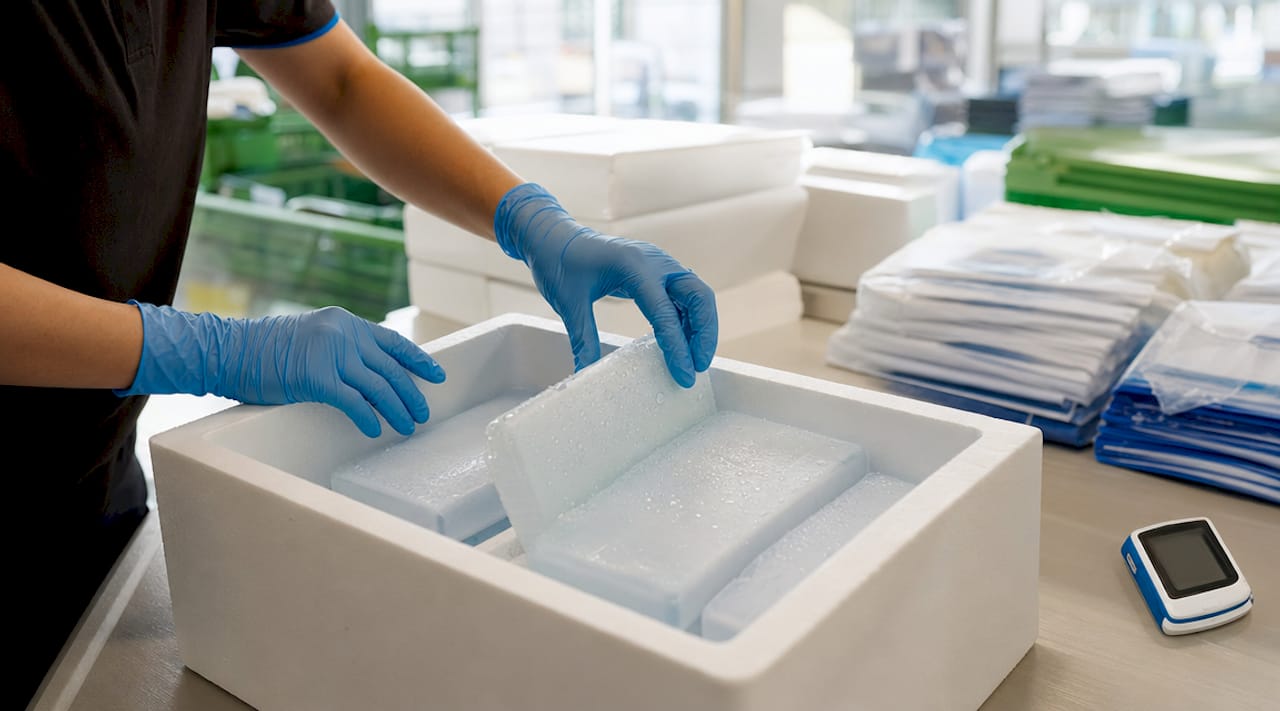
Validated packaging is the physical foundation of cold chain logistics. The term “validated” has a precise meaning here: packaging must be tested and documented under conditions that replicate the actual shipping route, season, and duration.
| Packaging Type | Best Use Case | Key Limitation |
|---|---|---|
| Expanded polystyrene (EPS) with gel packs | Refrigerated (2°C to 8°C), short to medium routes | Limited duration; gel pack conditioning is critical |
| Vacuum-insulated panels (VIP) | Long-haul refrigerated and frozen shipments | Higher cost; panels degrade if punctured |
| Dry ice with insulated containers | Ultra-cold (minus 60°C to minus 80°C) | Requires venting; CO2 release is a safety concern |
| Phase change materials (PCMs) | Refrigerated or frozen, extended durations | Must be pre-conditioned to exact melt point |
| Liquid nitrogen dewars | Cell and gene therapies, ultra-cold | Requires specialized handling and carrier approval |
Validated packaging must meet standards such as ISTA 7E and ASTM D3103, which test performance under route-specific and seasonal temperature profiles. A packaging system validated for a Singapore-to-Bangkok lane in January may fail on the same lane in April due to ambient temperature differences.
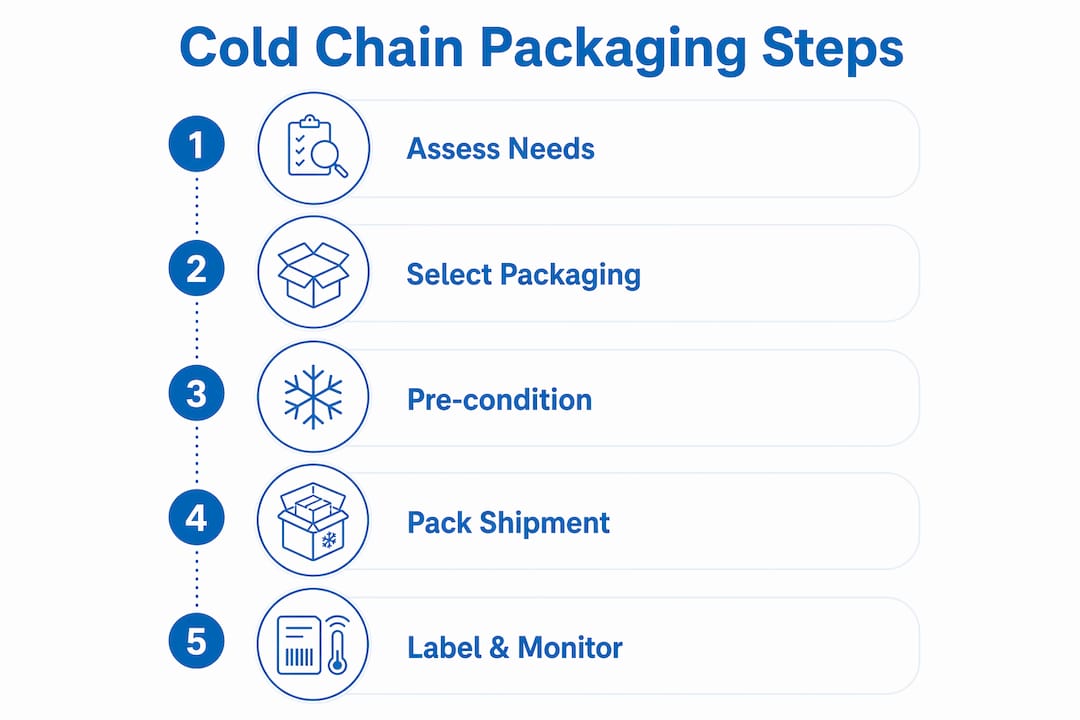
Pre-conditioning is a step that many operations underestimate. Reefer containers maintain temperature but do not actively cool cargo. Loading warm product into a pre-set reefer causes thermal shock and can drive the internal temperature outside the acceptable range within minutes. All cargo must be pre-cooled to the target temperature before loading, and containers must be pre-conditioned before cargo is introduced.
Labeling is equally non-negotiable. Every outer carton must carry “Time and Temperature Sensitive” markings, directional arrows, and handling instructions that comply with IATA PCR requirements. These labels are not administrative formalities. They are the primary communication tool between your team and every handler who touches the shipment downstream.
Pro Tip: For dry ice shipments, always include a dry ice sublimation rate calculation in your shipment documentation. This tells the receiving party exactly how much dry ice remains viable at the expected delivery time, and it protects you in the event of a regulatory audit.
How do monitoring technologies maintain shipment compliance?
Continuous temperature monitoring is the mechanism that converts your cold chain plan into verifiable compliance. Without it, you have no evidence that your validated packaging performed as intended.
The three primary monitoring technologies used in healthcare cold chain logistics are:
- USB data loggers: Single-use or reusable devices that record temperature at set intervals. They are downloaded at the destination and provide a complete trip record. Brands such as Sensitech and Berlinger are widely used in pharmaceutical distribution.
- Bluetooth loggers: Transmit data to a nearby smartphone or gateway device. Useful for warehouse monitoring and short-haul transport where a receiver is in proximity.
- Real-time IoT sensors: Transmit continuous data via cellular or satellite networks. These enable intervention during transit, not just post-delivery analysis.
Real-time monitoring represents the highest-impact technological shift in cold chain risk management, because it enables corrective action before product loss occurs. A logistics manager in Singapore can receive an alert about a temperature excursion on a shipment transiting Jakarta and authorize a reroute or emergency intervention within minutes.
Accuracy and calibration are not negotiable. Monitoring devices must maintain a calibration accuracy of ±0.5°C, with calibration records updated at least annually. Sensor placement within the shipment matters as much as the device itself. Loggers placed near container doors, which are the most thermally vulnerable points, provide the most conservative and defensible data for regulatory purposes.
Chain of custody documentation must accompany every temperature record. This means time-stamped handoff records at every transfer point, linked to the corresponding temperature data. Regulatory bodies including the Health Sciences Authority (HSA) in Singapore and equivalents across Southeast Asia require this documentation as part of GDP compliance audits.
What logistics practices reduce excursion risk during transport and handoffs?
Operational discipline during transport is where most cold chain plans succeed or fail. The majority of temperature excursions do not occur inside a validated reefer. They occur during handoffs at airport tarmacs, loading docks, and transfer terminals, where shipments sit unplugged and exposed to ambient conditions.
The following practices directly reduce excursion risk at these critical points:
- Schedule shipments early in the work week. Shipping Monday through Wednesday minimizes the risk of shipments sitting over a weekend at a transit hub with no active monitoring or intervention capability.
- Minimize unplugged time. Establish maximum allowable unplugged durations in your carrier contracts. For ultra-cold shipments, this window may be as short as 15 minutes.
- Verify carrier capabilities before booking. Confirm that carriers have reefers with multi-temperature compartments, standby power connections at terminals, and documented temperature-sensitive handling protocols.
- Train ground handling personnel. Human error is the leading cause of temperature excursions. Every handler who touches a temperature-sensitive shipment must be trained on packaging integrity checks, alarm response, and escalation procedures.
- Define emergency escalation paths. Your SOP must specify who is contacted when an excursion alarm triggers, what the response timeline is, and what authority that person has to quarantine or reroute a shipment.
Pro Tip: Build a lane risk profile for every route you operate. Document ambient temperature ranges by month, known infrastructure limitations at transit hubs, and historical excursion data by carrier. This profile becomes the basis for packaging selection, monitoring frequency, and contingency planning on that specific lane.
For healthcare logistics across Southeast Asia, lane risk profiling is particularly important. Regional infrastructure variability between Singapore, Vietnam, Indonesia, and the Philippines means that a single standard operating procedure cannot cover all routes without route-specific adjustments.
How to develop SOPs for temperature-sensitive shipments
A Standard Operating Procedure for temperature-sensitive shipping is the documented framework that converts best practices into repeatable, auditable processes. GDP requires that SOPs cover every phase of the cold chain, from packaging qualification through final delivery acceptance.
Core SOP elements for temperature-sensitive shipments include:
- Packaging qualification records: Documentation that the selected packaging system has been validated for the specific route, season, and product temperature range.
- Equipment calibration certificates: Current calibration records for all temperature monitoring devices, with traceability to national or international standards.
- Chain-of-custody documentation: Time-stamped records of every handoff, linked to corresponding temperature data from loggers or sensors.
- Acceptance criteria and pass/fail thresholds: Written criteria defining what constitutes an acceptable temperature record versus a reportable excursion, referenced against manufacturer stability data.
- Deviation and corrective action procedures: Clear written procedures for quarantine, deviation reporting, root cause analysis, and corrective action when an excursion occurs.
Training programs must be documented and role-specific. A warehouse operative needs different training content than a logistics coordinator or a quality assurance manager. GDP mandates that training records are maintained and that retraining occurs when procedures change or when personnel errors are identified.
IATA PCR compliance adds an additional layer for air freight. Acceptance checklists, shipper declarations for dangerous goods (where dry ice is involved), and carrier-specific documentation requirements must all be incorporated into your SOP framework. Audit readiness means that every document referenced in your SOP is retrievable within minutes, not hours.
Key takeaways
Effective cold chain logistics in healthcare requires validated packaging, calibrated monitoring, and documented SOPs working together across every handoff point in the supply chain.
| Point | Details |
|---|---|
| Know your temperature band | Identify the exact required range for each product before selecting packaging or carriers. |
| Validate packaging by route and season | Use ISTA 7E or ASTM D3103 standards; a system validated for one lane may fail on another. |
| Monitor in real time | IoT sensors enable intervention during transit; USB loggers alone only confirm loss after the fact. |
| Control handoff risk | Most excursions occur during unplugged time at terminals; define maximum allowable exposure in carrier contracts. |
| Document everything | GDP and HSA compliance requires calibration certificates, chain-of-custody records, and deviation reports to be audit-ready. |
What experience in cold chain logistics has taught us
The most persistent gap in temperature-sensitive shipping is not technology. It is the assumption that a validated system will perform without active management. After working across cold chain logistics in Southeast Asia, the pattern is consistent: operations that invest in real-time monitoring but neglect ground handler training still experience excursions. The technology surfaces the problem. The people determine whether it gets resolved in time.
The shift toward cell and gene therapies has fundamentally changed the stakes. These products are often patient-specific, irreplaceable, and priced in the hundreds of thousands of dollars per dose. A single excursion is not a financial inconvenience. It is a clinical failure. This reality demands that logistics managers treat cold chain compliance as a patient safety function, not a regulatory checkbox.
Lane risk analysis is consistently underinvested. Most operations apply a single packaging standard across all routes and adjust only after an excursion occurs. A proactive lane-by-lane risk assessment, updated seasonally, prevents the first failure rather than responding to it. The data to build these profiles exists in your historical shipment records. The discipline to use it systematically is what separates high-performing cold chain operations from reactive ones.
— Labgistics
How Labgistics supports your cold chain operations
Labgistics brings over 20 years of specialized healthcare logistics experience to temperature-sensitive shipping across Southeast Asia. For logistics managers who need more than a standard 3PL warehouse, Labgistics provides tailored logistics solutions that include validated cold chain infrastructure, real-time shipment monitoring, SOP development support, and GDP-aligned documentation frameworks. Every service is designed specifically for pharmaceutical, medical device, and life science supply chains operating under HSA and regional regulatory requirements. Whether you are managing refrigerated biologics or ultra-cold gene therapies, Labgistics provides the supply chain risk management expertise to protect product integrity from origin to final delivery across the region.
FAQ
What temperature range is required for most pharmaceutical shipments?
Most pharmaceutical products require refrigerated storage between 2°C and 8°C. Advanced biologics and gene therapies may require ultra-cold conditions between minus 60°C and minus 80°C, depending on manufacturer specifications.
Why do most temperature excursions occur during transport?
Most excursions happen during handoffs at loading docks and airport tarmacs, where shipments are unplugged and exposed to ambient temperatures. Minimizing unplugged time and training ground handlers are the most direct mitigations.
What monitoring accuracy is required for GDP compliance?
GDP and pharmaceutical distribution standards require temperature monitoring devices to maintain an accuracy of ±0.5°C, with annual calibration records traceable to recognized standards.
How do I know if my packaging is validated for my shipping route?
Validated packaging must be tested under ISTA 7E or ASTM D3103 protocols for the specific route, season, and shipment duration. A packaging system validated for one lane or climate profile cannot be assumed to perform on a different route without separate testing.
What should an SOP for temperature-sensitive shipments include?
A compliant SOP must cover packaging qualification records, equipment calibration certificates, chain-of-custody documentation, written acceptance criteria, and deviation response procedures including quarantine, reporting, and corrective action protocols.
Recommended
- Streamline medical product distribution workflows in SEA
- How to choose a 3PL warehouse for pharma supply chains
- Healthcare logistics: cold chain and compliance in SE Asia