
Not every logistics provider is built to handle pharmaceuticals. For healthcare and pharmaceutical executives managing regulated, temperature-sensitive products across Southeast Asia, choosing the wrong third-party logistics (3PL) partner is not merely an operational setback. It is a compliance risk, a patient safety issue, and a potential supply chain failure. Singapore’s life sciences 3PL segment is growing rapidly, but not all providers have the infrastructure, processes, or regulatory knowledge to serve this demanding sector. This article breaks down what truly separates capable healthcare 3PLs from standard providers, covering cold chain integrity, warehouse design, audit readiness, and the criteria that matter most when making your selection.
Table of Contents
- Why healthcare logistics in Singapore demands specialized 3PLs
- How 3PLs ensure end-to-end cold chain integrity
- Designing compliant cold rooms: Beyond ‘one-size-fits-all’
- Audit-ready 3PLs: Meeting regulatory and quality demands
- What most executives miss about choosing a healthcare 3PL in Singapore
- Streamline your healthcare supply chain with the right 3PL partner
- Frequently asked questions
Key Takeaways
| Point | Details |
|---|---|
| Specialized 3PLs required | Healthcare and pharmaceutical logistics in Singapore require providers with compliance and temperature-control expertise. |
| Cold chain is non-negotiable | Continuous, validated temperature management from warehouse through delivery is essential for product safety. |
| Audit readiness sets leaders apart | Top 3PLs invest in documentation and deviation response for rapid audits and minimized compliance risk. |
| Design for traceability | Client-specific temperature zones and integrated inventory tracking are key for regulated storage and audit outcomes. |
Why healthcare logistics in Singapore demands specialized 3PLs
Singapore occupies a strategic position as Southeast Asia’s primary healthcare and life sciences logistics hub. Its regulatory environment, port connectivity, and concentration of multinational pharmaceutical companies make it a natural distribution center for the region. But that status also raises the operational bar significantly for any 3PL that wants to serve this market credibly.
The Singapore 3PL sector is not growing uniformly. The life sciences and healthcare segment is forecast to grow at a 5.23% CAGR through 2031, and the primary differentiators in this segment are audit readiness and the ability to manage regulated, temperature-sensitive cargo. That growth creates opportunity, but it also creates pressure to distinguish capable providers from those simply claiming healthcare expertise.
What drives the specialized demand? Several converging factors:
- Temperature control requirements: Biologics, vaccines, and many oncology products require strict temperature bands, often between +2°C and +8°C or as low as -80°C for certain advanced therapies.
- GDP compliance: Good Distribution Practice (GDP) regulations govern how pharmaceutical products must be stored, handled, and transported. Any deviation is a regulatory event requiring documentation and corrective action.
- Traceability mandates: Regulators and pharmaceutical manufacturers require full product history, from origin to final delivery. Gaps in the chain create liability and audit failures.
- Risk management: A temperature excursion in transit is not just a spoiled product. It can trigger a recall, delay a patient’s treatment, and expose both the 3PL and the healthcare company to regulatory penalties.
“The ability to provide auditable, scalable cold chain operations is no longer optional for Singapore 3PLs serving healthcare clients. It is the entry requirement.”
Generic logistics providers rarely invest in the validated systems, trained personnel, or accredited facilities that healthcare logistics demands. For pharmaceutical executives, the operational heart of a reliable supply chain in this region is a specialized 3PL with the infrastructure and documentation culture to match.
How 3PLs ensure end-to-end cold chain integrity
Cold chain management is more than keeping a product cold. It is a continuous, documented process that protects product quality and patient safety from the moment goods are received at the warehouse through final delivery to the clinic, hospital, or distributor.
Cold chain in pharma logistics operates across four sequential stages:
- Receiving: Temperature verification upon inbound receipt, with documentation confirming the product arrived within the approved range.
- Storage: Placement in validated storage areas with real-time temperature logging and defined alarm thresholds.
- Transport: Use of qualified packaging, thermal containers, and cold trucks with continuous temperature monitoring.
- Delivery: Final-mile handling with confirmation of chain-of-custody and temperature integrity upon handover.
Temperature excursions and inadequate logistics strategy remain among the most significant risks for pharmaceutical products in transit. A single break in the cold chain, even a brief one, can render an entire shipment non-compliant and unsaleable. This is why why cold chain matters for every link in the distribution process, not just the storage phase.
Leading 3PLs deploy several critical monitoring tools to maintain chain integrity:
| Monitoring method | Function | Example application |
|---|---|---|
| Real-time data loggers | Continuous temperature capture | Attached to each pallet or container |
| Automated alert systems | Instant notification of excursions | SMS or email alerts to quality team |
| Warehouse management system (WMS) | Links temperature data to inventory records | Full traceability to lot and batch |
| Deviation management SOPs | Structured response to out-of-spec events | Quarantine, investigation, corrective action |
Deviation management is especially worth highlighting. When a temperature excursion occurs, a compliant 3PL does not simply log the event. It quarantines the affected product, initiates a documented investigation, and works with the client’s quality team to determine whether the product remains fit for release. This process, when executed well, is what allows companies to demonstrate regulatory compliance during audits.
Pro Tip: When evaluating a 3PL, ask to review their deviation log and SOP for temperature excursions. A provider with a mature, well-documented response process signals real operational readiness, not just certification on paper.
Designing compliant cold rooms: Beyond ‘one-size-fits-all’
With the cold chain process mapped, it is essential to examine the physical infrastructure. Not all cold storage is created equal, and for pharmaceutical companies managing multiple product classes, the design of a warehouse’s temperature zones is a critical compliance factor.
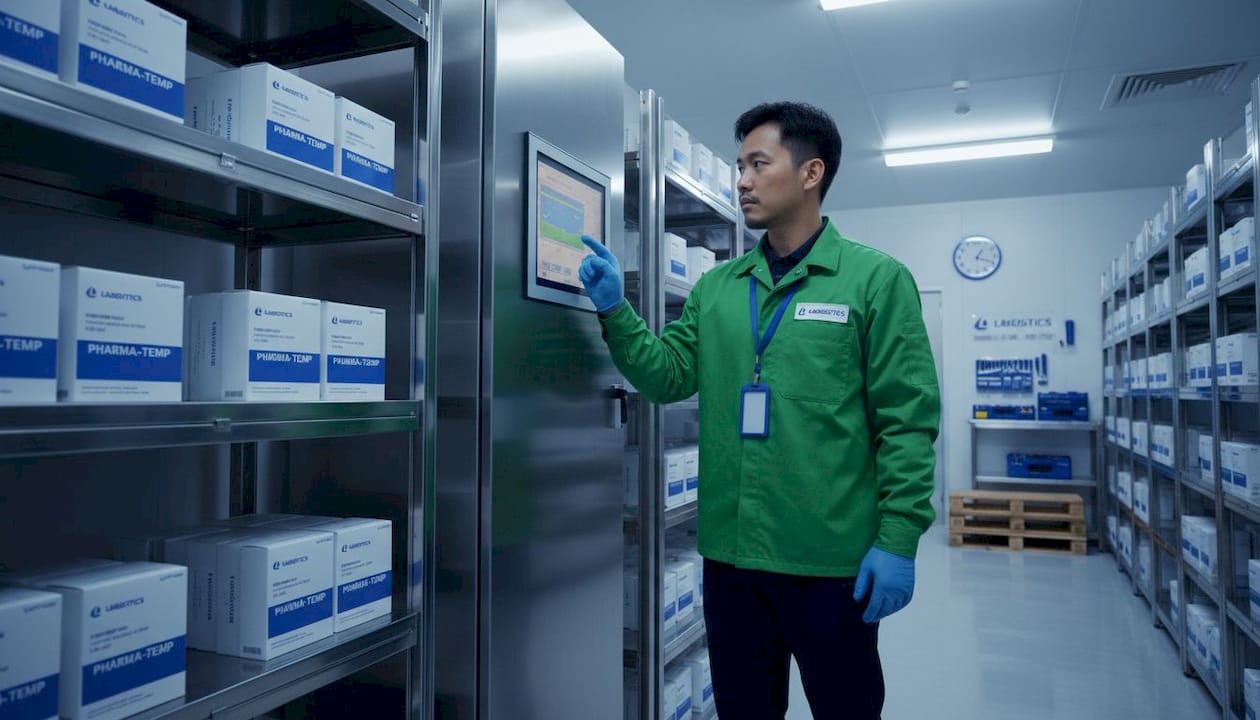
Cold-room design in Singapore 3PL facilities requires separate temperature zones, controlled access, and temperature logging linked directly to inventory locations. A product stored in the wrong zone, even briefly, can trigger a quality deviation that requires expensive investigation and documentation. And if that deviation surfaces during a regulatory audit, the consequences extend well beyond the product itself.
Here is how compliant cold storage design differs from generic cold storage:
| Feature | Generic cold storage | Compliant healthcare cold storage |
|---|---|---|
| Temperature zones | Single or dual zone | Multiple zones: ambient, chilled, frozen, ultra-cold |
| Access control | Minimal or standard | Role-based access, logged entry and exit |
| Temperature logging | Manual or periodic | Continuous, automated, linked to WMS |
| Inventory traceability | SKU level | Batch, lot, pallet, and item level |
| Audit documentation | Minimal | Full trail: receipt, storage, dispatch |
| Deviation response | Ad hoc | Documented SOP with quarantine protocol |
Smart warehouse solutions in healthcare logistics integrate temperature data with inventory management systems in real time. This means that when a quality review or regulatory audit occurs, the 3PL can produce a complete product history tied to specific storage conditions, handling events, and transport records.
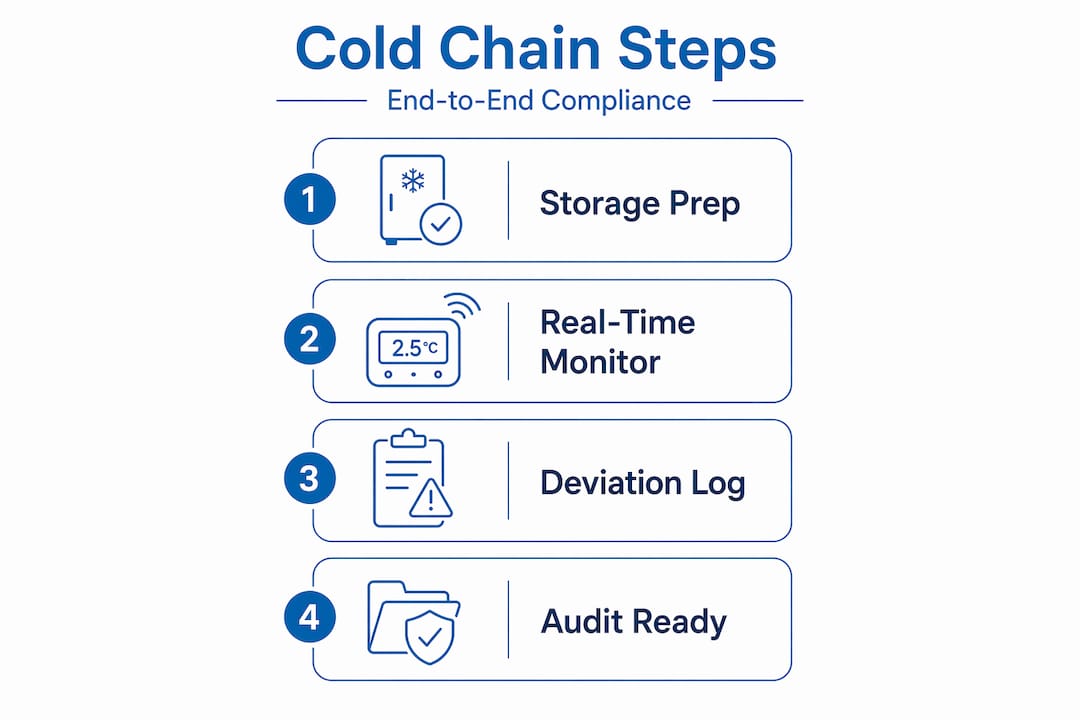
Multi-zone cold storage facilities allow pharmaceutical companies to store different product categories under the same roof without compromising the integrity of any individual temperature range. This is particularly important for companies managing a product portfolio that includes ambient biologics, refrigerated vaccines, and controlled frozen products simultaneously.
Key design requirements for compliant cold rooms include:
- Zone separation with validated boundaries to prevent cross-contamination of temperature ranges
- Alarm thresholds mapped to product specifications, not generic industry defaults
- Redundant cooling systems to maintain temperature during equipment maintenance or failure
- Access control logs that are time-stamped and stored for audit review
- Regular calibration of all temperature monitoring equipment against traceable standards
Pro Tip: When reviewing a 3PL’s cold storage design, ask specifically whether their temperature logging system feeds directly into their WMS. If inventory records and temperature data sit in separate systems with no integration, full traceability during an audit becomes difficult and time-consuming.
Audit-ready 3PLs: Meeting regulatory and quality demands
Even the best infrastructure is only as strong as the compliance culture behind it. Audit readiness is not a one-time preparation. It is an ongoing operational discipline that separates tier-one healthcare 3PLs from providers that treat compliance as a checkbox.
GDP-compliant warehousing in Singapore covers chilled storage at +2°C to +8°C, frozen storage at -20°C, real-time temperature monitoring with automated alerts, and full audit trails for all healthcare products. These are the baseline requirements. A truly audit-ready 3PL goes further, embedding documentation practices into daily operations so that every action is traceable.
What does GDP compliance look like in practice? The following elements are non-negotiable:
- Validated storage areas with qualification records showing the facility maintains specified temperature ranges under worst-case conditions
- Real-time monitoring with automated alerts that notify designated personnel immediately when temperatures drift outside limits
- Comprehensive batch and lot tracking linking every product movement to a specific location, time, and operator
- Change control documentation for any modifications to storage areas, equipment, or processes
- Training records demonstrating that all personnel handling regulated products are qualified for their roles
- Self-inspection programs that mirror external audit processes and identify gaps before regulators do
The practical benefit for pharmaceutical executives is straightforward. When a regulatory inspection occurs, either from Singapore’s Health Sciences Authority (HSA) or from international bodies such as the WHO or European Medicines Agency, a fully audit-ready 3PL can produce all required records quickly, accurately, and without scrambling. That readiness directly reduces compliance risk for the pharmaceutical company, protecting market access and product licensing.
GDP and audit-readiness are increasingly becoming competitive requirements rather than differentiators in Singapore. The companies that fall behind are those that partner with 3PLs treating documentation as an administrative burden rather than an operational asset.
“In healthcare logistics, audit readiness is not the end goal. It is the daily standard against which every process, every movement, and every record must be measured.”
What most executives miss about choosing a healthcare 3PL in Singapore
Most organizations, when evaluating 3PL partners, focus on price, basic certifications, and geographic coverage. These are necessary filters, but they are not sufficient. The real differentiators are narrower and harder to assess in a standard procurement process.
The most common oversight is treating cold chain compliance as binary. Either the 3PL is GDP-compliant or it is not. In reality, compliance exists on a spectrum. A provider can hold a GDP certificate and still lack the granular monitoring capability to flag a temperature excursion at the pallet or item level. This gap only becomes visible when an excursion occurs and the investigation reveals that the 3PL cannot tell you exactly which pallets were affected.
Multi-zone cold storage requires client-specific temperature configurations and full traceability down to the product, pallet, and item level. Executives should be asking specific questions: Can the 3PL demonstrate excursion flagging at the item level, not just the room level? Does their WMS allow a quality manager to pull the complete temperature history for a single lot number in under ten minutes? What is their documented escalation process when an alarm triggers outside business hours?
The cost of under-investing in traceability is significant. Consider a scenario where a temperature alarm triggers at 2:00 AM on a Saturday. If the 3PL’s response is a phone call to a supervisor with no documented SOP behind it, the outcome depends entirely on that individual’s judgment. If the product is released without a proper deviation investigation, the pharmaceutical company carries the regulatory liability.
A related blind spot is the assumption that customizable temperature zones are standard. Many 3PLs offer a defined menu of zones and expect clients to fit their products into existing configurations. For pharmaceutical companies with specialized biologics or clinical trial materials requiring non-standard temperature bands, this rigidity creates real risk. The right 3PL designs storage solutions around the product’s specification, not the other way around.
The cold chain guide for SE Asia reinforces a core principle: the value of a healthcare 3PL is not measured only by what it does when everything runs smoothly. It is measured by what it does when something goes wrong. Mature deviation management, item-level traceability, and around-the-clock monitoring are the capabilities that convert compliance investment into genuine risk protection.
Streamline your healthcare supply chain with the right 3PL partner
Every insight covered in this article points to the same conclusion: specialized healthcare logistics is not a product of good intentions. It is the result of deliberate infrastructure, rigorous process design, and a compliance culture that runs from the warehouse floor to senior management.
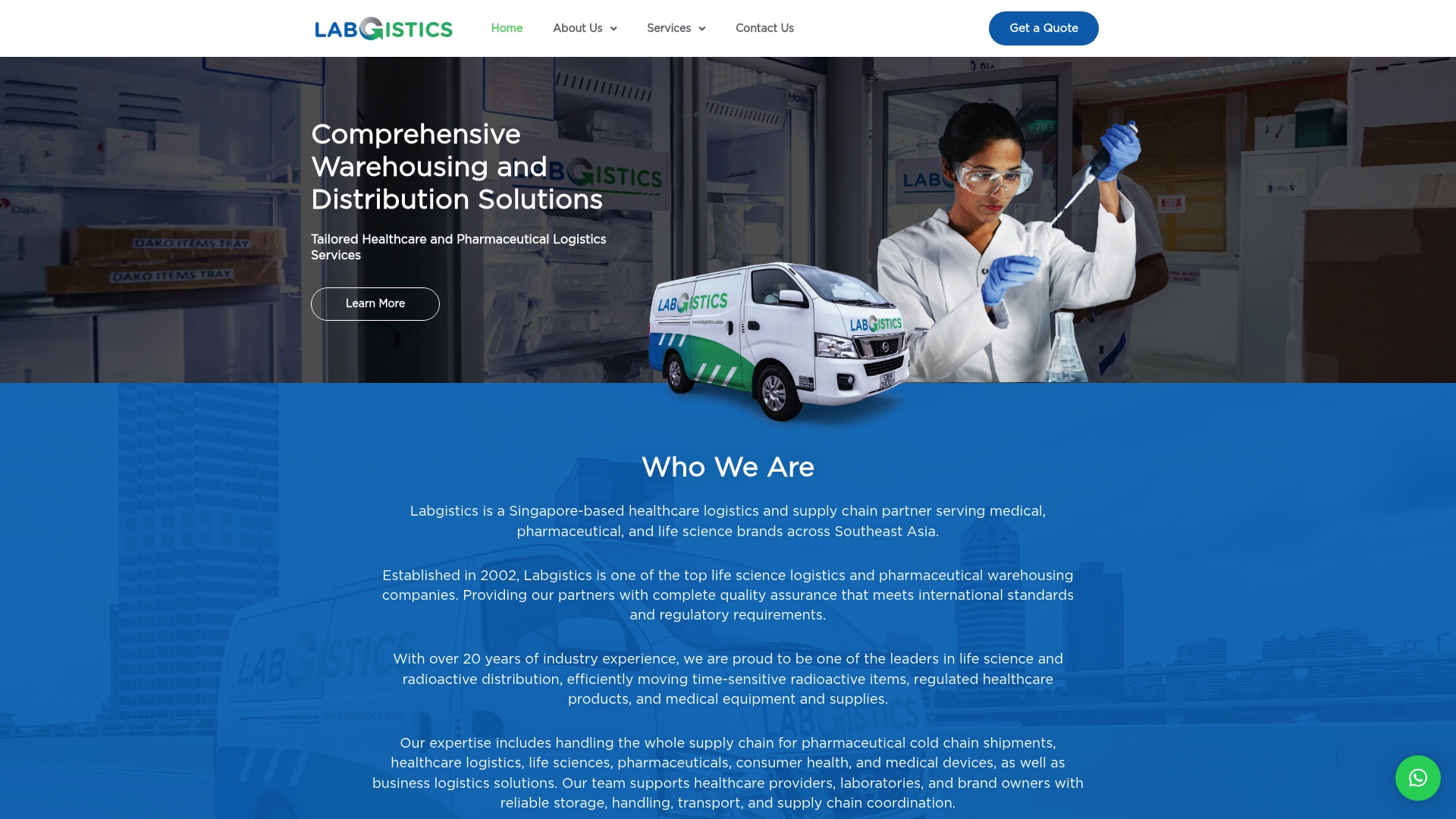
Labgistics Asia brings over 20 years of experience in temperature-controlled, regulated healthcare logistics across Singapore and Southeast Asia. From GDP-compliant cold chain operations and multi-zone warehousing to regulatory support and market access services, Labgistics provides the end-to-end infrastructure that pharmaceutical and medical device companies need to operate with confidence. Whether you are managing existing distribution networks or planning entry into SEA markets, Labgistics offers tailored solutions built around your product’s specific requirements. Explore smart solutions for pharma logistics and connect with our team to discuss how we can support your supply chain strategy.
Frequently asked questions
What is GDP compliance in Singapore’s healthcare logistics?
GDP (Good Distribution Practice) compliance ensures pharmaceutical products are stored and transported within regulated temperature ranges and all processes are documented for audit readiness, including deviation records and product traceability from origin to delivery.
How do 3PLs in Singapore monitor temperature-sensitive shipments?
Leading 3PLs use real-time temperature logging, automated excursion alerts, and WMS-linked traceability that connects inventory records to temperature data for every shipment at the batch and item level.
What are the major risks of poor cold chain management for pharmaceuticals?
Temperature excursions and inadequate logistics can spoil products, trigger regulatory investigations, and disrupt supply chains, making robust monitoring and documented deviation response essential for any healthcare 3PL.
What differentiates Singapore’s 3PLs in healthcare logistics?
Their focus on audit readiness and regulated cargo management, combined with client-specific cold storage configurations and continuous real-time monitoring, sets Singapore’s top healthcare 3PLs apart from general logistics providers in the region.
Recommended
- Smart 3PL Warehouses and Inventory Management | Labgistics
- How Singapore 3PL Providers Are Powering Asia’s Healthcare Logistics | Labgistics
- Last-Mile Healthcare Delivery in Singapore: What Makes a 3PL Ready for Clinics, Labs, and Hospitals?
- Cold Chain Logistics for Pharma in Southeast Asia | Labgistics