
Holding a GDP (Good Distribution Practice) certificate does not make a third-party logistics warehouse the right partner for your pharmaceutical or medical supply chain. Across Southeast Asia, procurement specialists routinely approve 3PL providers based on certification alone, only to face regulatory findings, temperature excursions, and product losses that expose both patients and organizations to serious risk. The real differentiator lies in how a warehouse translates GMP (Good Manufacturing Practice) expectations into daily logistics operations, how explicitly compliance scope is defined, and whether temperature controls and performance data are genuinely auditable. This article gives you a practical, evidence-backed framework for making that judgment.
Table of Contents
- What makes a 3PL warehouse suitable for healthcare supply chains?
- Key quality and compliance factors: GMP translation and scope
- Temperature mapping, monitoring, and risk-based data requirements
- Performance KPIs and defensible contract requirements
- Why most ‘compliant’ 3PL warehouses still expose you to risk
- How Labgistics helps you achieve defensible 3PL compliance
- Frequently asked questions
Key Takeaways
| Point | Details |
|---|---|
| Right-size GMP controls | Insist on explicit GMP controls for every warehouse zone and clear evidence of regulatory alignment. |
| Demand defensible oversight | Quality agreements and monitoring must cover risk-based temperature mapping and retrievable records. |
| Don’t trust GDP labels alone | Evaluate 3PLs through operational data and documented SOPs, not just certificates or marketing claims. |
| Link KPIs to safety | Ensure contractual metrics are tied to patient and regulatory risk, not just process efficiency. |
What makes a 3PL warehouse suitable for healthcare supply chains?
Having highlighted why not all GDP-labeled 3PLs are created equal, let’s clarify what makes a warehouse a real asset for pharmaceutical and medical supply chains.
A third-party logistics (3PL) warehouse is an outsourced facility that handles storage, inventory management, and distribution on behalf of a manufacturer or healthcare organization. In general commerce, the main concerns are cost and speed. In healthcare, the stakes are categorically higher. A warehouse that mishandles temperature-sensitive biologics or fails to maintain segregated storage for controlled substances puts patients directly at risk.
The distinction between GDP and GMP is foundational to this discussion. GDP governs how medicinal products are transported and distributed, focusing on preventing contamination, mix-ups, and deterioration during transit and storage. GMP, on the other hand, governs the quality systems that ensure products are manufactured and handled to consistent standards throughout their entire life cycle, including storage and distribution. For pharmaceutical supply chains, both frameworks apply simultaneously. A 3PL that is GDP-certified but lacks a clear GMP framework for its warehousing operations is only partially compliant by healthcare standards.
Key controls that define a genuinely suitable healthcare 3PL include:
- Retrievable records: All storage, handling, and temperature events must be documented and accessible for regulatory inspection with minimal lead time.
- Qualified storage zones: Each zone must be formally qualified for its intended product type, including ambient, refrigerated (2°C to 8°C), and frozen storage.
- Risk-based temperature mapping: Sensors must be positioned based on documented risk assessments, not convenience.
- Segregated areas: Quarantined, rejected, and approved stock must be physically or electronically separated at all times.
- Qualified personnel: Staff handling regulated healthcare products must receive role-specific training aligned with GMP expectations.
| Requirement | General logistics | Healthcare 3PL |
|---|---|---|
| Temperature monitoring | Optional | Mandatory, risk-based |
| Documentation retrieval | Basic | Regulatory-grade audit trails |
| Storage zone qualification | Not required | Formally validated |
| Deviation handling | Informal | Documented CAPA process |
| Personnel training | General | GMP-aligned, role-specific |
Practical cold chain logistics for healthcare involves far more than refrigerated trucks. It is a system of controls that must be verified at every node, including the warehouse itself. Understanding the role of cold chain in pharma logistics helps procurement teams recognize which operational details actually protect product integrity.
Pro Tip: Do not rely on GDP certification alone. Ask potential 3PL partners to show you how their standard operating procedures (SOPs) specifically translate GMP expectations for logistics into warehousing tasks. If they cannot produce documented procedures with version control and staff sign-off records, that is a significant warning sign.
Key quality and compliance factors: GMP translation and scope
After defining the essentials, let’s look at how quality and compliance responsibilities are operationalized through explicit GMP controls.
One of the most overlooked failures in 3PL selection is the assumption that a quality agreement automatically means compliance scope is fully defined. It does not. Compliance scope must cover every physical and administrative element of the warehouse: each storage zone, loading dock, mezzanine, cage, and interface with GMP manufacturing activities. If a zone is not explicitly named and qualified, it is effectively uncontrolled from a regulatory standpoint.
“Guidance stresses defining scope and zones, including buildings, rooms, mezzanines, cages, and loading areas, labelled storage ranges, national expectations, GMP interfaces, and third-party responsibilities, plus qualification, mapping, and monitoring and complete retrievable records.”
This level of specificity is not bureaucratic excess. It is what allows you to defend your supply chain during a regulatory audit or a product quality investigation. Southeast Asian regulatory agencies, including those in Singapore, Thailand, and the Philippines, are increasingly aligning inspection frameworks with EU GDP and WHO guidelines. A 3PL that cannot demonstrate compliance down to zone level creates audit exposure for your entire organization.
Follow this structured approach when assessing GMP translation during 3PL selection:
- Request a site master file or equivalent documentation that lists every storage zone, its intended product class, and its qualification status.
- Review SOPs for all GDP-GMP interface activities, including goods receipt, quarantine release, pick and pack, and returns handling.
- Confirm that third-party responsibilities are documented in a quality agreement that is specific to your product categories, not a generic template.
- Assess training records to verify that warehouse staff handling pharmaceutical products are trained on GMP principles, not just general warehousing procedures.
- Evaluate change control processes: any modification to storage zones, equipment, or procedures should trigger a documented change control review.
- Examine past regulatory inspection reports or internal audit results to identify recurring findings and how they were resolved.
| Feature | GDP baseline | Right-sized GMP control |
|---|---|---|
| Zone definition | General temperature ranges | Formally qualified, labeled zones |
| Change management | Informal notification | Documented change control with risk assessment |
| Deviation response | Reactive | Proactive CAPA with root cause analysis |
| Record retention | Minimum legal requirement | Accessible, formatted for regulatory audit |
| Vendor oversight | Basic contract | Quality agreement with defined KPIs |
Understanding compliance in healthcare logistics requires going beyond what a certification document states. The real question is whether the operational reality on the warehouse floor matches the written procedures. Site visits, unannounced if contractually possible, are the only reliable way to verify this alignment.
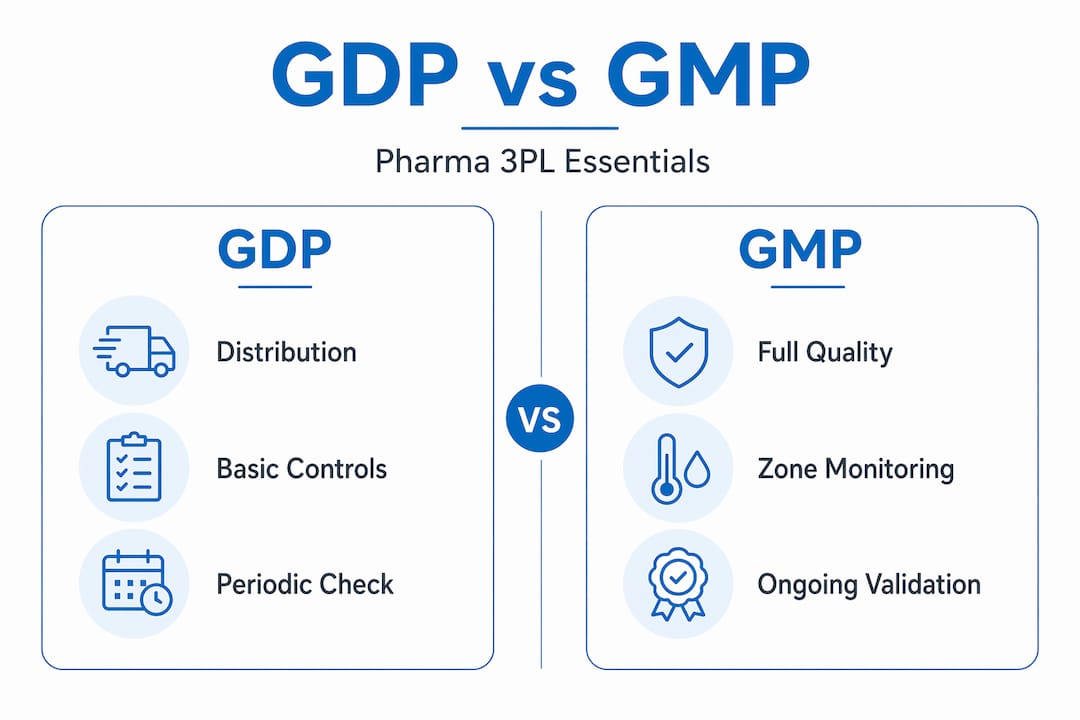
Common pitfalls in GMP compliance validation include: accepting generic quality agreements without product-specific addenda, failing to audit loading dock temperature controls during peak weather conditions, and overlooking the qualification status of backup refrigeration units. Each of these gaps has caused real regulatory findings in Southeast Asian pharmaceutical supply chains.
Temperature mapping, monitoring, and risk-based data requirements
With compliance scope and GMP translation clarified, temperature control practices stand out as the linchpin of safety and regulatory success.
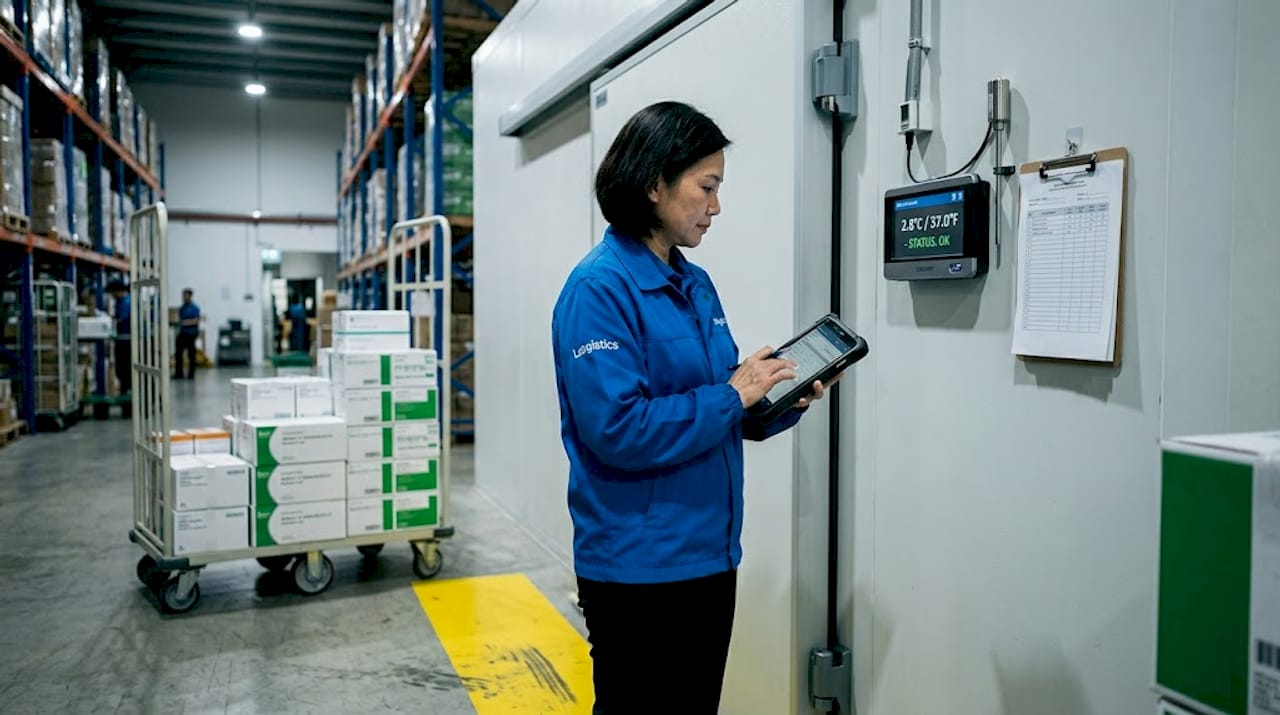
Temperature excursions are one of the leading causes of pharmaceutical product loss and regulatory action globally. Yet many procurement teams assess cold chain capability by asking whether a warehouse “has temperature monitoring” rather than probing the technical depth behind that claim. The difference between a compliant system and a genuinely robust one lies in the specifics of mapping, monitoring frequency, calibration, and exception handling.
Documented, risk-based temperature mapping means placing sensors based on a formal analysis of where temperature variability is most likely to occur. Hot spots near loading doors, cold spots near cooling units, and stratification in tall racking systems all require specific sensor placement. A mapping study conducted only under one set of ambient conditions is insufficient. Mapping should account for seasonal variation, which is particularly relevant in Southeast Asia given the region’s high humidity and temperature extremes.
When writing quality agreements with a 3PL partner, your temperature control requirements should explicitly include:
- Mapping protocol: frequency of mapping exercises, conditions covered, and acceptance criteria.
- Sensor placement and density: minimum number of sensors per zone, calibration traceability requirements.
- Continuous monitoring: real-time data logging with alarm thresholds set below excursion limits to allow corrective action before a product is affected.
- Calibration schedule: regular calibration of all monitoring instruments against traceable standards, with documented certificates.
- Exception handling: defined response times for alarms, escalation procedures, and authority to quarantine affected product.
- Deviation and CAPA processes: every temperature excursion must be investigated, and a corrective and preventive action (CAPA) plan must be documented and tracked.
| Zone | Sensor count | Monitoring frequency | Data retention | Alarm threshold |
|---|---|---|---|---|
| Ambient (15°C to 25°C) | Minimum 3 | Continuous | 5 years | ±2°C from target |
| Refrigerated (2°C to 8°C) | Minimum 5 | Continuous | 5 years | ±1°C from target |
| Frozen (below -20°C) | Minimum 4 | Continuous | 5 years | ±2°C from target |
| Loading dock | Minimum 2 | Continuous during operations | 5 years | Zone-specific limit |
For healthcare procurement teams, the most defensible approach is to treat the 3PL warehouse as part of the product quality system: require documented, risk-based qualification of temperature mapping, monitoring, and calibration, plus clear quality agreements and oversight evidence including deviation and CAPA handling.
Procurement should also explicitly request data coverage including what gets monitored, where, how often, and how exceptions are handled, rather than relying only on marketing claims of “GDP-compliant” cold chain.
Pro Tip: When evaluating a 3PL’s temperature control capability, request actual deviation logs from the past 12 months and review how each incident was investigated. A warehouse with zero recorded excursions is not necessarily the safest choice. It may simply mean that excursions are not being captured or reported. Operational transparency is the standard you should be demanding.
Sound cold chain logistics across Southeast Asia requires that every node in the distribution network, including third-party warehouses, can produce this level of documented evidence on demand.
Performance KPIs and defensible contract requirements
Beyond pure compliance, how do you ensure your 3PL partner delivers on both operational efficiency and patient safety? That is where defensible KPIs (key performance indicators) come in.
Many 3PL contracts in the healthcare sector focus heavily on cost metrics: cost per pallet, cost per order, cost per delivery. While financial efficiency matters, cost-centric KPIs do not capture whether the warehouse is operating safely or whether product quality is being maintained through the supply chain. In healthcare, every operational failure has a potential patient outcome attached to it. Your KPIs should reflect that reality.
Linking operational efficiency metrics such as dock-to-stock cycle time, picking accuracy, perfect order rate, and audit trail completeness to patient and customer risk outcomes creates genuine accountability. It also provides the evidence base needed to defend your supplier selection decision during a regulatory inspection or internal quality review.
Follow these steps to write defensible performance clauses into your 3PL contracts:
- Define each KPI with precise measurement criteria: specify the numerator, denominator, data source, and reporting frequency for every metric.
- Set benchmark-oriented targets: use industry data to set realistic but demanding targets, and include an improvement trajectory for the first year.
- Link KPIs to quality events: tie picking accuracy directly to the risk of wrong-product dispensing, and link temperature compliance rates to product quarantine thresholds.
- Require digital audit trails: all KPI data should be automatically logged and accessible through a shared portal, not reported manually by the 3PL.
- Establish escalation and remedy clauses: define what happens when KPIs are missed, including investigation requirements, corrective action timelines, and financial penalties where appropriate.
Common accountability pitfalls to prevent include:
- Self-reported data without verification: require independent data access or third-party audit rights.
- Vague quality targets: “high accuracy” is not measurable; “99.8% picking accuracy measured monthly” is.
- No consequence for repeated findings: contracts should include provisions for repeat breaches that trigger re-qualification audits or contract review.
- Misaligned reporting periods: quarterly KPI reviews are insufficient for high-risk pharmaceutical operations; monthly is the minimum standard.
Pro Tip: Audit data trails directly rather than accepting summary reports. Ask to view the underlying system logs for order processing, temperature events, and inventory adjustments. Smart 3PL inventory management systems should provide this level of transparency as a standard feature, not as a premium add-on.
Why most ‘compliant’ 3PL warehouses still expose you to risk
After reviewing the requirements in detail, there is a harder truth that deserves direct attention: certificate-level compliance and real operational safety are two different things.
Standard due diligence processes in healthcare procurement are often insufficient. Site visits happen once at onboarding. Quality agreements are reviewed by legal teams rather than quality assurance specialists. GDP certificates are accepted as evidence of systematic control when they are only evidence that a warehouse met a defined standard at a point in time. The conditions that existed on audit day may not reflect everyday operations.
The most dangerous failures typically occur at the interfaces between GMP manufacturing and 3PL logistics functions. A product leaves the manufacturer in perfect condition. It enters the 3PL’s receiving dock where ambient temperature has not been formally qualified. It moves through a loading area that is outside the scope of the quality agreement. These unexamined interfaces accumulate risk invisibly, right up until a product quality incident makes them visible.
Organizations that treat 3PLs as a genuine extension of their quality system operate differently. They conduct scheduled and unannounced audits. They review deviation logs quarterly. They require joint training sessions between their quality teams and the 3PL’s warehouse staff. They monitor AI-supported cold chain efficiency data in real time rather than waiting for monthly reports. The result is measurably fewer patient safety events and regulatory findings.
The difference-maker steps that high-performing supply chain teams insist on include: conducting at least one unannounced audit per year, maintaining direct access to the 3PL’s monitoring system data, including 3PL performance in internal quality management review meetings, and requiring the 3PL’s quality manager to participate in joint CAPA reviews for any product-affecting event. These are not extraordinary measures. They are the baseline for organizations that take supply chain quality seriously.
How Labgistics helps you achieve defensible 3PL compliance
Selecting the right 3PL partner in Southeast Asia’s complex regulatory environment requires more than reviewing a certificate. It requires a partner whose infrastructure, documentation, and quality culture are built specifically for pharmaceutical and medical supply chains.
Labgistics Asia provides end-to-end 3PL warehousing and cold chain solutions purpose-built for Southeast Asia’s healthcare sector. With over 20 years of experience, fully accredited distribution centers, and risk-based temperature monitoring that goes well beyond GDP minimums, Labgistics delivers the auditable evidence and patient-centric KPI reporting that procurement and quality teams need. From zone qualification and deviation management to regulatory support and market entry, Labgistics operates as a genuine extension of your quality system, not just a storage provider. Contact the Labgistics team to discuss how their solutions address your specific compliance and operational requirements.
Frequently asked questions
What is the difference between GDP and GMP in 3PL warehousing?
GDP covers distribution best practices for medicinal products, while GMP governs quality and handling standards throughout the product life cycle. Healthcare 3PL providers must address both to ensure product integrity and regulatory compliance.
How should we handle temperature excursions in third-party medical storage?
Your quality agreement should require the 3PL to document, investigate, and resolve every excursion through a formal deviation and CAPA process with traceable records available for regulatory review.
Can we rely solely on a 3PL’s GDP certificate for compliance?
No. GDP certification confirms a snapshot of compliance at one point in time. Procurement teams should explicitly request data coverage and verify how GMP controls are implemented operationally, not just documented on paper.
Which KPIs should a healthcare 3PL contract include?
Essential metrics include dock-to-stock cycle time, picking accuracy, perfect order rate, and audit trail completeness. Operational efficiency metrics must be explicitly linked to patient safety and regulatory risk outcomes, not just cost performance.