
Pharma logistics compliance checklist for Southeast Asia
Pharmaceutical supply chains in Southeast Asia operate under some of the most demanding regulatory conditions in the world. A single documentation gap or cold chain deviation can trigger product recalls, customs holds, or license suspensions that cost millions and, more critically, compromise patient safety. For compliance officers and logistics managers navigating this fragmented regulatory landscape across ten distinct ASEAN markets, having a structured, actionable checklist is not optional; it is the operational backbone of every compliant shipment. This guide delivers exactly that.
Table of Contents
- Key compliance criteria for pharma logistics in Southeast Asia
- Documentation and record-keeping essentials
- Temperature control and cold chain compliance checklist
- Operational safety and security: Facility and transit controls
- Inventory and sustainability compliance for pharmaceutical warehouses
- Why checklists alone aren’t enough: Human judgment and technology pitfalls
- Streamline your compliance with expert logistics solutions
- Frequently asked questions
Key Takeaways
| Point | Details |
|---|---|
| Tailored compliance criteria | Follow region-specific regulatory requirements and best practices for SEA healthcare supply chains. |
| Comprehensive documentation | Keep critical documents and records organized for successful audits and traceability. |
| Cold chain vigilance | Ensure temperature controls are continuously monitored and logged for compliance. |
| Security and sustainability | Implement both robust security protocols and sustainable practices in warehousing operations. |
| Human factors matter | Empower staff with ongoing training—beyond checklist use—to maintain effective logistics compliance. |
Key compliance criteria for pharma logistics in Southeast Asia
Having set the stage for why compliance matters, let’s focus on the essential criteria you must address in the Southeast Asian context.
Regulatory and operational compliance are core for healthcare logistics providers in SEA, and understanding the full scope of those requirements is the first checkpoint in any compliance program. The regulatory environment spans national Ministry of Health (MOH) mandates, regional ASEAN guidelines, and internationally recognized frameworks including Good Distribution Practice (GDP), Good Manufacturing Practice (GMP), and the broader family of GxP standards. Each country interprets and enforces these standards differently, which is what makes the SEA market uniquely challenging.
Foundational compliance criteria to address:
- GxP and GDP alignment: Every process from storage to final-mile delivery must map to GDP guidelines, which govern the proper distribution of medicinal products and include requirements for personnel, premises, equipment, documentation, and complaints handling.
- Local MOH registration and permits: Indonesia’s BPOM, Thailand’s FDA, Malaysia’s NPRA, and Singapore’s HSA each maintain distinct registration portals and renewal timelines. Non-compliance with any one of them can block product movement across borders.
- Cross-border documentation consistency: Shipments transiting through multiple SEA countries require harmonized documentation. A discrepancy between the country of origin documents and the receiving country’s import requirements is a common trigger for delays.
- Temperature and product classification mandates: Regulatory bodies increasingly require evidence of temperature-controlled handling for a wide range of pharmaceutical categories, not just biologics.
- Digital audit trail requirements: Several SEA governments now expect electronic records with timestamps, particularly for controlled substances and narcotics.
- Security and chain-of-custody protocols: Verified chain-of-custody documentation is required for high-value and schedule-controlled pharmaceuticals in most SEA jurisdictions.
Pro Tip: Create a compliance tracking matrix with each SEA country as a column and each regulatory requirement as a row. Assign a responsible team member per market and review it quarterly to capture regulatory updates before they become violations.
Documentation and record-keeping essentials
Once the key compliance criteria are established, effective documentation cements your ability to demonstrate compliance and respond to inspections.

Pharma logistics quality assurance standards make clear that documented operational procedures and traceability are vital. Regulators and auditors do not accept verbal confirmation; they expect organized, retrievable records that prove every action taken during a product’s journey from manufacturer to end recipient.
Core documentation checklist for pharma logistics:
- Bill of Lading (BOL): Issued by the carrier and legally binding; must reflect accurate product descriptions, quantity, and consignee details.
- Commercial Invoice: Must align with customs valuation requirements in the destination country, including accurate HS codes for pharmaceutical classifications.
- Import/export permits: Country-specific controlled substance permits, health certificates, and free-sale certificates where applicable.
- Delivery receipts: Signed proof of delivery including time stamps and condition verification at receipt.
- Temperature logs: Continuous data logger reports covering the entire transit period, from pre-shipment validation through final delivery.
- SOPs and training records: Evidence that staff involved in handling, storage, and transport have received appropriate GxP training and that SOPs have been reviewed within specified timeframes.
- Deviation and non-conformance reports: Any incident during transit or storage must be formally documented, investigated, and resolved with a corrective action plan.
- Batch traceability records: Lot numbers, expiration dates, and production batch data must be recorded at every handover point.
Digital records management platforms have become standard in high-performing logistics operations. Cloud-based systems that automatically back up documentation and flag overdue reviews reduce the administrative burden considerably. They also accelerate response times during regulatory inspections.
Pro Tip: Conduct monthly random audits of five to ten randomly selected shipment files. Cross-check documents for completeness, signature accuracy, and temperature data continuity. Catching gaps early prevents them from becoming audit findings.
Temperature control and cold chain compliance checklist
With records and standards in place, the most technical compliance pillar, the cold chain, demands special focus.
Cold chain logistics compliance is enforced by SEA ministries and is critical for maintaining the integrity of temperature-sensitive pharmaceuticals including vaccines, biologics, insulin, and oncology agents. SEA’s tropical climate introduces constant ambient temperature risk, making deviations more likely and more severe than in temperate markets.
Pre-transport:
- Validate storage unit temperatures against calibration certificates before loading.
- Confirm packaging qualification data for the specific lane and expected transit duration.
- Seal and label all cold packs, gel packs, or dry ice according to approved packaging specifications.
- Record pre-shipment temperature conditions and document packaging personnel.
In-transit:
- Activate automated temperature data loggers before shipment leaves the facility.
- Establish predetermined escalation contacts if a deviation alert is triggered mid-transit.
- Ensure vehicle refrigeration units are validated and service records are current.
- Define failover plans for equipment failure: approved backup carriers, emergency cold storage locations, and time-temperature tolerance thresholds.
At receiving:
- Log the temperature reading immediately upon receiving, before any product is moved.
- Compare the logger data against the approved temperature range for that product category.
- Quarantine any shipment showing an excursion and initiate a deviation investigation before product is released.
| Activity | Responsible party | Verification method |
|---|---|---|
| Pre-shipment temperature validation | Warehouse supervisor | Calibrated thermometer, calibration certificate |
| In-transit monitoring | Carrier/3PL logistics team | Automated data logger, real-time alert system |
| Deviation escalation | Logistics manager | Escalation protocol, incident log |
| Receiving temperature check | Receiving officer | Logger printout, deviation form |
| Product release decision | Quality assurance officer | Temperature excursion review, MSD guidance |
Pro Tip: Always equip shipments with dual-temperature sensors placed at opposite ends of the payload. Single sensors can miss localized excursions, especially in large pallet shipments or during transfers between vehicles.
Operational safety and security: Facility and transit controls
Compliance is holistic: operational security and staff training round out your logistics protection.
Pharma logistics security controls confirm that facility security, product tracking, and staff vetting minimize risks in healthcare supply chains. Theft, tampering, and unauthorized access are real threats in pharmaceutical logistics, and regulators in several SEA markets now require documented security protocols as part of GDP compliance assessments.
Facility and in-transit security checklist:
- Closed-circuit television (CCTV) coverage across all warehouse zones with footage retained for a minimum of 90 days.
- Biometric or card-based access control for restricted storage areas, particularly controlled substances.
- Tamper-evident seals on all outbound pharmaceutical cargo, verified and logged at dispatch.
- GPS asset tracking activated on all vehicles carrying high-value or controlled pharmaceutical products.
- Formal incident reporting system with mandatory escalation timelines and root cause documentation.
- Background checks and security clearance for staff with access to controlled substance storage areas.
| Control type | Facility controls | In-transit controls |
|---|---|---|
| Primary risk mitigated | Unauthorized physical access, internal theft | Cargo theft, tampering, route deviation |
| Tools used | CCTV, biometric access, security personnel | GPS trackers, tamper-evident seals, e-locks |
| Compliance documentation | Access logs, visitor registers, CCTV retention records | Chain-of-custody forms, driver ID verification, deviation reports |
| Regulatory reference | GDP facility security requirements | GDP transport and distribution controls |
Physical access management and digital access management must be treated as equally important. A strong perimeter means little if user credentials for your warehouse management system are shared or poorly controlled. Regular IT access audits and role-based permissions are standard requirements for GDP-compliant operations.
Staff training on emergency and breach protocols is also a compliance item, not just an operational nicety. Your team should know exactly what to do within the first 30 minutes of a security incident, including who to contact, how to preserve evidence, and when to escalate to regulatory authorities. Good safe warehousing practices integrate these protocols into routine operational procedures.
Inventory and sustainability compliance for pharmaceutical warehouses
With security and facility protocols active, your final compliance lens is warehouse operations and sustainability.
Inventory management tips for healthcare logistics emphasize that proper inventory controls and sustainable practices are increasingly regulated in medical warehousing. Regulatory bodies across SEA are beginning to formalize expectations around both inventory accuracy and environmental stewardship, particularly for organizations handling large volumes of pharmaceutical waste.
Inventory compliance checklist:
- Conduct cycle counts on a rolling basis, covering all SKUs at least once per quarter.
- Implement batch-level tracking with first-expiry-first-out (FEFO) rotation enforced at all picking stations.
- Maintain a dedicated expiring products log with escalation triggers at 90, 60, and 30 days before expiration.
- Document all product destructions or returns with lot numbers, quantities, and disposal methods.
- Reconcile physical stock against warehouse management system (WMS) records monthly and investigate variances exceeding 0.5%.
Sustainability compliance checklist:
- Separate pharmaceutical waste streams, cytotoxic, infectious, and general pharmaceutical, according to local MOH and environmental agency requirements.
- Maintain recycling logs for packaging materials, including cardboard, cold packs, and temperature-controlled containers.
- Track energy consumption data for refrigerated storage units and report against established benchmarks.
- Document and report any refrigerant leaks or environmental incidents according to applicable environmental regulations.
- Review supplier packaging for compliance with medical warehousing sustainability standards, particularly single-use plastics restrictions now emerging across several SEA jurisdictions.
Pro Tip: Assign a named monthly owner for each sustainability initiative. Shared ownership dilutes accountability. When one person is responsible for the energy log, the recycling record, or the waste segregation check, you get consistent compliance rather than periodic scrambles before audits.
Why checklists alone aren’t enough: Human judgment and technology pitfalls
A checklist is a framework. It tells you what to check. It does not tell you what to do when the situation deviates from the expected. And in Southeast Asian pharmaceutical logistics, deviations happen constantly. Monsoon flooding disrupts ground transport lanes. Port congestion creates unexpected temperature exposure windows. A public holiday in one country delays customs clearance in another, and suddenly a 48-hour transit becomes a 96-hour one. No checklist anticipated that specific combination.
The honest observation from over two decades of healthcare logistics in this region is that organizations with the best compliance records are not simply the ones with the most detailed checklists. They are the ones whose teams understand why each control exists. When staff understand the patient safety rationale behind temperature log requirements, they are far more likely to escalate an anomaly proactively rather than retroactively document it to avoid a finding.
Technology introduces its own category of risk. Automated monitoring systems, IoT temperature sensors, and AI-powered documentation platforms are enormously valuable. But overreliance on automation creates blind spots. A data logger that was not activated before shipment generates no alert. A warehouse management system configured with the wrong expiry date logic silently passes non-conforming stock. Teams that trust the system implicitly miss what the system cannot see.
The most resilient compliance programs treat SEA supply chain security as a continuous learning discipline, not an annual audit exercise. That means scenario planning, tabletop exercises where teams work through what happens when a cold chain fails mid-flight over the Strait of Malacca, and regular calibration of automated systems by staff who understand the underlying processes. Invest in training that builds adaptability. Checklists capture the standard path; your people must navigate everything else.
Streamline your compliance with expert logistics solutions
Achieving end-to-end pharmaceutical logistics compliance across Southeast Asia requires more than internal checklists. It requires infrastructure, validated systems, and sector-specific expertise that takes years to build.
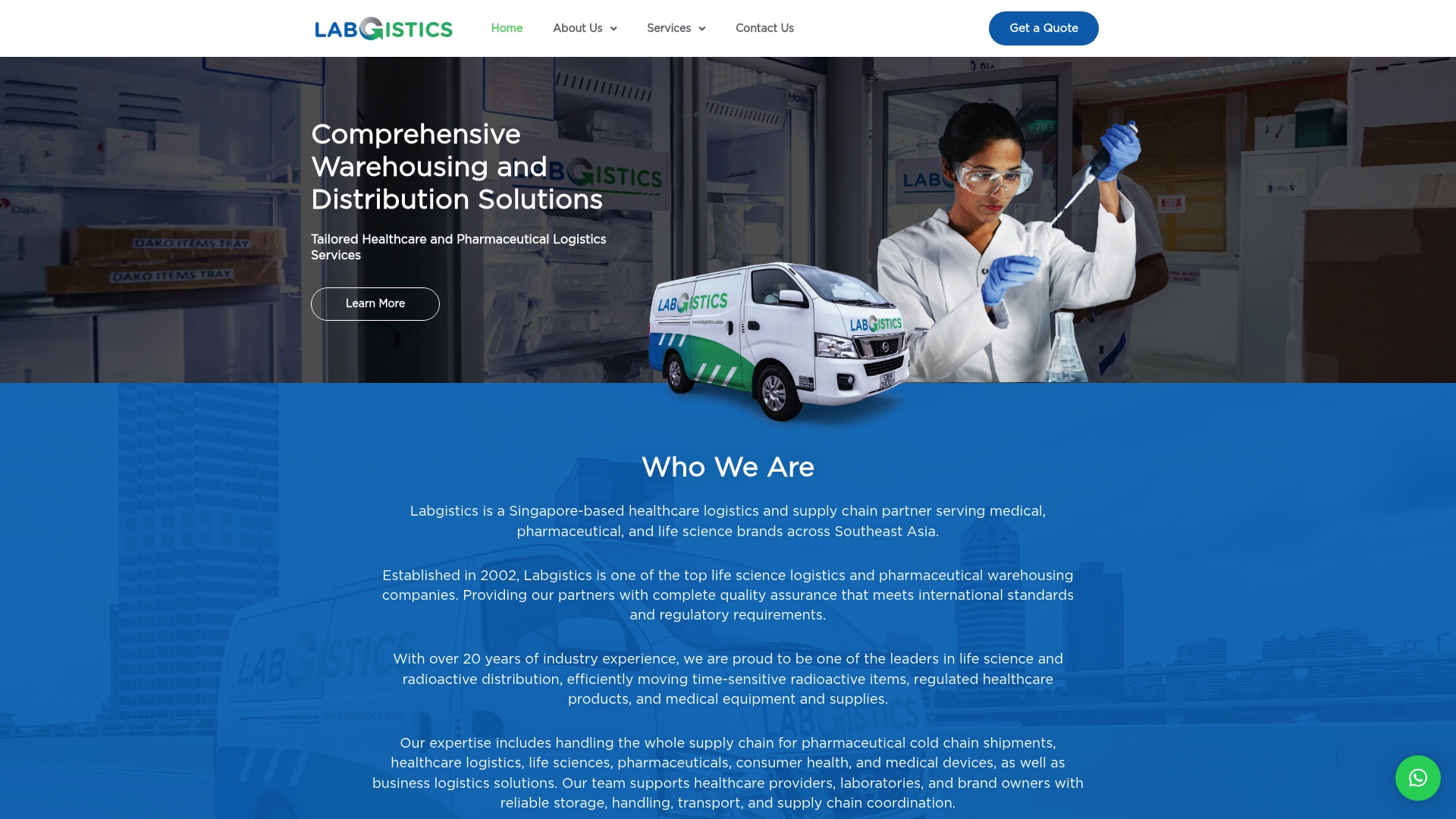
Labgistics Asia delivers exactly that. With fully accredited distribution centers, real-time cold chain monitoring, regulatory support across all major SEA markets, and over 20 years of specialized experience in pharmaceutical and life sciences logistics, we help compliance officers and logistics managers move from checklist to execution with confidence. Explore our cold chain and compliance services and our inventory and quality management solutions to see how tailored logistics partnerships translate directly into audit-ready, patient-safe supply chains across the region.
Frequently asked questions
What are the most critical documents for pharma logistics compliance in Southeast Asia?
The most critical documents include shipping manifests, customs clearance certificates, product permits, temperature logs, and staff SOP training records. Documented procedures and traceability are mandatory for meeting quality assurance standards in SEA pharmaceutical logistics.
How often should cold chain temperature logs be reviewed?
Temperature logs should be reviewed immediately upon receiving each shipment and assessed on a continuous basis during storage. Cold chain integrity monitoring is a daily priority in compliant healthcare logistics operations, not a periodic exercise.
Is sustainability a compliance requirement in SEA healthcare logistics?
Yes, many SEA countries are formalizing sustainability requirements for healthcare warehousing, covering waste handling, packaging standards, and energy efficiency reporting. Sustainable practices are increasingly required rather than simply recommended in medical warehousing operations across the region.
How do companies handle regional regulatory differences within Southeast Asia?
Companies use compliance tracking matrices, regional regulatory audits, and in-country subject matter experts to tailor processes for each market’s requirements. Regulatory compliance in SEA varies significantly by jurisdiction and requires dedicated monitoring rather than a single standardized approach.
Recommended
- Pharma logistics: Ensuring safe distribution and compliance
- Pharma supply chain optimization guide for Southeast Asia
- Healthcare logistics: cold chain and compliance in SE Asia
- Pharmaceutical Distribution Explained: Compliance and Efficiency