
Technical support in healthcare logistics: efficiency, risk, and innovation
Many healthcare executives assume that investing in the latest technology automatically solves their supply chain problems. The reality is more nuanced. Across Southeast Asia, where regulatory environments vary significantly between markets and infrastructure gaps remain a persistent challenge, technical support in healthcare logistics plays a role that goes far beyond installing software or deploying robots. It encompasses process validation, compliance troubleshooting, real-time monitoring, and the disciplined frameworks that hold everything together. This article examines what technical support actually means, what the evidence says about its impact, and how organizations can apply it effectively.
Table of Contents
- Defining technical support in healthcare logistics
- Technology in action: automation, robotics, and process improvement
- Process discipline: why systems matter more than tools
- Applying technical support: Southeast Asian healthcare logistics challenges
- The uncomfortable truth about technical support in healthcare logistics
- How Labgistics supports your healthcare logistics transformation
- Frequently asked questions
Key Takeaways
| Point | Details |
|---|---|
| Beyond technical fixes | Real improvements in healthcare logistics depend on strong process management, not just automation. |
| Discipline drives results | Strategic process discipline can lead to measurable gains in order fulfillment and reduced stockouts. |
| Evidence-backed solutions | Robotics and Lean techniques demonstrate proven efficiency improvements, but system alignment is critical. |
| SEA context matters | Technical support should address unique compliance and risk challenges for Southeast Asia’s healthcare supply chains. |
Defining technical support in healthcare logistics
With the stage set, let’s clarify exactly what technical support means within healthcare logistics. The term is frequently used but rarely defined with precision. In healthcare supply chains, technical support is distinct from operational logistics. Operational logistics covers the day-to-day activities: picking, packing, transporting, and delivering products. Technical support, by contrast, focuses on the systems, processes, and expertise that make those operations reliable, compliant, and continuously improving.
The support functions in logistics that matter most in healthcare include:
- Process validation: Ensuring that every step in the supply chain performs consistently within defined parameters, particularly for temperature-sensitive pharmaceuticals and regulated medical devices.
- Technology implementation: Selecting, deploying, and maintaining digital tools, from warehouse management systems (WMS) to Internet of Things (IoT) sensors for cold chain monitoring.
- Compliance troubleshooting: Identifying and resolving gaps that could trigger regulatory findings from agencies like the Health Sciences Authority in Singapore or the Food and Drug Administration in the Philippines.
- Real-time monitoring: Using data dashboards and automated alerts to detect deviations before they escalate into product losses or patient safety events.
- Staff training and standard operating procedure (SOP) development: Building the human layer of competence that technology cannot replace.
In regulated sectors, these activities are not optional enhancements. They are the infrastructure upon which distribution licenses and product registrations depend. A single temperature excursion in a cold chain shipment or a documentation gap in a batch record can halt an entire product line.
“Applying Lean Six Sigma methodology to medical logistics resulted in order fulfillment improvements from 63.55 minutes down to 61.09 minutes, while stockouts decreased from 10.20 to 9.81 per month — modest but meaningful gains that demonstrate the value of structured process improvement over ad hoc fixes.”
These numbers may appear incremental, but in a healthcare context they represent fewer delayed treatments and reduced risk of stockouts affecting patient care. Protecting supply chain security for pharmaceuticals and medical devices is what makes these small improvements matter enormously.
Technology in action: automation, robotics, and process improvement
Now that we have defined technical support, let’s see what it looks like when cutting-edge technology is put to work. Automation and robotics have moved from pilot projects to practical deployments across healthcare warehouses in Asia. The results are impressive on paper, but context matters.
Research shows that intelligent logistics robots reduced delivery time by 32 to 36 percent, achieved 100 percent verification accuracy, and demonstrated that a 10-robot fleet could cover the equivalent of 7.3 times the trips completed by manual workers. For high-volume pharmaceutical distribution centers, these metrics translate to real gains in throughput and accuracy.
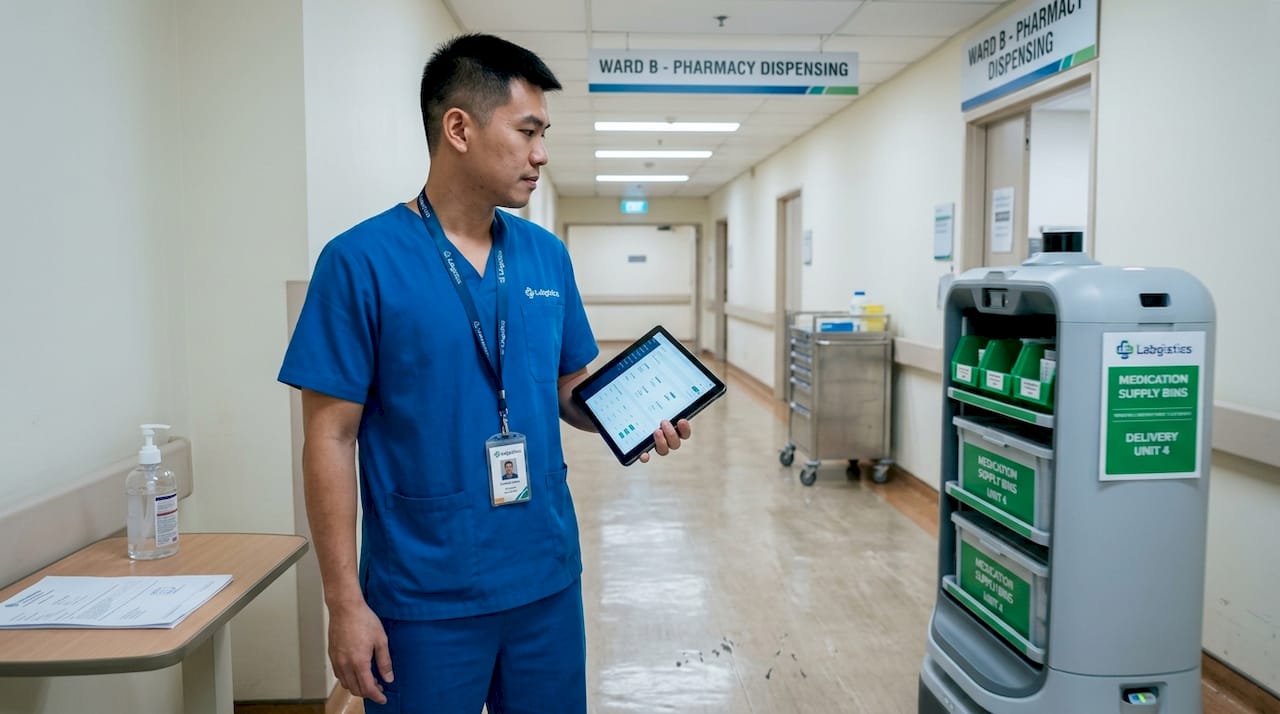
The following table illustrates the measurable difference between legacy manual operations and automated systems in healthcare logistics settings:
| Performance metric | Legacy/manual operations | Automated operations |
|---|---|---|
| Delivery time | Baseline | 32 to 36% reduction |
| Verification accuracy | Variable, human error-dependent | 100% |
| Worker trip equivalent | 1x | 7.3x (10-robot fleet) |
| Stockout frequency | ~10.20 per month | ~9.81 per month |
| Order fulfillment time | 63.55 minutes | 61.09 minutes |
These improvements in inventory management are meaningful, but they do not occur simply by purchasing equipment. A structured deployment process is essential to realizing these gains. Here is a practical sequence for organizations considering technology adoption:
- Needs assessment: Map current pain points in your distribution workflow. Identify where errors, delays, or compliance failures consistently occur. Do not automate a broken process.
- Technology selection: Evaluate options based on your specific product types, regulatory requirements, and infrastructure constraints. A smart 3PL warehouse designed for Singapore may not be the right template for a facility in Vietnam or Indonesia without adaptation.
- Implementation with process integration: Deploy technology alongside updated SOPs. Every new system needs a corresponding procedural framework to define how staff interact with it, how exceptions are handled, and how records are maintained.
- Ongoing evaluation: Set measurable KPIs before go-live. Monitor them consistently and be prepared to iterate. Technology without performance feedback loops stagnates.
Pro Tip: Technology without process discipline leads to underwhelming results. Before selecting any automation platform, document your current workflows in detail and identify the three most frequent failure modes. These are the areas where technology will deliver the most value — and where the risks of poor implementation are highest.
Process discipline: why systems matter more than tools
Despite impressive technology gains, experts highlight that sustainable improvements depend on process discipline. This is the insight that often gets lost in conversations about automation, robotics, and digital transformation.
Research on healthcare logistics automation offers a striking contrast: while robotics promises a 32 percent time reduction in delivery operations, the statistical improvement in stockout rates from Lean Six Sigma was only around 3 percent. That gap between headline efficiency numbers and actual operational outcomes underscores a critical lesson. Technology creates capability. Process discipline converts that capability into consistent, auditable, compliance-ready performance.
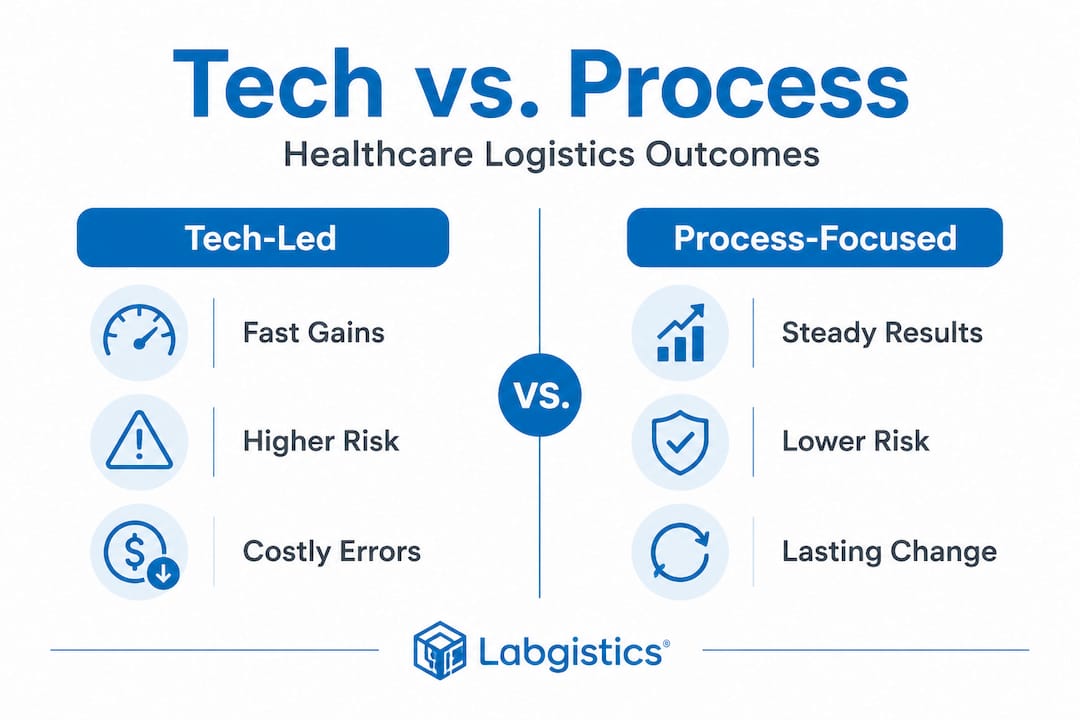
| Initiative type | Typical outcomes | Key risks | Implementation cost |
|---|---|---|---|
| Technology-led | Fast initial gains, high throughput | Over-reliance on systems, gaps in human oversight | High upfront, ongoing maintenance |
| Process-led (Lean Six Sigma) | Steady, sustainable improvement | Slower visible results, requires change management | Moderate, primarily training and consulting |
| Combined approach | Best outcomes over time | Complexity of integration | Higher initial, lower long-term risk |
Validating logistics processes is where process discipline becomes concrete. Validation means more than testing a system once at launch. It means establishing documented evidence that your processes consistently deliver results that meet predetermined specifications, whether that is temperature range maintenance, chain-of-custody documentation, or order accuracy rates.
Strong logistics systems share recognizable characteristics. Organizations that consistently perform well in healthcare supply chain audits typically demonstrate the following:
- Standardization: Every process has a written SOP, and deviations are documented and investigated rather than quietly corrected.
- Audit trails: Digital or paper records support full traceability from manufacturer to end point, meeting the requirements of Good Distribution Practice (GDP) guidelines.
- Continuous feedback: Performance data is reviewed at regular intervals by people with the authority to act on findings, not just observe them.
- Cross-functional accountability: Quality, operations, and regulatory teams share ownership of logistics performance metrics rather than operating in silos.
The advantages of supply chain management built on these principles extend beyond regulatory compliance. They reduce waste, protect product integrity, and build the kind of partner reputation that supports long-term commercial relationships. Incorporating sustainable supply chain practices into this framework also positions organizations to meet growing environmental and governance expectations from multinational principals and institutional buyers.
Applying technical support: Southeast Asian healthcare logistics challenges
With the importance of systems established, let’s apply technical support to Southeast Asia’s distinct landscape. The region presents a combination of opportunities and operational challenges that are genuinely unique. Regulatory requirements differ across 11 countries. Infrastructure quality ranges from Singapore’s world-class facilities to remote rural supply chains in Myanmar or Papua New Guinea. Language, culture, and documentation standards add further complexity.
Technical support interventions for this environment need to be both rigorous and adaptable. Here is a practical framework for applying technical support effectively across the region:
- Compliance audits calibrated to each market: Generic GDP compliance checklists are not sufficient. Effective technical support means understanding the specific registration requirements of BPOM in Indonesia, the FDA Thailand, or Malaysia’s Pharmaceutical Services Programme, and building audit protocols accordingly. What triggers a finding in one market may be acceptable in another.
- Digital tracking for multi-country distribution: Real-time visibility systems must account for varying mobile and internet connectivity across the region. Robust solutions use a combination of GPS tracking, offline data capture, and cloud-based dashboards that sync when connectivity is restored, ensuring chain-of-custody integrity regardless of geography.
- Risk mitigation for regulated product categories: Cold chain pharmaceuticals, biological samples, medical devices, and radioactive materials each carry specific risk profiles. Technical support must include scenario planning and documented contingency procedures for events like power outages, vehicle breakdowns, and customs delays.
- Cold chain validation for temperature-sensitive products: Validation studies must reflect the actual thermal conditions products will encounter during distribution, not idealized laboratory conditions. Mapping studies, qualification runs, and seasonal re-validation are essential elements of a credible cold chain program.
Pro Tip: For pharmaceutical and regulated medical product distribution in Southeast Asia, risk management is the area where technical support delivers the clearest return on investment. A single temperature excursion affecting a high-value biological product can result in losses that exceed the entire annual cost of a properly designed technical support program.
The Lean Six Sigma data showing order fulfillment improvements from 63.55 to 61.09 minutes and stockout reductions from 10.20 to 9.81 per month may seem modest, but in Southeast Asian contexts these efficiencies compound. Fewer stockouts mean fewer emergency procurement events, which are disproportionately costly in markets where alternative supply routes are limited and customs clearance times are unpredictable. Optimizing transportation management across this region requires exactly this kind of disciplined, data-driven approach.
The uncomfortable truth about technical support in healthcare logistics
Let’s step back and consider what experience teaches us, especially in the context of Southeast Asia’s challenges. The healthcare logistics industry spends considerable time discussing technology. Robotics, artificial intelligence, blockchain for supply chain traceability, and IoT-enabled cold chain monitoring all generate significant attention at industry conferences and in vendor presentations.
The uncomfortable truth is that most supply chain failures in the region are not caused by a lack of technology. They are caused by a lack of process discipline. Expired products reaching patients, cold chain excursions going undetected, documentation gaps triggering regulatory holds — these events typically trace back to inadequate SOPs, insufficient training, or accountability structures that allow problems to be ignored rather than addressed.
Technology does not fix a culture that tolerates shortcuts. A sophisticated warehouse management system installed into an organization without disciplined receiving procedures will still generate inaccurate inventory records. A temperature monitoring system without a defined escalation protocol will generate alerts that nobody acts on. The data from calibration and validation research consistently shows that organizations with strong calibration and validation programs outperform those relying on technology investments alone, precisely because calibration and validation are fundamentally about process integrity, not equipment sophistication.
The organizations that consistently perform best in healthcare logistics, whether they are multinational pharmaceutical companies or regional distributors, are not necessarily those with the most advanced technology. They are the ones where every person in the supply chain knows exactly what the standard is, why it matters, and what to do when something falls outside of it. That is what genuine technical support builds. It is less visible than a fleet of autonomous robots, but it is far more durable.
How Labgistics supports your healthcare logistics transformation
For organizations ready to elevate their technical support and transform their healthcare logistics, actionable solutions are within reach. Labgistics Asia brings over 20 years of specialized experience in pharmaceutical and healthcare logistics across Southeast Asia, backed by fully accredited distribution centers and a team that understands both the technical and regulatory dimensions of this sector.
Whether you need to strengthen your risk management strategies, optimize transportation management across multiple Southeast Asian markets, or build a comprehensive logistics strategy for Southeast Asia, Labgistics offers end-to-end support designed specifically for regulated healthcare products. From cold chain validation and process qualification to real-time monitoring and compliance documentation, the team works as a strategic extension of your operations, not just a service provider. Contact Labgistics to discuss how technical support can be integrated into your supply chain for measurable, sustainable results.
Frequently asked questions
How does technical support differ from operational logistics in healthcare?
Technical support focuses on system improvements, technology integration, and compliance frameworks, while operational logistics handles day-to-day transport and distribution. Structured methodologies like Lean Six Sigma, which cut fulfillment time from 63.55 to 61.09 minutes, are examples of technical support applied to operational outcomes.
What technologies are most effective for technical support in healthcare logistics?
Robotics, automation, and digital tracking are highly effective, particularly when paired with disciplined processes and Lean Six Sigma practices. Evidence shows intelligent logistics robots achieving 100 percent verification accuracy and delivery time reductions of 32 to 36 percent in controlled healthcare settings.
Is automation enough to solve supply chain challenges in Southeast Asia?
Automation alone is not enough; process discipline and compliance frameworks are essential for real improvements in healthcare logistics. Research shows that while automation delivers a 32 percent time reduction, statistical gains in stockout rates remain around 3 percent, confirming that process rigor drives sustained outcomes.
How does technical support impact regulatory compliance for pharmaceuticals?
Technical support ensures compliance through real-time monitoring, systematic audits, and validated logistics processes, mitigating risks across the supply chain. Applying structured improvement methodologies has been shown to produce measurable stockout reductions from 10.20 to 9.81 per month, which directly reduces compliance risk exposure.
Recommended
- Business support in healthcare logistics: key functions explained
- Optimize healthcare transportation management for better outcomes
- Top inventory management tips for healthcare logistics
- Logistics risk management: healthcare supply chain strategies