
5 key advantages of supply chain management in healthcare SEA
Supply chain breakdowns in Southeast Asia’s healthcare sector carry consequences that go far beyond delayed shipments. For pharmaceutical and medical device companies operating across multiple markets, a single compliance failure or cold chain breach can trigger product recalls, regulatory penalties, and direct harm to patients. The region’s fragmented regulatory landscape, diverse infrastructure, and rapidly growing healthcare demand make strategic supply chain management (SCM) more urgent than ever. This article maps the core advantages of SCM, from regulatory compliance and cost efficiency to risk mitigation and optimization methodologies, giving healthcare executives a practical framework for building resilient, high-performing supply chains across Southeast Asia.
Table of Contents
- Ensuring regulatory compliance and risk mitigation
- Driving operational efficiency and cost savings
- Proven methodologies for supply chain optimization
- Mitigating edge risks: Single-source dependency and regulatory inconsistencies
- The uncomfortable truth about supply chain management decisions in Southeast Asia
- Next steps: Level up your healthcare supply chain in Southeast Asia
- Frequently asked questions
Key Takeaways
| Point | Details |
|---|---|
| Regulatory confidence | Strong SCM systems make legal compliance seamless and reduce cross-border risks. |
| Cost-efficient operations | Operational efficiency rises and costs fall with optimized regional logistics. |
| Resilient supply chains | Proactive approaches mitigate risks like supplier dependency and regulatory variance. |
| Proven optimization tools | Methodologies like Lean Six Sigma and VSM drive measurable improvements in healthcare logistics. |
Ensuring regulatory compliance and risk mitigation
For pharmaceutical and medical device companies in Southeast Asia, regulatory compliance is not a checkbox. It is a continuous operational requirement that demands structured, well-documented supply chain frameworks. Regulatory supply chain practices show that effective SCM ensures adherence to GDP, GMP, and GSP standards, directly reducing the risk of non-compliance penalties, market access delays, and supply interruptions.
Singapore’s Health Sciences Authority (HSA) serves as a regional benchmark, with its regulatory model increasingly referenced in ASEAN harmonization efforts such as the Common Submission Dossier Template (CSDT). For executives managing multi-country distribution, aligning internal SOPs with Singapore’s standards provides a solid foundation for regional expansion. Understanding the cold chain compliance importance across these markets is essential to building that foundation.
The practical implications of SCM-driven compliance include:
- Standardized documentation across borders, reducing approval timelines
- Temperature and storage monitoring aligned with GDP and GSP requirements
- Audit-ready record-keeping to satisfy country-level inspections
- SOPs that map to ASEAN regulatory frameworks, enabling faster market entry
- Third-party validation of distribution center operations and cold chain processes
When compliance systems are fragmented or manually managed, the exposure multiplies quickly. Addressing smart solutions for pharma logistics becomes critical at this stage, particularly for companies scaling across Vietnam, Thailand, Indonesia, and the Philippines where regulatory variance is significant.
“Supply chain security and regulatory alignment are inseparable in Southeast Asia. A gap in documentation at one node can compromise the integrity of an entire product batch across multiple markets.”
Investing in supply chain security strategies from day one reduces the cost of reactive fixes later. Country-by-country regulatory divergence is one of the most persistent pain points for regional healthcare operators, and proactive SCM frameworks are the most effective mitigation tool available.
Pro Tip: Invest early in cross-border documentation systems that are configurable by country. A centralized platform that adapts output formats to each market’s submission requirements eliminates manual rework and significantly reduces the risk of import rejection.
Once the need for tight regulatory control is clear, it’s equally important to examine how SCM drives measurable operational efficiency.
Driving operational efficiency and cost savings
Beyond compliance, the operational payoff of optimized SCM in Southeast Asia is substantial and measurable. Pharmaceutical supply chain transformation studies confirm that structured SCM improves cost efficiency, delivery speed, and inventory optimization, particularly in regional hubs like Singapore and Vietnam. The numbers validate the investment.

Empirical data from the region tells a clear story. Companies that implement disciplined SCM programs achieve 13-15% transport cost savings in Southeast Asia. Warehouse capacity increases of up to 75% have been documented through logistics masterplanning, and on-shelf availability rates approaching 95% are achievable when demand forecasting is integrated with distribution planning. For context, a study on warehouse efficiency shows that scalable logistics masterplans consistently deliver these outcomes across diverse product categories.
| Efficiency metric | Benchmark outcome | Key driver |
|---|---|---|
| Transport cost reduction | 13-15% savings | Regional hub optimization |
| Warehouse capacity increase | Up to 75% | Scalable logistics masterplan |
| On-shelf availability | Up to 95% | Integrated demand forecasting |
| Inventory cost reduction | Up to $1M annually | Real-time inventory visibility |
| Delivery speed improvement | 20-30% faster | Air freight and hub strategy |
The key operational drivers behind these outcomes include:
- Regional distribution hubs that consolidate inventory and reduce last-mile complexity
- Air freight integration for time-sensitive pharmaceutical shipments
- Supplier partnership agreements that lock in lead times and quality standards
- Real-time inventory visibility linked to cold chain and compliance systems
Addressing supply chain risk management in parallel with efficiency gains ensures that cost savings are not offset by operational disruptions. The two priorities reinforce each other when managed within a unified SCM framework. Understanding key supply chain functions helps executives identify where to invest for maximum return.
Pro Tip: Prioritize real-time data sharing agreements with your third-party logistics partners. Live inventory and temperature data accelerates decision-making during disruptions and prevents costly stockouts or product losses.
With efficiency gains clearly mapped, the next step is selecting the methodologies that make them repeatable and sustainable.
Proven methodologies for supply chain optimization
Strategic SCM in healthcare is not guesswork. The field has a set of well-tested methodologies, and VSM, Lean Six Sigma, and strategic supplier partnerships are consistently cited as the most impactful tools for pharmaceutical and healthcare supply chains in Southeast Asia.
Value Stream Mapping (VSM) visualizes every step in the supply chain, helping teams identify waste, bottlenecks, and redundant steps that inflate costs and delay delivery. Lean Six Sigma applies statistical rigor to process improvement, targeting defect reduction and cycle time compression. Supply chain performance studies confirm that these methodologies, when applied to healthcare logistics, yield measurable quality and cost improvements. Technology-enabled traceability, including AI for supply chain transparency, adds a real-time layer that classical methodologies alone cannot provide.
| Methodology | Implementation speed | Cost level | Primary outcome |
|---|---|---|---|
| Value Stream Mapping | 2-4 weeks | Low | Waste identification |
| Lean Six Sigma | 3-6 months | Medium | Defect and cost reduction |
| AI-enabled traceability | 1-3 months | Medium-High | Real-time visibility |
| Strategic partnerships | Ongoing | Variable | Resilience and flexibility |
For organizations building or restructuring their regional supply chains, a risk-based adoption approach is recommended:
- Map current state using VSM to identify the highest-impact inefficiencies
- Prioritize compliance-critical nodes for Lean Six Sigma process improvement
- Integrate technology for real-time traceability and temperature monitoring
- Build strategic partnerships with 3PL for healthcare logistics providers that understand the regulatory requirements of each market
- Review and iterate on a quarterly basis using defined performance KPIs
Pro Tip: Blend methodologies rather than committing exclusively to one. VSM reveals the problem, Lean Six Sigma fixes it, and technology sustains the improvement. Organizations that deploy all three in sequence report the strongest resilience outcomes.
With these methodologies defined, executives must also account for the structural risks that can undermine even well-designed supply chains in Southeast Asia.
Mitigating edge risks: Single-source dependency and regulatory inconsistencies
Even organizations with mature SCM frameworks face structural vulnerabilities specific to Southeast Asia. Single-source dependency is among the most dangerous. Research in medical device supply chains shows that single-source and regulatory inconsistencies across SEA countries heighten supply shock risks, and concentration levels can reach 97.7% in certain supply categories, leaving manufacturers severely exposed to disruptions at a single supplier or crossing point.
For healthcare executives, the common risk scenarios to monitor include:
- Single-source dependency for active pharmaceutical ingredients or critical device components
- Border delays caused by inconsistent import documentation across different country requirements
- Fragmented regulations that require product re-registration when entering new ASEAN markets
- Infrastructure gaps in emerging markets that affect cold chain integrity during last-mile delivery
- Geopolitical disruptions that interrupt regional trade routes without advance notice
Singapore plays a structurally important role in mitigating several of these risks. Its mature regulatory environment, world-class logistics infrastructure, and status as a regional distribution hub make it the natural anchor point for multi-country supply chain architectures. Executives managing regional cold chain hubs from Singapore can use the city-state as a compliance and quality control gateway before onward distribution.
Multi-sourcing is the primary structural defense against single-source risk. Qualifying two or three suppliers per critical input, even if the primary supplier is preferred, creates the flexibility needed to reroute procurement when disruptions occur. Exploring medical supply risks in SEA in detail allows executives to build country-specific contingency plans rather than relying on generic frameworks.
“ASEAN’s AMDD and CSDT harmonization efforts provide a roadmap for reducing country-by-country regulatory variance, but organizations cannot afford to wait for full harmonization before building their own compliance buffers.”
Faced with both strategic advantages and structural risks, healthcare leaders need an honest appraisal of what SCM success actually requires in this region.
The uncomfortable truth about supply chain management decisions in Southeast Asia
The standard narrative around SCM improvement in Southeast Asia is largely optimistic, and for good reason. The efficiency gains, compliance benefits, and risk reduction tools are real and well-documented. But healthcare executives who approach regional SCM with a one-size-fits-all mindset are taking a risk that rarely appears in whitepapers.
Southeast Asia is not a single market. It is ten distinct regulatory environments, each with different infrastructure maturity levels, political dynamics, and enforcement priorities. A strategy that performs well in Singapore may underperform significantly in Indonesia or Myanmar. Contrasting SCM outcomes show that over-reliance on external partners or underestimating local regulatory complexity can produce mixed and sometimes negative results.
Technology adoption, including AI-driven visibility and 3PL partnerships, creates genuine value. But it also creates dependency. Executives who treat technology as a substitute for regulatory expertise or local market knowledge often discover the gap at the worst possible moment, during a product recall or a customs dispute. Examining real-world risk scenarios in each target market before committing to a single operational model is not optional. It is the baseline standard for responsible SCM governance in this region.
The executives who build the most resilient supply chains here are not the ones who adopt the most sophisticated tools. They are the ones who balance innovation with rigorous oversight and never stop questioning their assumptions.
Next steps: Level up your healthcare supply chain in Southeast Asia
Building a compliant, efficient, and resilient healthcare supply chain in Southeast Asia requires the right operational partner alongside the right strategy.
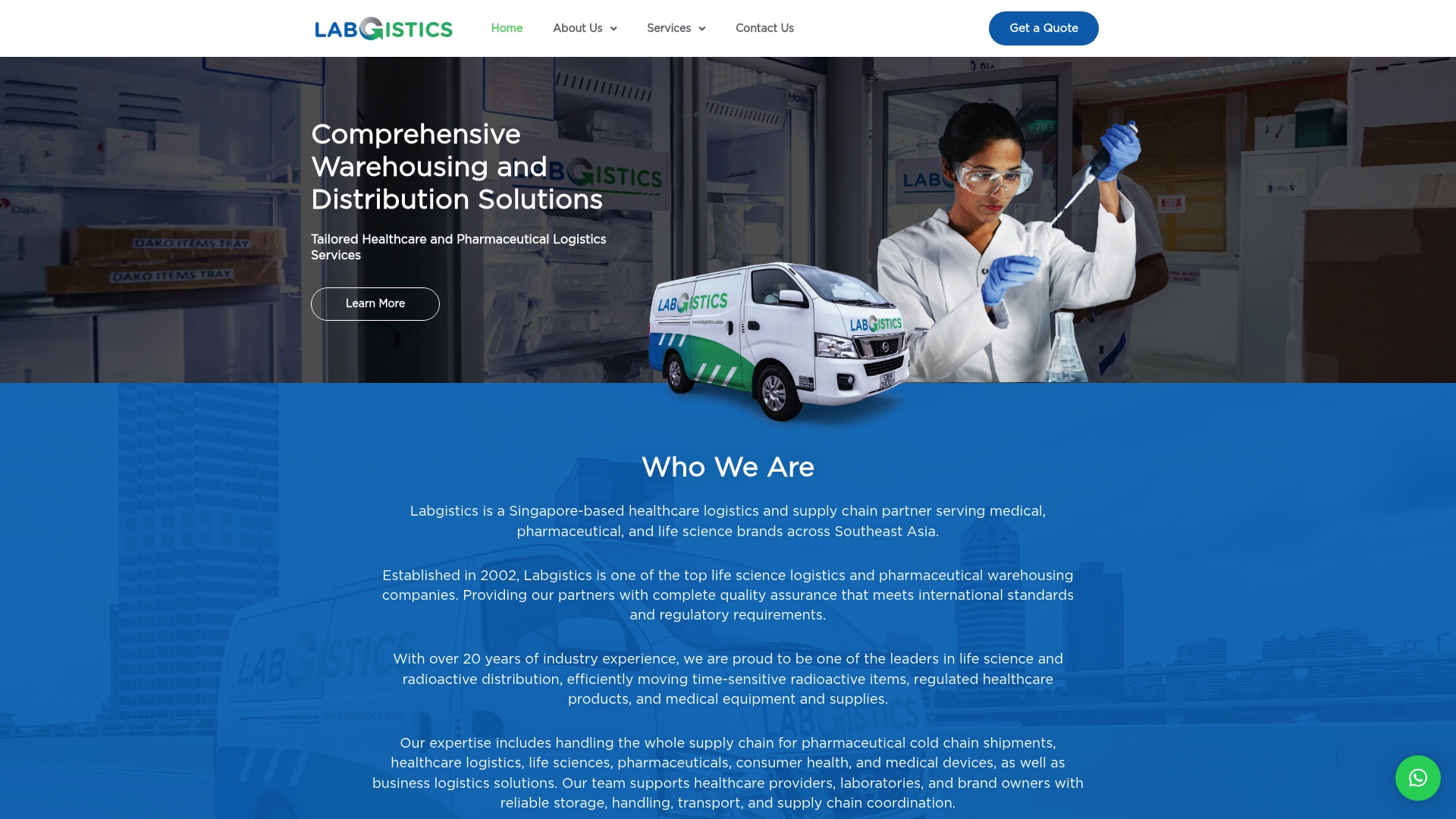
Labgistics Asia brings over 20 years of specialized experience in pharmaceutical and medical device logistics across the region. Whether your priority is cold chain and compliance for temperature-sensitive products or end-to-end distribution management across multiple ASEAN markets, Labgistics provides tailored solutions built on proven regulatory expertise. From accredited distribution centers to real-time inventory management and cross-border compliance support, the platform is designed for organizations that cannot afford gaps. To optimize healthcare transportation outcomes and take the next step toward supply chain excellence, connect with the Labgistics team today.
Frequently asked questions
How does supply chain management help meet regulatory requirements in Southeast Asia?
SCM provides systematic processes and documentation frameworks that support adherence to GDP, GMP, and GSP standards, as well as ASEAN CSDT requirements, minimizing non-compliance risk across multiple markets.
What are the top operational gains from advanced supply chain management in healthcare?
Companies typically achieve 13-15% transport cost savings alongside substantial inventory reductions and faster delivery times when optimized SCM is implemented across Southeast Asian distribution networks.
How can organizations reduce single-source dependency in their supply chains?
Diversifying to two or three qualified suppliers per critical input and leveraging regional hubs like Singapore as distribution anchors reduces supply shock risk significantly during disruptions.
What methodologies are best for supply chain optimization in pharma and medical devices?
VSM, Lean Six Sigma, and partnerships represent the most consistently effective combination for healthcare logistics, particularly when layered with technology-enabled traceability for real-time visibility.
Recommended
- Smart 3PL Warehouses and Inventory Management | Labgistics
- Business support in healthcare logistics: key functions explained
- Optimize healthcare transportation management for better outcomes
- Healthcare logistics: cold chain and compliance in SE Asia