Controlled Substances Logistics: A Compliance Guide for 2026
Controlled substances logistics is defined as the set of regulated procedures, controls, and documentation practices applied to the handling, storage, and transportation of controlled drugs within healthcare and pharmaceutical supply chains. The industry term most compliance officers use is “controlled substances supply chain management,” though both phrases describe the same tightly audited process. The Controlled Substances Act classifies drugs into five schedules based on medical use and abuse potential, and that classification directly determines every logistics and handling requirement downstream. Failure to meet those requirements carries criminal liability, not just regulatory fines. For logistics professionals and compliance officers operating in healthcare, understanding this framework is the foundation of every decision you make.
What is controlled substances logistics and why does it matter?
Controlled substances logistics is more than transportation. It is a tightly audited process that spans procurement, warehousing, distribution, and destruction, with legal accountability at every stage. The Drug Enforcement Administration (DEA) in the United States and equivalent regulatory bodies globally set the rules, and those rules apply to every party in the supply chain, including third-party logistics (3PL) providers.
The stakes are high because controlled substances carry significant diversion risk. Diversion means any controlled drug that leaves the legal supply chain and reaches unauthorized hands. A single undocumented discrepancy can trigger a DEA audit, license suspension, or criminal prosecution. This is why healthcare logistics for controlled substances requires a level of documentation and oversight that far exceeds standard pharmaceutical distribution.

The scope of this discipline covers Schedule I through Schedule V substances. Schedule I drugs have no accepted medical use and the highest abuse potential. Schedule V drugs have accepted medical uses and the lowest abuse potential. Each schedule carries different storage, handling, and reporting requirements, which means a logistics operation managing multiple schedules must maintain parallel compliance tracks simultaneously.
What are the key regulatory and documentation requirements?
The legal framework for controlled substances logistics centers on the Controlled Substances Act and its implementing regulations. DEA registration is mandatory for every entity that manufactures, distributes, dispenses, or stores controlled substances. That registration must match the physical location and the specific schedules handled.
Shipping controlled substances across borders requires five essential documents: a commercial invoice, a packing list, a dangerous goods declaration, an export license, and a certificate of origin. Each document must include substance names, UN numbers, and quantities, and all must reflect 2025/2026 regulatory updates. Missing or inaccurate documentation is the most common cause of shipment delays and regulatory citations.
The five mandatory shipping documents are:
- Commercial invoice: Lists the substance, quantity, value, and parties involved in the transaction.
- Packing list: Details the physical contents of each package, including weight and volume.
- Dangerous goods declaration: Confirms the substance meets international transport safety standards under IATA or IMDG codes.
- Export license: Issued by the relevant national authority, authorizing the cross-border movement of the controlled substance.
- Certificate of origin: Verifies the country where the substance was manufactured or processed.
Pro Tip: Review your documentation against the current DEA and International Narcotics Control Board (INCB) requirements at least 90 days before any new shipping lane opens. Regulatory updates often take effect mid-year and can invalidate previously approved document templates.
The table below summarizes the primary regulatory bodies and their core documentation mandates:
| Regulatory Body | Jurisdiction | Core Requirement |
|---|---|---|
| DEA | United States | Registration, Form 222 or CSOS, Schedule II ordering |
| INCB | International | Import/export authorization for Schedule I and II |
| HSA | Singapore | Product registration and controlled drug licenses |
| MHRA | United Kingdom | Controlled drug licenses and SOPs |
| PIC/S GDP | Global | Good Distribution Practice for pharmaceuticals |
What types of controlled substance logistics models exist?
Three primary operational models govern how organizations manage the supply chain for controlled drugs. Each model carries distinct compliance responsibilities.
Direct physical handling means the organization takes possession of the controlled substance at every stage. This model gives the organization full visibility and control, but it also places the full burden of DEA registration, secure storage, and record-keeping directly on that entity. Hospitals, retail pharmacies, and licensed distributors typically operate this way.
Virtual supply chain management applies to organizations that coordinate the movement of controlled substances without ever taking physical possession. These entities must still maintain SOPs and formal documented agreements with their 3PL partners to avoid liability. Regulators do not accept “we never touched it” as a defense if the organization directed the transaction.
Third-party logistics (3PL) partnerships represent the most common model for pharmaceutical companies entering new markets. The 3PL takes physical custody and handles storage, order fulfillment, and transportation. However, the Technical Agreement between the 3PL and the contracting organization must clearly define who holds responsibility for each compliance obligation. Regulators reject ambiguity in security and reporting responsibilities, and that ambiguity increases compliance risk for both parties.
Key responsibilities that Technical Agreements must address:
- DEA registration and license maintenance
- Secure vault or cage storage specifications
- Inventory reconciliation frequency and method
- Discrepancy reporting timelines and escalation paths
- Destruction authorization and dual-verification protocols
Pro Tip: When drafting a Technical Agreement with a 3PL, assign each compliance obligation to a named role, not just a company. Ambiguity about which team handles a DEA audit request has ended partnerships and triggered regulatory action.
How is technology transforming controlled substances logistics?
Digital transformation in controlled substances management is real but uneven. Over 50% of DEA registrants still rely on paper DEA Form 222 for Schedule II ordering. That figure shows how much of the industry remains on manual processes despite the availability of the electronic Controlled Substance Ordering System (CSOS).
Shifting from paper Form 222 to CSOS can reduce order return cycle times by 30–50%. That efficiency gain matters because delayed orders for Schedule II substances directly affect patient care. Hospitals and 3PL warehouses that have adopted CSOS report faster order processing, fewer transcription errors, and significantly improved audit readiness.
The benefits of digital adoption extend beyond ordering:
- Automated inventory reconciliation reduces the manual effort of matching purchase orders to receipts and flags discrepancies in real time.
- Electronic audit trails replace paper logs that can be lost, damaged, or altered, giving compliance officers a complete and tamper-evident record.
- Digital destruction records capture dual-verification signatures electronically, satisfying regulatory requirements without physical paperwork.
- Integration with 3PL warehouse management systems allows the contracting organization to monitor controlled substance inventory remotely without requiring physical presence.
One critical compliance nuance: regulatory bodies expect a hard copy of all SOPs to be maintained on site, even when digital records are the primary system. Hard copies serve as the fallback during system outages and are the first document an auditor requests. Organizations that have gone fully paperless on SOPs have faced citations during inspections.
The biopharma sector’s digital innovation trends point toward greater use of blockchain for chain-of-custody verification and AI-assisted anomaly detection in controlled substance inventory. These tools are moving from pilot programs to operational deployment in 2026, particularly among enterprise-level pharmaceutical distributors.
What are best practices for managing controlled substances throughout the supply chain?
Effective controlled substances management depends on structured processes applied consistently across every node in the supply chain. The following practices represent the standard that regulators and accreditation bodies expect.
-
Conduct routine narcotic audits. Routine narcotic audits and complete controlled substance logs are the primary defense against diversion. Audits should occur at a frequency matched to the volume and schedule of substances handled. High-volume Schedule II operations warrant daily reconciliation.
-
Maintain complete controlled substance logs. Every receipt, dispensing event, transfer, and destruction must be logged with date, time, quantity, and the identity of the responsible party. Gaps in logs are treated as potential diversion events by regulators.
-
Implement documented destruction policies. Witnessed destruction and dual verification create an accountable chain of custody. Two authorized individuals must be present and must sign the destruction record. Electronic capture of these signatures is acceptable under current DEA guidance.
-
Coordinate across clinical and logistics teams. Effective management requires collaboration among doctors, pharmacy staff, and logistics providers, with continuous auditing to manage destruction, storage, and distribution. Siloed operations create blind spots that diversion exploits.
-
Invest in staff education. Compliance failures in controlled substances logistics are most often caused by staff who did not know the rule, not staff who intentionally broke it. Regular training on DEA regulations, SOP updates, and reporting obligations reduces this risk materially.
Pro Tip: Schedule unannounced internal audits at least quarterly. Announced audits reveal what staff do when they know they are being watched. Unannounced audits reveal what actually happens day to day.
Logistics professionals managing healthcare supply chain risk should also build a discrepancy resolution protocol into their SOPs. Every discrepancy, no matter how small, must be investigated, documented, and resolved within a defined timeframe. Unresolved discrepancies compound into patterns that regulators interpret as systemic failures.
Key Takeaways
Controlled substances logistics requires documented accountability at every stage, from procurement through destruction, with no tolerance for ambiguity in regulatory responsibilities.
| Point | Details |
|---|---|
| Regulatory classification drives requirements | The CSA’s five schedules determine storage, handling, and reporting obligations for every controlled substance. |
| Five documents are mandatory for shipment | Commercial invoice, packing list, dangerous goods declaration, export license, and certificate of origin are all required. |
| Technical Agreements must assign clear roles | 3PL partnerships require explicit responsibility assignments to avoid regulatory risk and audit failures. |
| Digital adoption reduces cycle times significantly | Shifting from paper Form 222 to CSOS cuts order return times by 30–50%, improving both efficiency and audit readiness. |
| Continuous auditing prevents diversion | Routine narcotic audits, complete logs, and dual-verified destruction records are the core defense against supply chain diversion. |
The compliance gap that most logistics teams underestimate
The most persistent problem in controlled substances logistics is not the complexity of the regulations. The regulations are detailed, but they are knowable. The real problem is the gap between what a Technical Agreement says and what actually happens on the warehouse floor.
I have seen operations where the 3PL contract clearly assigned discrepancy reporting to the contracting organization, but the warehouse staff had no idea that obligation existed. The 3PL team assumed the client handled it. The client assumed the 3PL flagged it. Neither team had trained the other. When a DEA audit arrived, both parties were exposed.
The lesson is that compliance in controlled substances management is an interprofessional discipline. It requires clinical teams, pharmacy staff, logistics coordinators, and 3PL operations managers to share a common understanding of the rules and their specific roles. A Technical Agreement is not a compliance program. It is a starting point.
The organizations that perform best in DEA audits are the ones that treat their 3PL partners as an extension of their own compliance team, not as a vendor at arm’s length. They conduct joint training, share audit results, and review SOPs together. That level of integration is what the pharma supply chain demands in 2026, and it is what regulators increasingly expect to see documented.
— Brandcore
Labgistics: specialized healthcare logistics built for compliance
Logistics professionals managing controlled substances need a partner with the infrastructure, regulatory knowledge, and documented processes to meet DEA and international standards without gaps.
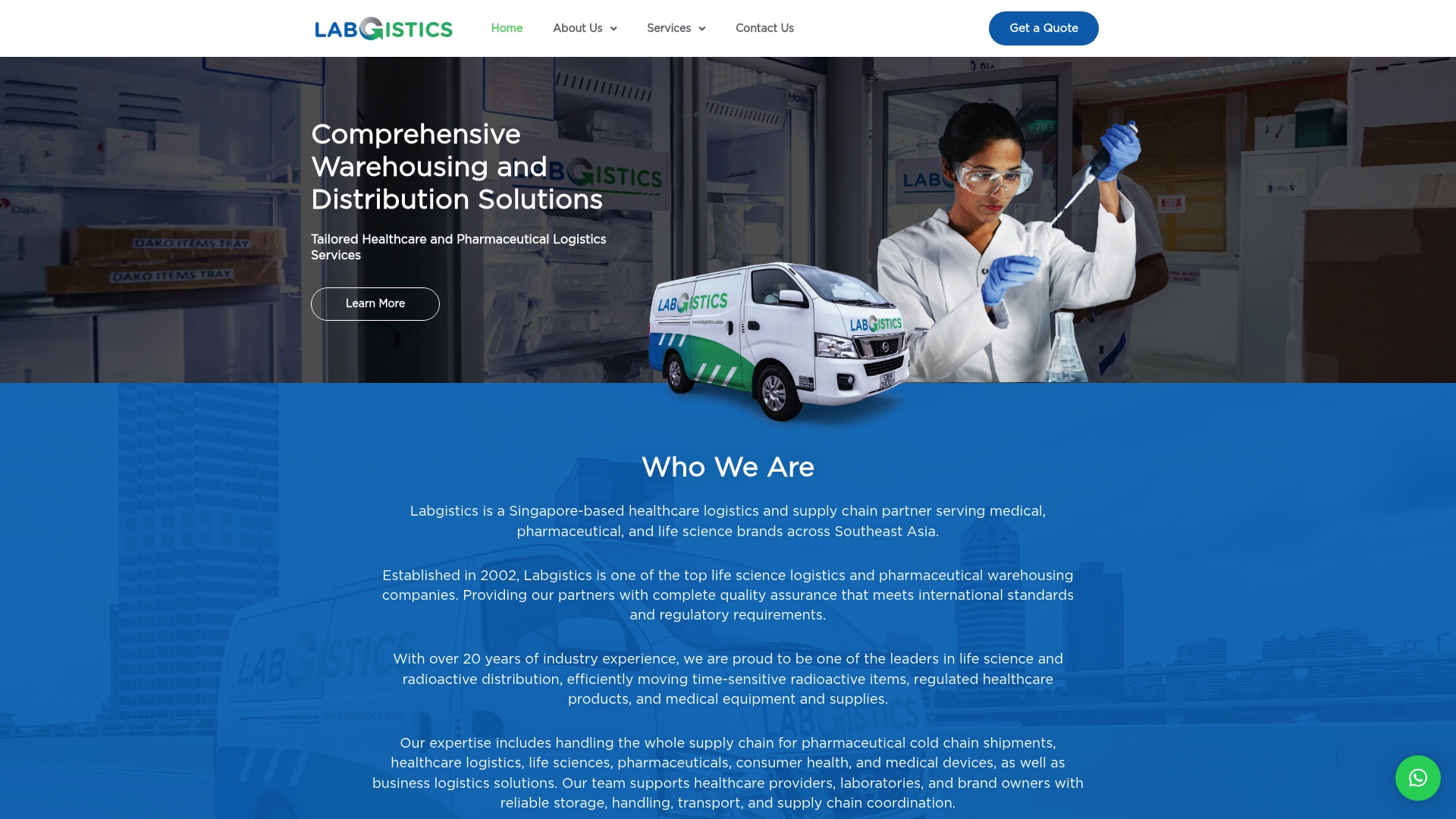
Labgistics brings over 20 years of experience in specialized healthcare logistics across Southeast Asia, with fully accredited distribution centers, validated cold chain capabilities, and regulatory support designed for pharmaceutical and life science supply chains. The team handles controlled and regulated healthcare items with documented SOPs, trained staff, and the audit-ready systems that compliance officers require. For organizations entering or expanding in Southeast Asia, Labgistics also provides regulatory services and market access support to align logistics operations with local and international requirements. Contact Labgistics to discuss how its end-to-end capabilities can support your controlled substances supply chain.
FAQ
What is controlled substances logistics?
Controlled substances logistics is the regulated process of handling, storing, transporting, and documenting controlled drugs within healthcare and pharmaceutical supply chains. It requires DEA registration, strict documentation, and continuous auditing to prevent diversion and maintain legal compliance.
What documents are required to ship controlled substances?
Shipping controlled substances requires five documents: a commercial invoice, packing list, dangerous goods declaration, export license, and certificate of origin. Each must include substance names, UN numbers, and quantities aligned with current regulations.
What is the difference between CSOS and DEA Form 222?
DEA Form 222 is the traditional paper-based ordering system for Schedule II controlled substances. The Controlled Substance Ordering System (CSOS) is its electronic equivalent, which reduces order return cycle times by 30–50% and improves audit readiness.
Do virtual organizations need DEA registration for controlled substances?
Virtual organizations that direct the movement of controlled substances without physical possession still require formal SOPs and documented Technical Agreements with their 3PL partners. Regulators hold these organizations accountable even without direct physical custody.
How often should controlled substance audits be conducted?
Audit frequency depends on the volume and schedule of substances handled. High-volume Schedule II operations require daily reconciliation. All operations should conduct unannounced internal audits at least quarterly to verify that day-to-day practices match documented SOPs.
Recommended
- Hazardous Materials Logistics: A Compliance Guide for 2026
- Chain of Custody in Logistics: A 2026 Compliance Guide
- Controlled Room Temperature Logistics: A Pharma Guide
- Medical Device Regulatory Compliance Guide for 2026