
End-to-end supply chain explained: Healthcare in Southeast Asia
Healthcare supply chains in Southeast Asia face a defining pressure: a single gap in coordination can mean the difference between a patient receiving a lifesaving biologic on time or not at all. Many organizations operating across the region treat supply chain management as a series of separate functions rather than one integrated system, and that fragmented thinking creates costly vulnerabilities. This guide clarifies exactly what end-to-end supply chain management means in healthcare, maps the specialized challenges across Southeast Asia, and provides practical strategies for building a supply chain that is resilient, compliant, and genuinely fit for purpose.
Table of Contents
- What is an end-to-end supply chain?
- Unique challenges for healthcare supply chains in Southeast Asia
- Integration across supply chain stages: Key benefits and strategies
- Reverse logistics and after-sales support: Closing the loop in healthcare
- A fresh perspective: What most supply chain guides overlook
- Next steps: Explore healthcare supply chain solutions
- Frequently asked questions
Key Takeaways
| Point | Details |
|---|---|
| Integrated process, not siloed | End-to-end supply chain management connects every stage for seamless delivery and visibility. |
| Healthcare-specific challenges | Regulatory compliance, cold chain needs, and detection of counterfeits make healthcare supply chains uniquely complex. |
| Strategic integration is vital | Smart integration across all supply chain partners and stages drives efficiency and risk reduction for medical products. |
| Reverse logistics protects patients | Recalls, returns, and after-sales support close the loop and maintain safety and trust. |
What is an end-to-end supply chain?
Healthcare professionals and supply chain managers often use the term loosely, but precision matters. An end-to-end supply chain is a holistic, integrated management approach encompassing all stages from raw material sourcing and procurement through manufacturing, inventory management, logistics, distribution, delivery, and after-sales support including reverse logistics, ensuring seamless data flow, visibility, and collaboration across all functions and partners to optimize efficiency, resilience, and customer satisfaction.
In healthcare, that definition carries serious operational weight. Every stage must connect without information gaps, because a delay or error at any single point can affect product integrity, regulatory standing, and patient outcomes. The E2E model treats the supply chain not as a relay race of independent handoffs but as a continuously managed system where each participant shares data and accountability.
The stages of a healthcare E2E supply chain
| Stage | Core activities | Healthcare-specific priorities |
|---|---|---|
| Sourcing and procurement | Supplier selection, contract management | Qualified supplier audits, GMP verification |
| Manufacturing | Production, quality control | Batch record integrity, contamination control |
| Inventory management | Stock levels, expiry tracking | FEFO (first expiry, first out) protocols |
| Inbound logistics | Transportation, customs clearance | Cold chain continuity, import permits |
| Warehousing | Storage, handling | Temperature-controlled facilities, GDP compliance |
| Distribution | Order fulfillment, last-mile delivery | Serialized product tracking, chain of custody |
| After-sales support | Returns, recalls, customer service | Safe disposal, regulatory reporting |
The key benefit of operating this way is resilience and agility. When disruption occurs, whether from a supplier failure, a regulatory hold, or a transport delay, integrated systems allow teams to identify the problem quickly and reroute resources before the impact escalates.
“Supply chain visibility is not a feature. It is a prerequisite for safe healthcare delivery, particularly when temperature-sensitive products and regulated pharmaceuticals are involved.”
Key outcomes that E2E integration delivers in healthcare include:
- Reduced product spoilage from undetected temperature excursions
- Faster response to regulatory inspections and audits
- Lower rates of stockouts for critical medicines and devices
- Consistent documentation supporting healthcare supply chain security
- Greater predictability for procurement planning across multiple markets
Understanding the structure is the foundation. But the true test is how this model performs against the specific realities of Southeast Asia.
Unique challenges for healthcare supply chains in Southeast Asia
Understanding the E2E concept, it’s crucial to explore the specialized obstacles healthcare supply chains face in Southeast Asia. The region spans eleven countries with distinct regulatory frameworks, infrastructure conditions, and healthcare market structures. What works in Singapore may need significant adaptation for distribution into Indonesia, Vietnam, or Myanmar.
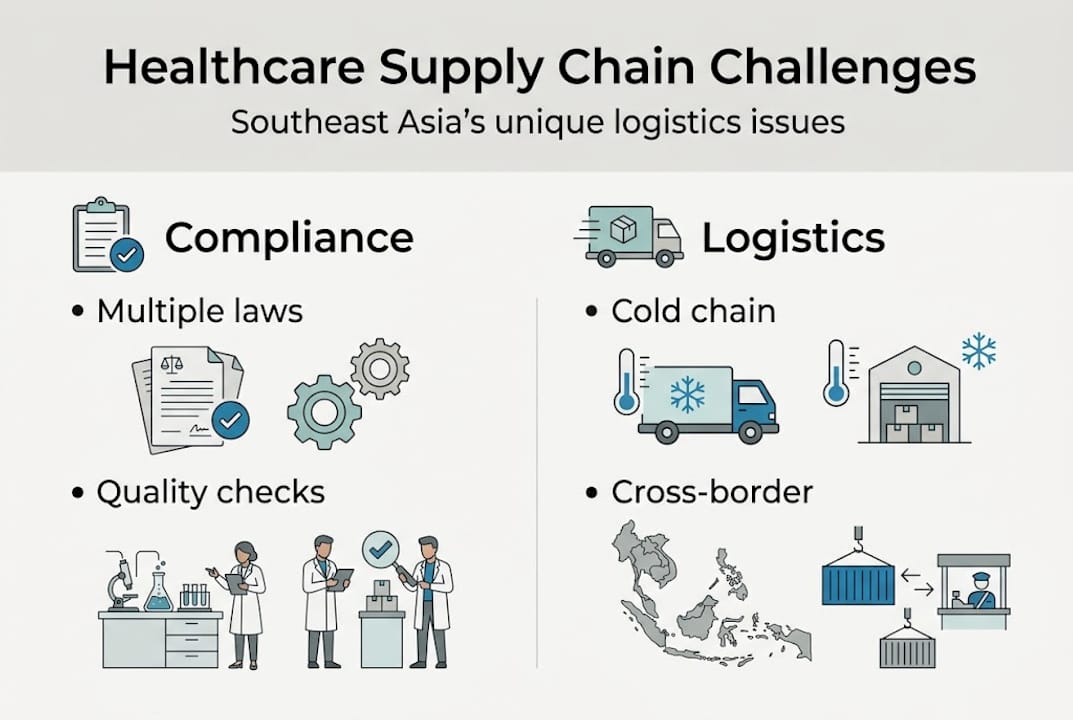
Pharmaceutical and medical E2E supply chains must address unique challenges: strict regulatory compliance covering standards such as FDA, EMA, EU MDR, GMP, and GDP; temperature-sensitive cold chain requirements for biologics and vaccines; complex global manufacturing networks; product sensitivity to environmental factors; ethical imperatives for timely delivery; and serialization for track-and-trace to prevent counterfeits.
How pharma supply chains differ from other industries
| Factor | Pharmaceutical and medical supply chains | General consumer goods supply chains |
|---|---|---|
| Regulatory oversight | Multiple concurrent frameworks (GMP, GDP, EMA, FDA) | General trade compliance |
| Temperature control | Mandatory for many products, with strict tolerance limits | Recommended for some perishables |
| Serialization | Legally required in many markets for track-and-trace | Not typically required |
| Recall protocols | Strict timelines and public health reporting obligations | Voluntary in many categories |
| Product sensitivity | High: light, humidity, vibration can degrade products | Low to moderate |
| Consequence of failure | Patient harm, regulatory sanction, license suspension | Financial loss, reputational damage |
The disparity is clear. For healthcare supply chain managers in Southeast Asia, the margin for operational error is far narrower than in most other sectors.
Cold chain management represents one of the most demanding areas. Vaccines, insulin, monoclonal antibodies, and certain diagnostics must stay within defined temperature ranges from the point of manufacture through final delivery. Maintaining that integrity across the region’s tropical climate, long transit corridors, and variable port infrastructure requires purpose-built systems and verified procedures. Organizations that prioritize cold chain compliance from the outset reduce excursion risk substantially.
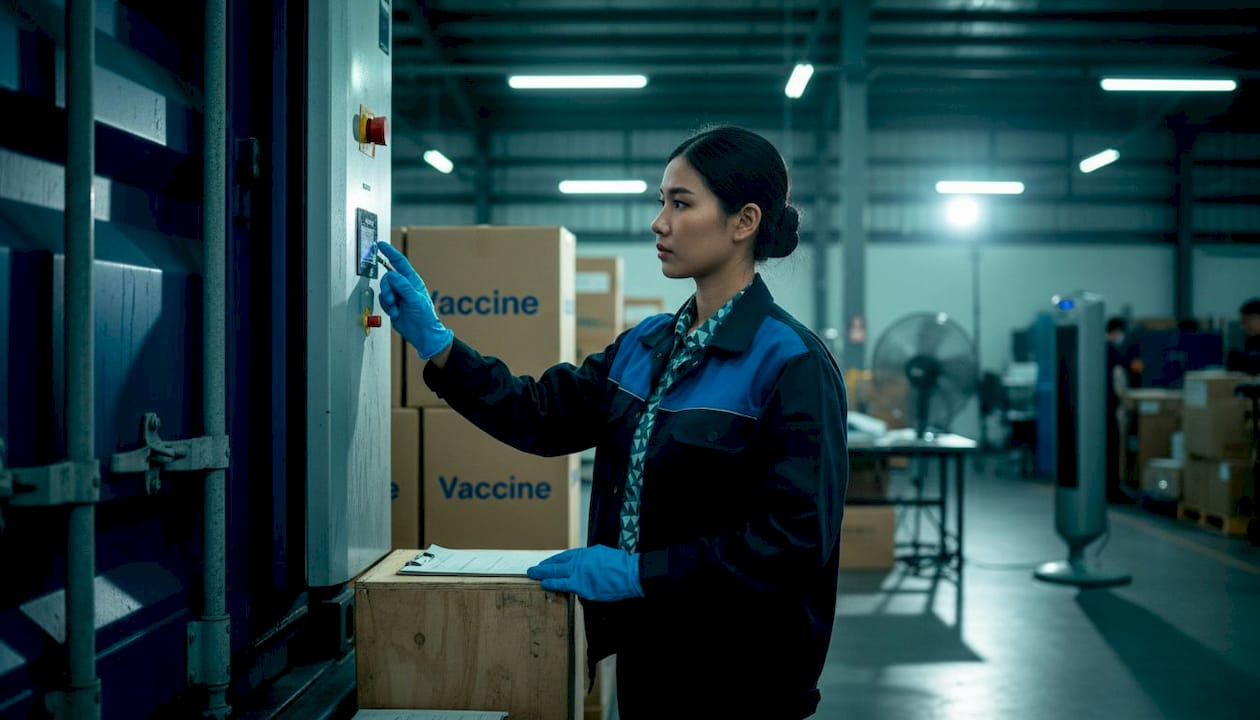
Counterfeit medicines are another serious concern. The World Health Organization estimates that substandard and falsified medical products are a significant threat in low and middle-income countries, many of which are in Southeast Asia. Serialization, meaning the assignment of a unique identifier to each product unit, enables track-and-trace across the entire chain and is now a regulatory requirement in several markets. Investing in this capability early also builds credibility with regulators and customers alike.
Supply chain managers should also recognize the advantage of supply chain management specific to healthcare: when done well, it directly supports access to care and protects public health, giving it a strategic value that goes well beyond cost reduction.
Pro Tip: Conduct a regulatory audit across every market you distribute to before finalizing your distribution network design. Regulatory requirements in Thailand, Malaysia, the Philippines, and Vietnam each have distinct timelines and documentation standards. Mapping these upfront prevents costly redesigns later.
Integration across supply chain stages: Key benefits and strategies
These challenges can be addressed through robust integration strategies. Let’s examine how this works in practice, because the benefits of genuine integration are measurable and well-documented across the healthcare sector.
A truly integrated E2E supply chain ensures seamless data flow, visibility, and collaboration across all functions and partners to optimize efficiency, resilience, and customer satisfaction. For healthcare organizations in Southeast Asia, that integration translates directly into fewer stockouts, faster recalls when needed, and stronger audit readiness.
Core integration strategies for healthcare supply chains
-
Implement a unified digital platform. A single system connecting procurement, warehouse management, transportation, and compliance tracking eliminates the data silos that cause most supply chain failures. Platforms that integrate with ERP systems and provide real-time inventory visibility are particularly valuable when managing products across multiple countries with different regulatory requirements.
-
Establish real-time data sharing with all supply chain partners. Sharing temperature logs, shipment status, and inventory levels in real time between manufacturers, 3PL (third-party logistics) providers, distributors, and end-point facilities creates the transparency needed for proactive decision-making. When a temperature alert triggers at a warehouse in Kuala Lumpur, the right people need to know within minutes, not hours.
-
Build structured partner collaboration protocols. Integration is not only a technology problem. It requires formal agreements on data formats, escalation paths, communication timelines, and performance metrics. Quarterly cross-partner reviews should cover key performance indicators such as on-time delivery rates, order accuracy, cold chain compliance rates, and regulatory incident frequency.
-
Develop contingency plans for each supply chain stage. Every node in the supply chain needs a defined backup procedure. This includes alternate approved suppliers, secondary warehousing options, and pre-negotiated transport agreements with backup carriers. For organizations managing pharma logistics challenges across multiple Southeast Asian markets, having tested contingency protocols is the difference between a manageable disruption and a critical product shortage.
-
Conduct regular end-to-end supply chain simulations. Tabletop exercises that simulate recall events, supplier failures, or border closure scenarios help teams identify weak points before they become real problems. These exercises are also valuable for training new staff and maintaining procedural readiness across partner organizations.
“Integration is not achieved the day a new platform goes live. It becomes real when every partner acts on shared data in real time, without waiting for someone else to escalate.”
The benefits of executing these strategies consistently include:
- Optimized inventory levels with less overstocking of expiry-sensitive products
- Reduced order errors through automated validation at each handoff
- Enhanced patient safety through continuous product integrity monitoring
- Stronger regulatory defensibility with complete, auditable documentation trails
Organizations that strengthen pharma supply chains through integration also report lower total logistics costs over time, because proactive visibility prevents the expensive emergency responses that fragmented systems require.
Pro Tip: Invest in interoperable technology from the start. Systems that cannot communicate with your partners’ platforms force manual workarounds, which introduce exactly the kind of errors and delays that integrated supply chains are designed to eliminate.
Reverse logistics and after-sales support: Closing the loop in healthcare
Integrated supply chains don’t just end with delivery. Reverse logistics and after-sales support are vital to healthcare E2E success, and they are frequently underestimated in supply chain planning.
The same E2E framework that covers sourcing, manufacturing, and distribution also encompasses after-sales support including reverse logistics, ensuring seamless data flow and collaboration across all functions and partners. In healthcare, this closing loop carries regulatory, financial, and ethical weight.
Key reverse logistics processes in healthcare
- Product recall management: Rapid identification of affected batch numbers, coordinated removal from distribution channels, and documented destruction or quarantine following regulatory guidelines
- Expired product returns: Systematic collection of expired medicines or devices from hospitals, clinics, and pharmacies, with documentation to support regulatory reporting
- Damaged goods handling: Segregation and safe disposal of products that fail quality checks during transportation or storage, with full documentation for insurance and compliance purposes
- Customer communication: Proactive notification to end-point facilities during recalls, including clear instructions on product quarantine, return procedures, and replacement timelines
- Reverse shipment logistics: Coordinating the physical return of products from distributed locations back to centralized facilities, including cross-border returns where applicable
- Regulatory reporting: Timely submission of recall and adverse event reports to relevant national health authorities in each market
“A well-executed product recall, while disruptive, can preserve public trust in a brand if handled transparently and efficiently. A poorly managed recall, on the other hand, can cause lasting reputational and regulatory damage that far outweighs the original product issue.”
After-sales support in healthcare also includes ongoing customer communication, issue resolution, and performance reporting. Hospitals and healthcare providers rely on their logistics partners for accurate, timely information about product availability, expiry schedules, and any quality concerns. Strong business support for healthcare logistics functions enable organizations to maintain these relationships with confidence.
Reverse logistics compliance is not optional. Regulatory authorities in Singapore, Malaysia, Thailand, and the Philippines all require documented procedures for product recalls and returns. Having these processes integrated into your E2E system from day one means you are not building them under pressure when a recall event actually occurs. The organizations that manage recalls with the least disruption are those that have rehearsed and documented the process well in advance.
A fresh perspective: What most supply chain guides overlook
Most E2E supply chain guides focus on technology and process frameworks, and those are important. But what experienced professionals in Southeast Asia know is that integration fails most often not because of missing software, but because of missing human coordination.
Cross-border supply chain management in this region involves navigating different languages, regulatory cultures, and business practices simultaneously. A cold chain partner in Vietnam and a regulatory team in Singapore may have entirely different assumptions about escalation timelines, documentation formats, and approval authority. Technology cannot resolve those differences without structured human protocols sitting alongside it.
The second overlooked reality is that E2E integration is not a project with a completion date. It is an ongoing management discipline. Supply chains evolve as regulations change, markets expand, and partners turn over. The organizations that maintain true integration are those that invest in continuous monitoring, regular partner reviews, and proactive adaptation. Reading about cold chain logistics success across Southeast Asia consistently reveals this pattern: the best-performing supply chains are actively managed at every stage, every day.
Integration is not a state you achieve. It is a standard you maintain.
Next steps: Explore healthcare supply chain solutions
Building a resilient, compliant, and efficient healthcare supply chain across Southeast Asia requires more than a framework. It requires a partner with the regional expertise, infrastructure, and regulatory knowledge to support every stage of the process.
Labgistics Asia provides end-to-end healthcare logistics solutions designed for the specific demands of pharmaceutical, medical device, and life science supply chains across the region. From cold chain warehousing and GDP-compliant distribution to regulatory support and market entry services, the team brings over 20 years of specialized experience to every partnership. Explore SEA logistics strategies and supply chain safeguarding resources to find solutions matched to your operations. For organizations focused on sustainability, Labgistics also supports eco-friendly pharma logistics aligned with regional and global environmental commitments.
Frequently asked questions
How does end-to-end supply chain management benefit healthcare organizations?
E2E supply chain management increases transparency, efficiency, and safety for medical products, helping healthcare providers deliver better patient care while meeting the regulatory standards required in each market they operate in.
What are the top challenges for healthcare supply chains in Southeast Asia?
Regulatory demands across multiple frameworks, cold chain logistics for temperature-sensitive products, cross-border coordination across eleven distinct markets, and preventing counterfeit medicines through serialization are the primary obstacles healthcare supply chain managers face in the region.
Why is reverse logistics crucial in healthcare supply chains?
Reverse logistics ensures proper handling of recalls, expired products, and returns, directly protecting patient safety and maintaining full regulatory compliance across all distribution markets within the E2E framework.
How can Southeast Asian healthcare providers start implementing end-to-end supply chain solutions?
Providers should begin by mapping every supply chain stage in detail, then prioritize regulatory compliance requirements by market, invest in interoperable digital integration tools, and select logistics partners with verified regional expertise and accredited infrastructure.
Recommended
- Logistics security for healthcare: safeguarding SEA supply chains
- SE Asia healthcare logistics: key drivers and strategies
- Healthcare logistics: cold chain and compliance in SE Asia
- 5 key advantages of supply chain management in healthcare SEA