
Healthcare logistics compliance in Southeast Asia is not simply a checkbox exercise. Temperature excursions affect 12 to 20% of shipments globally, and that figure climbs when you factor in the region’s tropical climate, fragmented regulatory landscape, and rapidly evolving digitization mandates. For procurement managers and healthcare administrators operating across ASEAN markets, the gap between understanding compliance requirements and actually executing them is where costly failures occur. This guide defines compliance, maps core standards like Good Distribution Practices (GDP) and the ASEAN Medical Device Directive (AMDD), examines country-by-country differences, and delivers practical tools to strengthen your compliance program from the ground up.
Table of Contents
- Defining compliance: What it means in healthcare logistics
- The core components of compliance: Standards and practicalities
- Regional realities: Compliance challenges and differences in Southeast Asia
- Edge cases and evolving trends: Cold chain risks and the future of logistics compliance
- The overlooked ROI of robust compliance in Southeast Asia logistics
- Solving compliance challenges with specialized healthcare logistics
- Frequently asked questions
Key Takeaways
| Point | Details |
|---|---|
| GDP is compliance core | Good Distribution Practices form the foundation for healthcare logistics compliance in Southeast Asia. |
| Southeast Asia rules differ | AMDD harmonizes standards but national regulations like Thailand’s LPI and Malaysia’s GDPMD add requirements. |
| Cold chain risks are rising | Temperature excursions and counterfeit threats require advanced monitoring and rapid response. |
| AI and digital tools help | Data-driven platforms offer real-time compliance tracking and proactive risk management. |
| Compliance boosts value | Treating compliance as an investment strengthens your supply chain and business reputation. |
Defining compliance: What it means in healthcare logistics
With a clear sense of the compliance stakes involved, it is essential to decode what the term actually means within the healthcare logistics context. Compliance is not a single rule. It is a layered set of standards that governs how pharmaceutical and medical products are stored, handled, and transported from the point of manufacture to the end user.
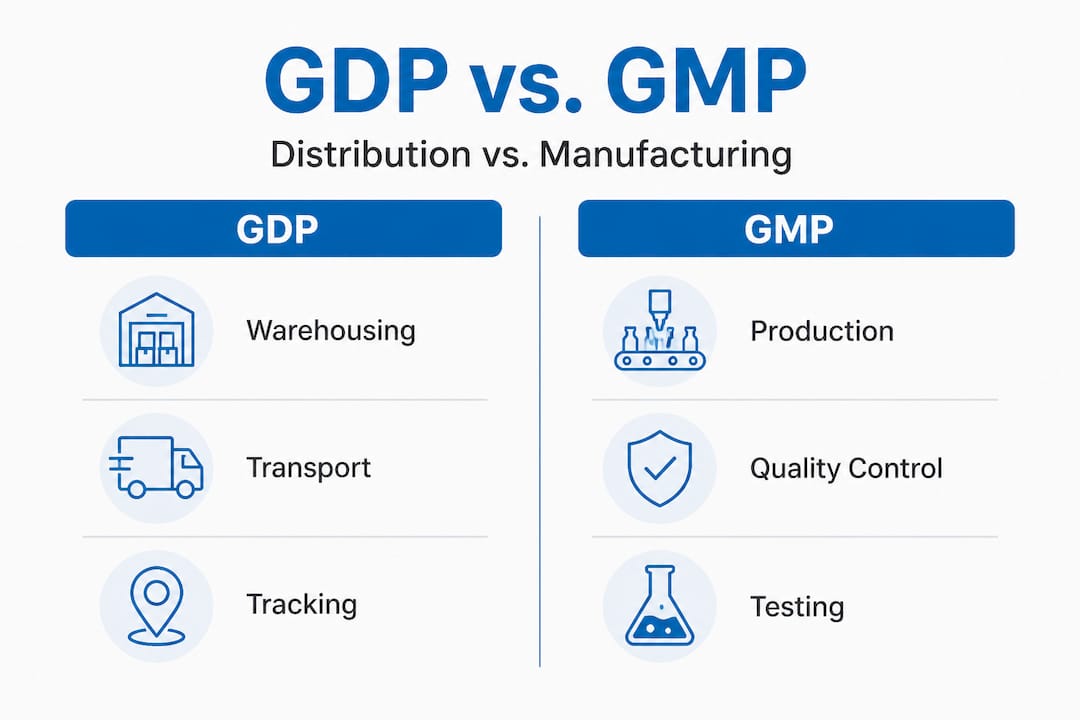
Good Distribution Practices (GDP) are quality standards that ensure medicinal products maintain their integrity, safety, and efficacy throughout every stage of the supply chain. GDP applies after the manufacturing gate, covering all distribution activities including warehousing, temperature management, documentation, and third-party logistics (3PL) relationships. It is the global foundation upon which regional frameworks are built.
Good Manufacturing Practice (GMP), by contrast, governs what happens inside the manufacturing facility. Understanding the distinction matters because many organizations confuse the two, which leads to gaps in oversight during the distribution phase where most compliance failures actually occur. AMDD is the ASEAN-specific harmonization framework for medical devices, aligning member state regulations while still leaving room for national variations.
| Standard | Applies to | Scope | Regional relevance |
|---|---|---|---|
| GDP | Distributors, 3PLs | Post-manufacture supply chain | Global, mandated across ASEAN |
| GMP | Manufacturers | Production processes | Global, pre-distribution |
| AMDD | Medical device distributors | Device registration, distribution | ASEAN-specific |
These frameworks are not interchangeable. GDP standards in supply chains serve as the operational backbone for distributors, while AMDD layers on device-specific requirements. Sound inventory management tips become compliance requirements, not optional efficiencies, once GDP is adopted.
Pro Tip: Start with GDP as your compliance baseline. Then identify the country-specific regulations for each market you serve and build those requirements on top. Trying to reverse-engineer country rules without a GDP foundation creates redundant effort and audit vulnerability.
The core components of compliance: Standards and practicalities
Now that the foundations are clear, let us examine what concrete compliance looks like in daily logistics practice. GDP is not a single document to file away. It is an operating system that defines how your entire distribution function runs.
Key GDP elements include quality management systems, personnel training, premises and equipment validation, documentation controls, operational procedures, complaints and recalls management, oversight of outsourced activities, self-inspections, and transportation controls. Each pillar has specific requirements that must be met and demonstrated through documented evidence.
Here is how those pillars translate to daily operations:
- Quality management systems (QMS): Define your standard operating procedures (SOPs) in writing and keep them current. A QMS is only effective if it is actively used and regularly reviewed.
- Personnel training: Every staff member who touches a regulated product must be trained, and that training must be documented with dates and sign-offs. One untrained handler can invalidate a temperature-controlled shipment.
- Premises and equipment validation: Warehouses and cold rooms must be qualified through Installation Qualification (IQ), Operational Qualification (OQ), and Performance Qualification (PQ) protocols.
- Documentation: Batch records, temperature logs, chain-of-custody records, and deviation reports must be traceable and retrievable. Paper-based systems are increasingly being replaced by electronic batch records.
- Transportation controls: Every leg of the journey must be covered by a qualified carrier, with temperature-monitoring devices active throughout.
- Self-inspections: Scheduled internal audits catch gaps before regulators do. Many organizations skip this step, then face expensive corrective actions during external audits.
“A compliance program without regular self-inspection is like a quality system with the alarm switched off. Issues accumulate silently until a regulatory audit or a product recall forces them to the surface.”
Real-world data makes the gap visible. US wholesale distributors score a median of 52 out of 100 on compliance benchmarks, placing them in the “Fair” tier, with 72% of distributors scoring between 40 and 59. Even in a highly regulated market, most distributors are performing at a mediocre level. ASEAN distributors face the same structural risks, often with fewer resources and more complex operating environments.
Meeting quality assurance requirements consistently demands systematic investment in people, processes, and technology rather than reactive patches after a failed audit.
Pro Tip: Implement digital documentation from day one. Paper logs are prone to human error and are far harder to audit efficiently. Digital systems with time-stamped entries, automated alerts, and audit trails reduce compliance risk substantially and demonstrate a mature quality posture to regulators.
Regional realities: Compliance challenges and differences in Southeast Asia
With the framework and standards laid out, understanding how compliance actually plays out across Southeast Asia is crucial for effective planning. ASEAN offers a degree of regulatory harmonization through the AMDD and regional guidelines, but national enforcement remains distinct and, in some cases, dramatically different from country to country.
Southeast Asian markets follow ASEAN harmonization but impose their own national layers. Thailand operates a digital License Per Invoice (LPI) system via the National Single Window, requiring importers to obtain electronic import permits per shipment. Malaysia enforces its own Good Distribution Practice for Medical Devices (GDPMD) under the Medical Device Authority (MDA). Indonesia, Thailand, and Vietnam are all moving toward mandatory serialization and track-and-trace requirements by 2027 to 2030. Each of these requirements has different timelines, technical specifications, and enforcement mechanisms.
| Country | Key framework | Notable requirements | Digitization status |
|---|---|---|---|
| Singapore | HSA GDP | Strict cold chain, full documentation | Advanced |
| Malaysia | GDPMD (MDA) | Device-specific GDP, local agent mandate | Developing |
| Thailand | FDA Thailand, NSWs | Digital LPI per invoice, serialization by 2027 | Active rollout |
| Indonesia | BPOM GDP | Track-and-trace, serialization by 2027 | In progress |
| Vietnam | Ministry of Health GDP | Drug traceability by 2030, cold chain audit | Developing |
Key compliance considerations by market include:
- Singapore sets the regional benchmark. Singapore market entry requirements are rigorous but transparent, making it an effective entry point for organizations building ASEAN compliance programs.
- Malaysia requires that medical devices be registered under the MDA before importation, with local authorized representatives carrying legal accountability for compliance.
- Thailand’s digital LPI system means a physical permit is no longer sufficient. Importers must integrate with government digital platforms, a requirement that many smaller distributors are not yet equipped to meet.
- Vietnam and Indonesia are rapidly tightening track-and-trace mandates. Organizations that delay digitization investments now will face forced compliance under less favorable conditions in 2027 and beyond.
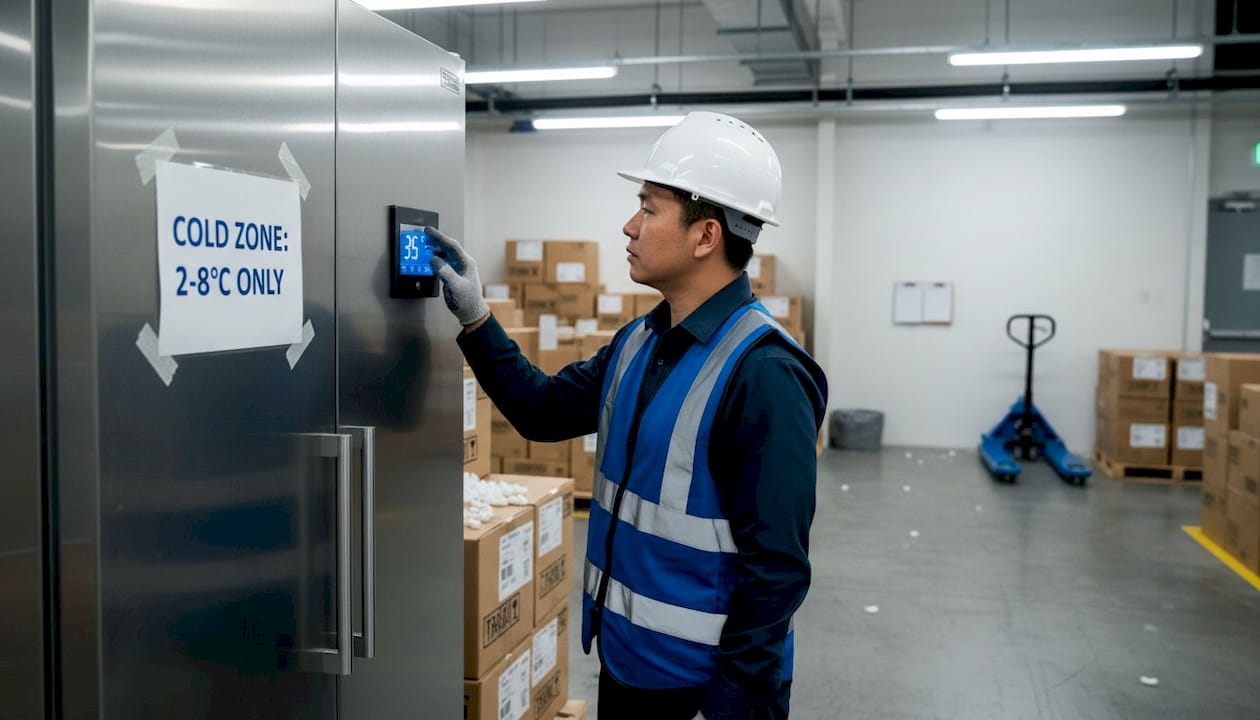
Regional cold chain compliance adds another layer of complexity across all markets. Tropical temperatures, monsoon seasons, and variable infrastructure mean that temperature deviations are far more likely in Southeast Asia than in temperate markets. Regulatory bodies in the region are increasingly auditing cold chain records, not just product registrations.
Understanding the intersection of SEA logistics drivers and strategies with compliance planning helps procurement teams anticipate regulatory shifts rather than react to them. Similarly, logistics security in SEA has become a compliance dimension in its own right, with counterfeit product infiltration and cargo theft posing direct risks to supply chain integrity.
Edge cases and evolving trends: Cold chain risks and the future of logistics compliance
Preparing for routine compliance is only one side of the coin. The ability to handle exceptions and leverage modern solutions is where the future lies. The compliance challenges that cause the most damage are rarely the ones organizations plan for.
Temperature excursions, freeze-thaw risks for biologics, customs delays, seasonal climate extremes, and counterfeit infiltration represent the most common edge cases in regulated supply chains. Each of these risks requires a dedicated response protocol. Risk assessment tools like Failure Mode and Effects Analysis (FMEA) and Corrective and Preventive Action (CAPA) frameworks are the industry-standard methods for identifying vulnerabilities and closing them before they cause product loss or patient harm.
The most common cold chain compliance risks in Southeast Asia include:
- Temperature excursions during last-mile delivery, where refrigerated vehicles hand off to ambient transport without adequate monitoring
Freeze-thaw cycles for biologics when cold rooms are not properly zoned or calibrated, making calibration services in Singapore an important part of equipment maintenance.
- Customs clearance delays that extend product exposure times beyond validated stability windows
- Monsoon season disruptions that affect road logistics in Indonesia, Vietnam, and Thailand
- Counterfeit product insertion into legitimate supply chains through unqualified secondary distributors
The response to these risks is shifting from reactive to predictive. AI and digital twin technologies in logistics are enabling supply chain teams to simulate temperature events before they happen, model route risk profiles, and receive automated alerts when environmental conditions deviate from acceptable ranges. A digital twin of a distribution center, for example, can model the thermal behavior of a cold room under a power outage scenario, allowing teams to rehearse response protocols without risking actual product.
Expert consensus is converging on data-driven cold chain management, with AI-powered predictive analytics and GDP oversight by a qualified Responsible Person becoming the operating standard for multi-country Southeast Asian operations. Organizations still relying on manual temperature logs and reactive excursion management are already behind the curve.
Eco-friendly cold chain practices are also gaining regulatory and commercial attention, as sustainable packaging and energy-efficient cold storage increasingly appear in tender requirements and supplier qualification frameworks.
Pro Tip: Implement a real-time data platform that integrates temperature monitoring, track-and-trace, and AI-driven anomaly detection. The upfront investment is significantly lower than the cost of a single product recall or a regulatory import suspension.
“The organizations building the most resilient compliance programs in Southeast Asia are not those with the largest compliance teams. They are those using the most intelligent tools to detect risk before it becomes a deviation.”
The overlooked ROI of robust compliance in Southeast Asia logistics
Taking a wider perspective, the strategic benefits of compliance are often overlooked, even as they become genuine competitive advantages in the region. The prevailing view treats compliance as a cost center: a regulatory burden that diverts budget from revenue-generating activities. This view is both common and mistaken.
Compliance is more accurately understood as a resilience enabler, with reactive monitoring giving way to predictive AI and voluntary accreditations increasingly lagging behind mandatory license requirements. The distinction matters for how organizations allocate investment. A company that treats compliance as a minimum threshold will invest just enough to pass audits. A company that treats compliance as a strategic asset will invest in systems that also reduce product loss, accelerate market authorization, and lower insurance premiums.
In Southeast Asia specifically, two dynamics amplify this point. First, regulatory authorities across the region are actively tightening enforcement, meaning that the compliance floor is rising. Organizations that built compliant operations early are better positioned to scale without disruption when new mandates come into effect. Second, procurement teams at hospitals and healthcare systems are increasingly conducting supplier audits. A distributor with a strong quality compliance ROI posture wins contracts that less-compliant competitors cannot access.
The practical lesson is this: partner with 3PLs that are not just rule-followers but active compliance builders. A 3PL that participates in regulatory consultations, invests in digital infrastructure, and conducts proactive self-inspections will protect your supply chain in ways that a minimum-viable-compliance provider simply cannot. In a region where regulatory environments are shifting as fast as Southeast Asia’s are, that difference translates directly into business continuity.
Solving compliance challenges with specialized healthcare logistics
For organizations ready to advance their compliance programs, solutions tailored for Southeast Asia’s unique logistics challenges can provide immediate support.
Labgistics Asia brings over 20 years of operational experience managing regulated pharmaceutical, medical device, and life science supply chains across the region. Our team works with healthcare administrators and procurement managers to assess existing compliance gaps, design GDP-aligned distribution frameworks, and implement technology-driven monitoring that meets both ASEAN harmonized standards and country-specific requirements.
Whether your priority is strengthening healthcare supply chain security solutions, achieving full cold chain logistics compliance across temperature-sensitive product lines, or developing a proactive logistics risk management services framework, Labgistics delivers end-to-end solutions built for the complexity of Southeast Asia. Our accredited distribution centers and regulatory support team are equipped to help you move faster, reduce risk, and maintain the compliance posture that your customers and regulators expect.
Frequently asked questions
What are Good Distribution Practices (GDP) in healthcare logistics?
GDP are quality standards ensuring medicinal products stay safe, effective, and intact at every supply chain stage, from manufacturer to end user.
How does compliance differ across Southeast Asian countries?
Countries follow ASEAN harmonization but enforce national rules independently, such as Malaysia’s GDPMD framework and Thailand’s digital License Per Invoice system through the National Single Window.
What are the main risks in healthcare logistics compliance?
Temperature excursions, counterfeiting, customs delays, and regulatory gaps are the top compliance risks, particularly for biologics and temperature-sensitive pharmaceuticals in tropical supply chains.
How can healthcare organizations improve compliance efficiently?
Adopt GDP as your operational baseline, digitize track-and-trace systems, qualify 3PL partners rigorously, and monitor evolving ASEAN registration requirements to stay ahead of new mandates in each market.
Is compliance a cost center or an opportunity?
While often categorized as a cost, robust compliance enables resilience, reduces product loss, improves supplier qualification outcomes, and directly supports business growth in regulated Southeast Asian markets.