Supply chain visibility is defined as the real-time ability to track and monitor products, materials, and information across every node of the supply chain, from raw material sourcing through final delivery. For supply chain professionals and logistics managers in healthcare and pharmaceuticals, this capability is not optional. It is the operational foundation for regulatory compliance, cold chain integrity, and patient safety. Standards like the PIC/S GDP Guide require documented traceability at every stage of pharmaceutical distribution. Without visibility, meeting those requirements becomes guesswork, and the consequences range from audit failures to product recalls.
What is supply chain visibility and why does it matter in pharma?
Supply chain visibility is the capacity to see, in real or near-real time, where every product, shipment, and material sits within your network. The standard industry term for this capability is end-to-end supply chain transparency, though visibility and transparency are not the same thing. Visibility is operational knowledge of what is happening; transparency is the act of sharing that knowledge with external stakeholders, including regulators, for trust and compliance purposes. Understanding the difference matters enormously in regulated industries.
In pharmaceutical and healthcare logistics, the stakes of poor visibility are concrete. A temperature excursion that goes undetected because no one has real-time monitoring data can render an entire shipment of biologics non-compliant. A stockout caused by inaccurate inventory data can delay patient treatment. Healthcare supply chain visibility requires item-level tracking, including pharmaceutical serial numbers and lot numbers, not just shipment-level tracking. That distinction separates basic logistics tracking from the compliance-grade visibility that regulators expect.
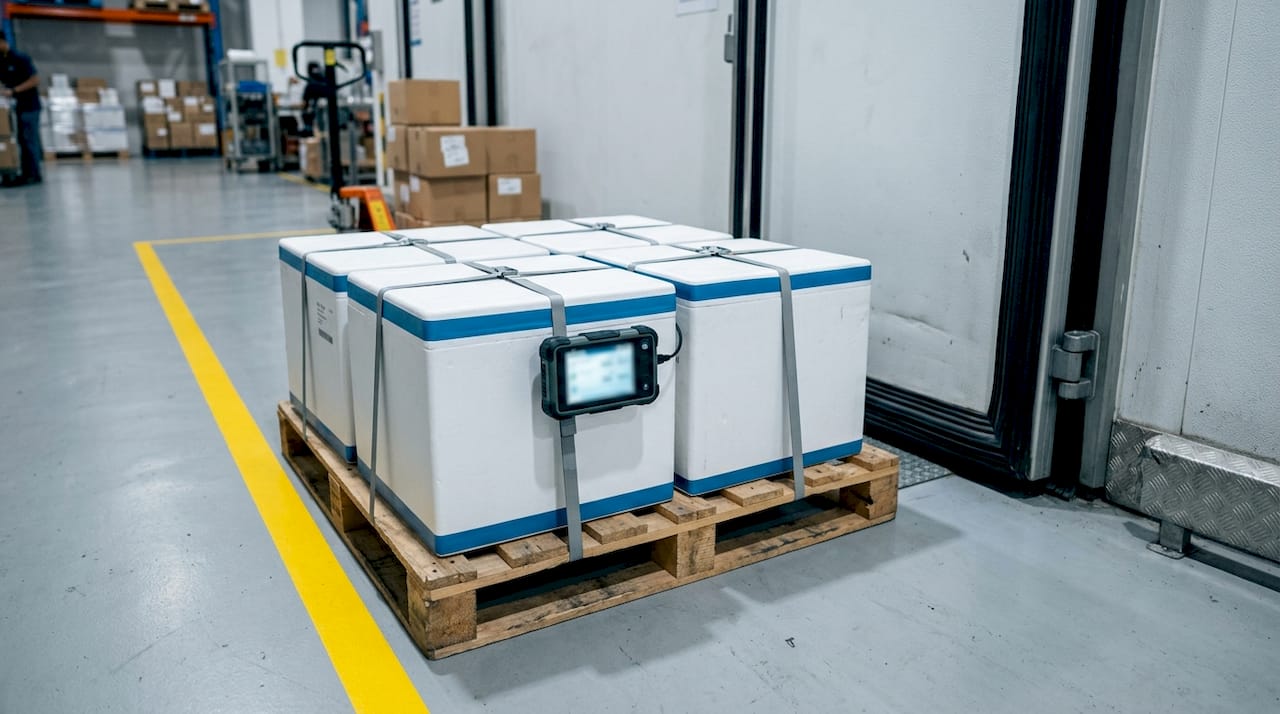
The importance of supply chain visibility also extends to financial performance. When you cannot see your inventory accurately, you carry excess safety stock, pay for expedited shipments, and write off expired products. Each of these outcomes is avoidable with the right data infrastructure in place.
How does visibility improve healthcare supply chain efficiency?
Manufacturers and distributors that improve supply chain visibility achieve 15–20% better inventory turns and a 30–50% reduction in expedited service costs. Those gains translate directly into released working capital and protected margins, two outcomes that healthcare CFOs and supply chain directors care about deeply.
The operational benefits of enhanced visibility fall into several categories:
- Inventory accuracy: Real-time stock data eliminates the gap between what the system says you have and what is physically on the shelf. This supports data-driven safety stock calculations rather than rule-of-thumb buffers.
- Cold chain integrity: Continuous temperature monitoring with automated alerts prevents excursions from going undetected. This is non-negotiable for biologics, vaccines, and other temperature-sensitive pharmaceuticals.
- Stockout prevention: When you can see demand signals and inventory levels simultaneously, you can reorder before a shortage occurs rather than reacting after the fact.
- Expedited cost reduction: Visibility reduces the frequency of emergency shipments by giving planners enough lead time to act on early warning signals.
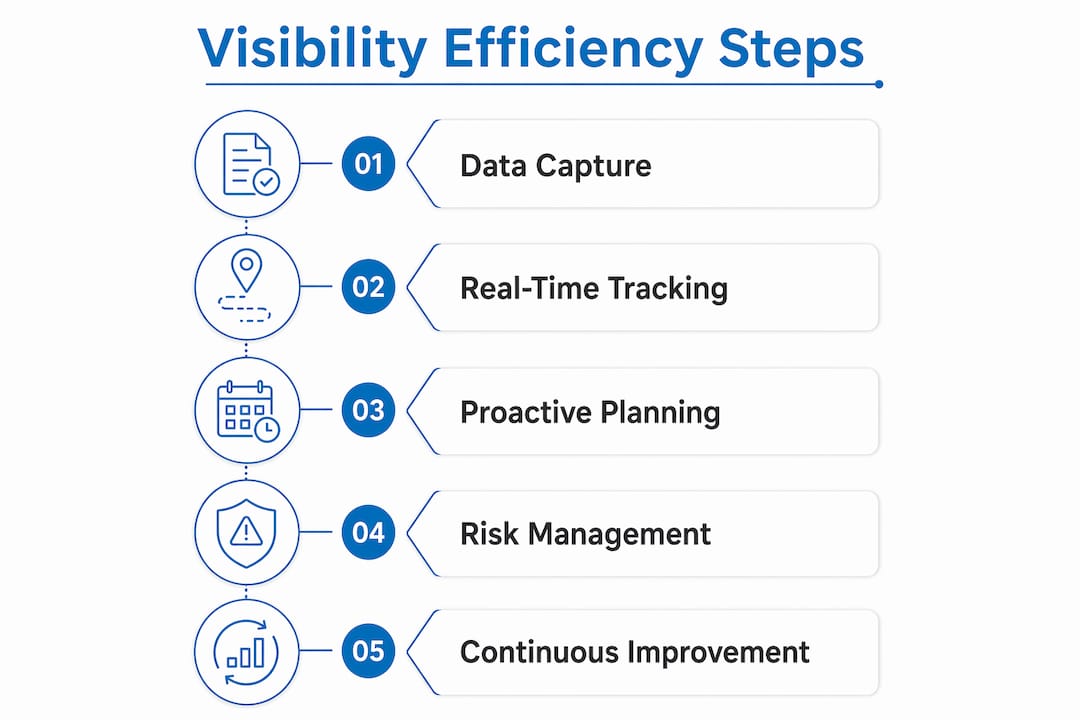
For healthcare inventory management, the shift from reactive to proactive planning is the single largest efficiency gain visibility delivers. When your warehouse management system (WMS), transportation management system (TMS), and ERP share synchronized data, your team stops firefighting and starts planning. An integrated supply chain that shares real-time data across sourcing, production, logistics, and delivery compounds these operational, financial, and strategic benefits simultaneously.
What are the challenges in achieving supply chain visibility?
The largest barrier to supply chain visibility is not technology acquisition. It is organizational data maturity. Most healthcare and pharma organizations operate with fragmented data spread across ERP, WMS, and TMS platforms that were never designed to communicate with each other. Before any analytics tool can create an accurate single source of truth, that data must be normalized and connected.
Only 19% of organizations have fully integrated advanced scenario planning into their supply chain strategy as of mid-2026. That figure reveals a significant gap between basic shipment tracking and the strategic use of data for risk management. Most teams are still operating at the descriptive analytics level, answering “what happened” rather than “what will happen.”
Common challenges include:
- System fragmentation: ERP, WMS, and TMS platforms often hold siloed data with incompatible formats, making a unified view difficult without middleware or integration layers.
- Data quality issues: Duplicate records, inconsistent unit-of-measure conventions, and missing fields corrupt analytics outputs before they reach decision-makers.
- Cultural resistance: Cross-functional data sharing requires organizational alignment that technology alone cannot create. Procurement, logistics, and finance teams often protect their data rather than share it.
- Premature AI adoption: Deploying predictive analytics or machine learning on dirty, disconnected data produces unreliable outputs. Clean, connected data must come before predictive analytics and AI, not after.
Pro Tip: Before evaluating any visibility platform, conduct a data audit across your ERP, WMS, and TMS. Map which fields are populated consistently and which are not. That audit will tell you more about your readiness than any vendor demo.
The distinction between visibility and transparency also creates organizational confusion. Teams that conflate the two often build internal dashboards without establishing the external reporting structures that regulators require. Addressing pharma logistics challenges requires treating these as separate but connected capabilities.
How do supply chain analytics turn visibility data into risk management?
Supply chain analytics is the discipline of converting raw visibility data into decisions. The progression moves from descriptive analytics (what happened) to predictive analytics (what will happen) to prescriptive analytics (what you should do). Most healthcare supply chains sit at the descriptive level. The goal is to move up that maturity curve deliberately.
Practical steps to build analytics capability on a solid visibility foundation:
- Establish a clean data layer. Normalize data from all source systems into a single data model. This step is unglamorous but non-negotiable.
- Deploy descriptive dashboards. Build visibility into current inventory positions, shipment status, and temperature logs before attempting any forecasting.
- Add predictive models incrementally. Start with demand forecasting for high-volume SKUs before expanding to supplier risk scoring or lead-time prediction.
- Implement a control tower. Control towers powered by predictive analytics provide centralized, real-time risk monitoring and scenario planning. They enable proactive supply chain management in volatile conditions.
- Measure financial outcomes. Tie analytics outputs to inventory turns, expedited spend, and stockout frequency so leadership can see the return on investment.
71% of procurement leaders prioritize strategic planning powered by real-time supply chain insights in 2026. That figure reflects a sector-wide shift toward proactive, data-driven supply chain resilience rather than reactive problem-solving. Healthcare organizations that delay this transition risk falling behind on both operational efficiency and regulatory readiness.
Pro Tip: Build your control tower around three core metrics first: on-time-in-full delivery rate, temperature excursion frequency, and days of inventory on hand. These three numbers will surface 80% of the operational problems worth solving.
For teams working on supply chain mapping, analytics capability and network visibility must develop in parallel. A map without data is a diagram. Data without a map is noise.
What is the role of visibility in regulatory compliance and audit readiness?
Regulatory compliance in pharmaceutical and healthcare supply chains depends on traceability, and traceability depends on visibility. Agencies and frameworks including the PIC/S GDP Guide require documented evidence that products were stored and transported within specified conditions throughout the supply chain. Without real-time monitoring and item-level data capture, producing that evidence at audit time becomes a manual, error-prone reconstruction exercise.
Key compliance requirements that visibility directly supports:
- Item-level traceability: Regulators require serial number and lot number tracking for pharmaceutical products. Shipment-level tracking does not satisfy this requirement.
- Cold chain documentation: Continuous temperature and humidity logs must be available for every leg of the journey, from manufacturer to end point.
- Audit reconciliation: Visibility links ERP data with real-time transit status, easing audit reconciliation and reducing the finance department’s burden at period close.
- Deviation reporting: When an excursion or delay occurs, visibility systems generate timestamped records that support root cause analysis and corrective action documentation.
“Visibility forms the operational basis; transparency is the external collaborative effect, critical for trust with regulators in pharma.” This distinction, drawn from supply chain governance frameworks, defines the two-layer compliance model that pharmaceutical organizations must build.
Visibility is essential for audit compliance because it connects ERP data with operational logistics status, aligning financial reporting with actual product movement. When these systems are disconnected, inventory valuations at period close may not reflect what is actually in transit, creating discrepancies that auditors flag. Building cold chain logistics infrastructure on a foundation of real-time monitoring is the most direct path to audit-ready compliance in Southeast Asia’s pharmaceutical distribution environment.
Key Takeaways
Supply chain visibility is the foundational operational capability that connects real-time data, regulatory compliance, and financial performance in healthcare and pharmaceutical supply chains.
| Point | Details |
|---|---|
| Visibility vs. transparency | Visibility is internal operational knowledge; transparency is sharing that knowledge with regulators and partners. |
| Item-level tracking is mandatory | Serial and lot number tracking, not just shipment tracking, is required for pharmaceutical compliance. |
| Data maturity precedes analytics | Clean, connected data across ERP, WMS, and TMS must exist before predictive analytics can deliver reliable outputs. |
| Financial impact is measurable | Better visibility drives 15–20% inventory turn improvements and 30–50% reductions in expedited shipping costs. |
| Control towers enable proactive management | Centralized analytics platforms turn real-time visibility data into scenario planning and risk response capability. |
Visibility is a strategy, not a software purchase
After working closely with pharmaceutical and healthcare supply chains across Southeast Asia, one pattern stands out clearly. Organizations that treat supply chain visibility as an IT project consistently underdeliver. They buy a platform, connect a few data feeds, and declare success. Then they wonder why their stockout rate has not changed and their audit preparation still takes three weeks.
Visibility is a foundational organizational capability. It requires leadership alignment, cross-functional accountability, and a willingness to confront data quality problems that have accumulated for years. The technology is the easy part. Getting procurement, logistics, finance, and quality assurance to agree on a single definition of “on-time delivery” is where most programs stall.
The often-overlooked distinction between visibility and transparency is where I see the most regulatory risk. Teams build excellent internal dashboards and then fail to establish the structured reporting mechanisms that regulators actually review. Visibility without transparency is a missed compliance opportunity.
My practical advice: start with a network map and a data audit, not a software evaluation. Identify every system that holds supply chain data, assess its quality, and define what “good” looks like for each field. Then build your visibility program outward from that foundation. Executive buy-in follows financial metrics, so frame every visibility investment in terms of inventory turns, expedited spend reduction, and audit cost avoidance. Those numbers speak louder than any dashboard screenshot.
— Brandcore
Labgistics: pharma logistics visibility built for Southeast Asia
Labgistics brings over 20 years of healthcare logistics experience to pharmaceutical and life science supply chains across Southeast Asia. Its fully accredited distribution centers and pharma-grade logistics services are built around the compliance and traceability requirements that regulators in the region enforce.
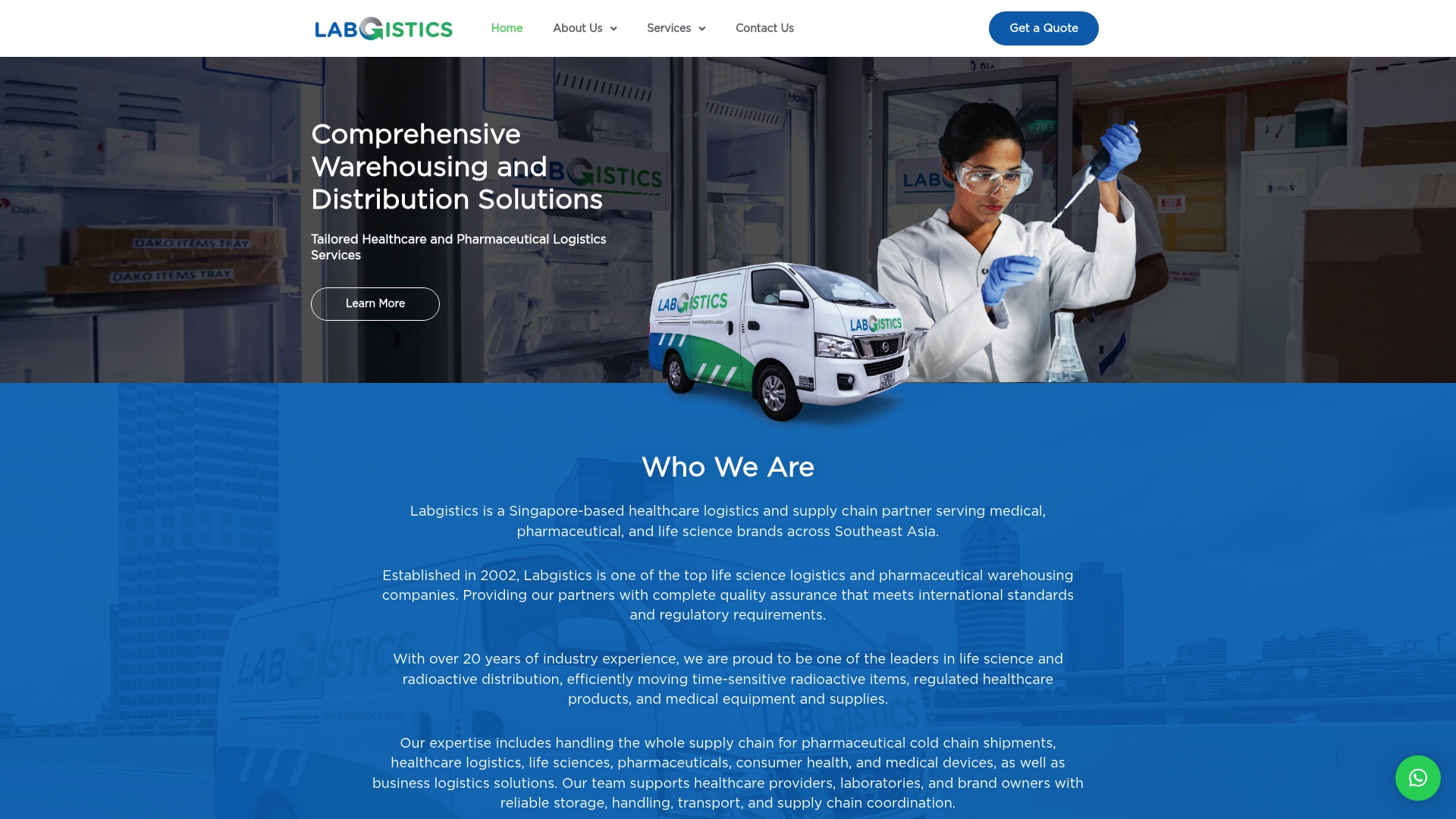
For temperature-sensitive pharmaceuticals, Labgistics operates cold chain logistics infrastructure with continuous monitoring and documented chain-of-custody records that support audit readiness. Its regulatory services team supports product registration, market access, and compliance documentation across multiple Southeast Asian jurisdictions. Supply chain professionals seeking a logistics partner with the data infrastructure and regulatory expertise to support real-time visibility can contact Labgistics directly to discuss tailored solutions for their distribution network.
FAQ
What is supply chain visibility in simple terms?
Supply chain visibility is the real-time ability to track products, shipments, and inventory across every stage of the supply chain. It gives logistics managers and supply chain professionals the data they need to make proactive decisions rather than reactive ones.
How does supply chain visibility differ from supply chain transparency?
Visibility is internal operational knowledge of what is happening within your supply chain. Transparency is the act of sharing that knowledge with external stakeholders, including regulators and trading partners, to build trust and meet compliance requirements.
Why is item-level tracking required in pharmaceutical supply chains?
Pharmaceutical regulations require serial number and lot number tracking for individual products, not just shipment-level data. This level of detail supports cold chain compliance, recall management, and audit traceability under frameworks like the PIC/S GDP Guide.
What is the biggest barrier to supply chain visibility?
The largest barrier is organizational data maturity, specifically the challenge of normalizing and connecting data from fragmented ERP, WMS, and TMS systems. Technology alone cannot solve this problem without first addressing data quality and cross-functional alignment.
How do supply chain analytics improve visibility outcomes?
Supply chain analytics convert raw visibility data into forecasts, risk alerts, and scenario plans. Control towers powered by predictive analytics provide centralized monitoring and enable proactive responses to disruptions before they affect product availability or compliance status.