
Pharmaceutical warehousing is defined as the controlled storage and handling of medicinal products under regulated conditions to preserve their quality, safety, and efficacy throughout the supply chain. In practice, this means operating facilities that meet Good Manufacturing Practice (GMP) and Good Distribution Practice (GDP) standards, with documented procedures governing every movement of product from receipt to dispatch. For supply chain professionals and logistics managers in healthcare, understanding pharma warehousing is not optional. A single lapse in temperature control or documentation can result in batch destruction, regulatory action, or patient harm. This guide covers facility layout, GMP versus GDP distinctions, cold chain requirements, and the technologies that keep compliant operations running.
What is pharmaceutical warehousing and why does it matter?
Pharmaceutical warehousing encompasses receiving, quarantine, sampling, approved storage, rejected materials handling, finished goods storage, and dispatch, with cold chain zones added where temperature-sensitive products are involved. This definition matters because each function represents a distinct regulatory control point, not just a physical location. Treating warehousing as simple storage misses the compliance architecture that governs every product movement.
The stakes are high across Southeast Asia, where healthcare logistics providers like Labgistics operate under both national regulations and international standards including PIC/S GDP guidelines. Singapore’s Health Sciences Authority (HSA) requires licensed warehouses to demonstrate validated environmental controls and traceable documentation before any product can be released to market. Warehousing failures do not stay within four walls. They propagate through the supply chain and reach patients.
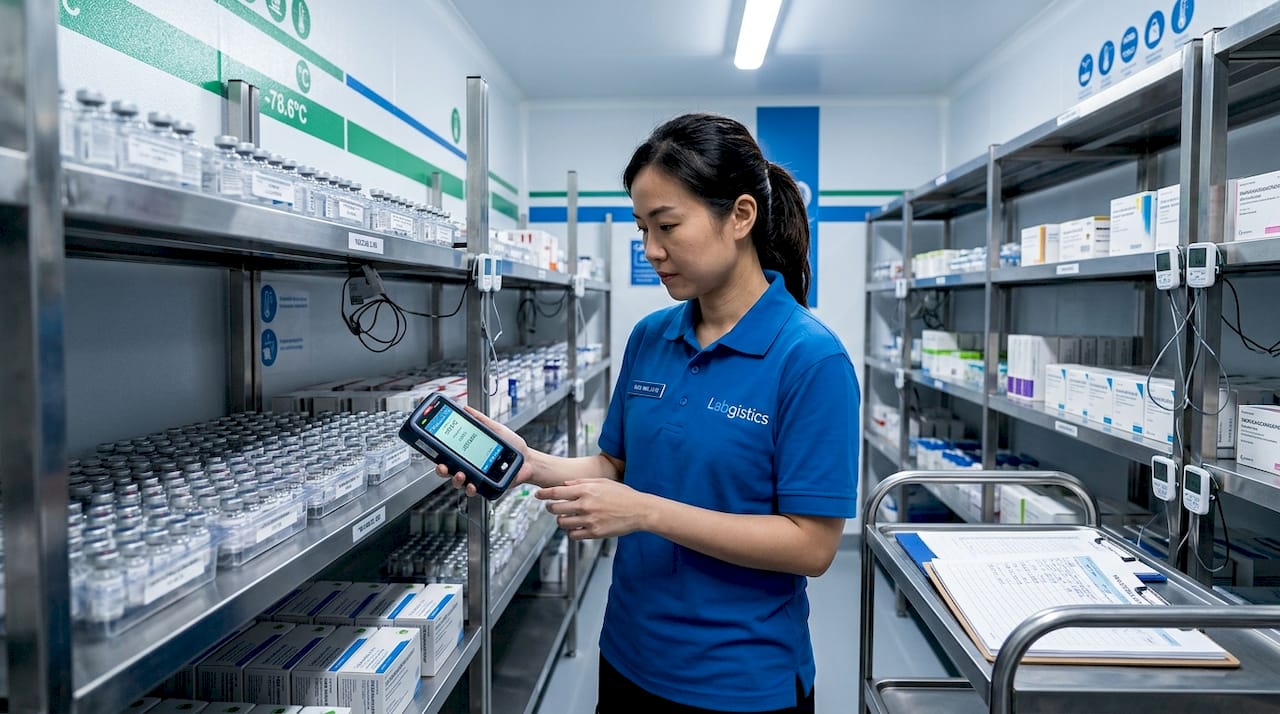
For logistics managers entering or expanding in the region, pharma warehousing is the first and most consequential operational commitment they will make.
How warehouse layout and zones support GMP compliance
A GMP-compliant pharmaceutical warehouse is organized into purpose-built zones that prevent contamination, mix-ups, and unauthorized access. Warehouse areas form the first GMP control point in manufacturing, requiring defined procedures for sampling, storage, and dispatch. The physical separation of materials by status is not a preference. It is a regulatory requirement.
A standard compliant layout includes the following zones:
| Zone | Function |
|---|---|
| Receiving area | Initial intake, visual inspection, and labeling of incoming goods |
| Quarantine area | Holding products pending quality review and release decision |
| Sampling area | Controlled environment for quality control sample collection |
| Approved storage | Segregated storage for released, market-ready products |
| Rejected/returned area | Secure holding for non-conforming or recalled products |
| Dispatch area | Final staging and documentation before outbound shipment |
Each zone must have controlled access, defined SOPs, and environmental monitoring appropriate to the products stored. Approved storage for ambient pharmaceuticals typically requires temperature and humidity controls between 15°C and 25°C, while cold chain zones operate under stricter parameters. The physical flow through these zones must prevent any approved product from coming into contact with quarantined or rejected materials.
Pro Tip: Map your product flow against your zone layout before any regulatory audit. Auditors from HSA and PIC/S-aligned agencies will walk the physical path of a product from receiving dock to dispatch bay. Gaps between your SOPs and your actual floor plan are among the most common findings.
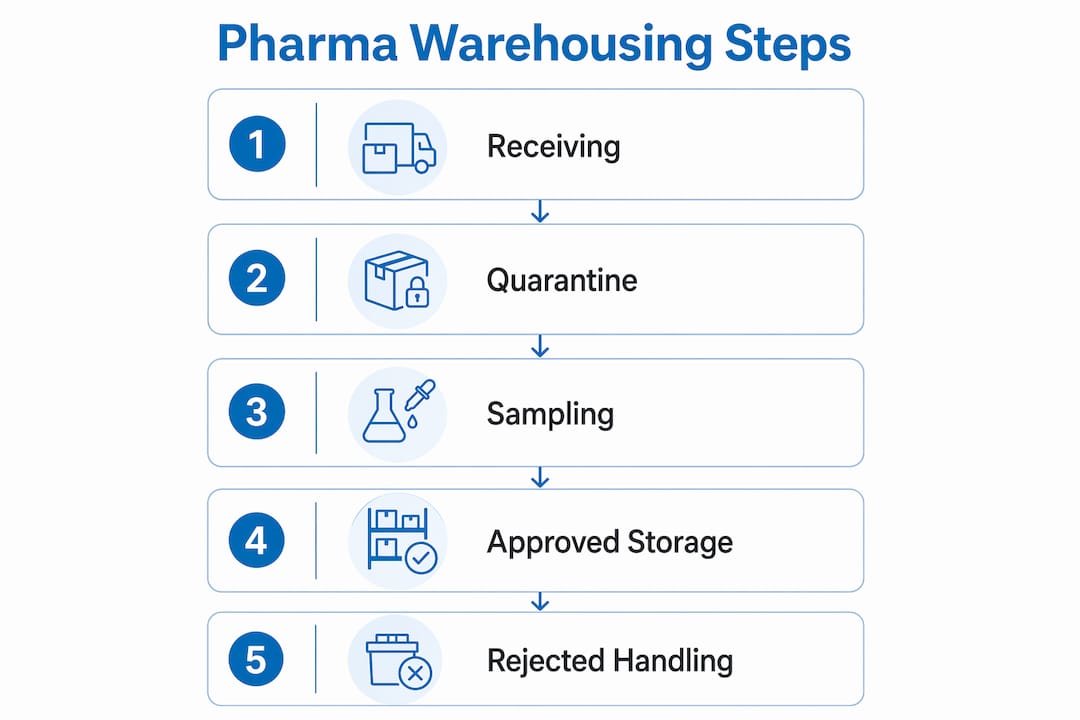
Facility design also affects workflow efficiency. A poorly sequenced layout forces unnecessary product movement, increasing handling risk and documentation burden. Warehouses designed with unidirectional flow, where products move from receiving through quarantine to approved storage and then to dispatch without backtracking, consistently perform better in both audits and operational throughput.
How do GMP and GDP regulations differ in pharmaceutical warehousing?
GMP and GDP are complementary but distinct regulatory frameworks, and confusing them creates compliance gaps. GMP applies mainly to how medicines are made and initially stored, governing product quality from the point of manufacture. GDP covers how quality is preserved post-release during storage, transport, and distribution. In practice, a warehouse attached to a manufacturing site operates under GMP, while a standalone distribution center or 3PL warehouse operates primarily under GDP.
The operational implications of this distinction are significant:
- GMP warehousing requires facility qualification, validated cleaning procedures, personnel gowning protocols, and batch documentation linked directly to manufacturing records.
- GDP warehousing requires a quality management system, qualified persons responsible for distribution, documented procedures for receipt, storage, picking, packing, dispatch, and complaint handling.
- Both frameworks mandate environmental monitoring, but GDP places additional emphasis on the integrity of the cold chain during transit, not just at rest.
- GDP is legally required in regions like the EU and is increasingly adopted as the standard across Southeast Asia, including Singapore and Malaysia.
“Successful GMP/GDP warehousing focuses on evidence-based compliance with documented control, not just physical temperature monitoring.” This principle, drawn from cGMP practice, means that a temperature log without an investigation protocol for excursions is incomplete compliance. The documentation must demonstrate that every deviation was identified, assessed, and resolved.
For logistics managers overseeing GMP standards in pharma logistics, the practical takeaway is this: know which framework governs each facility in your network, and verify that your SOPs, training records, and environmental monitoring programs align with the correct standard.
What are the requirements for pharmaceutical cold chain warehousing?
Cold chain warehousing is the most technically demanding segment of pharmaceutical storage. Products stored between 2°C and 8°C include vaccines, insulin, and most biologics, while ultra-cold storage at negative 60°C to negative 80°C is required for highly sensitive therapies such as mRNA-based products. The infrastructure and operational sophistication required for these ranges goes well beyond general refrigerated storage.
A compliant cold chain warehouse operation involves the following steps:
- Qualification of cold rooms and refrigeration units before any product is stored, including temperature mapping studies to identify hot and cold spots within the storage envelope.
- Continuous temperature monitoring using calibrated sensors with automated alerts that notify responsible personnel when readings approach or breach set limits.
- Validated emergency procedures covering power failures, equipment breakdowns, and product transfer protocols to backup storage.
- Quarantine and returns management with dedicated, access-controlled cold rooms for returned goods, given that returned pharmaceutical products carry uncertain temperature histories and require validated quarantine processes before any reuse decision.
- Documentation of every temperature excursion, including root cause analysis and impact assessment on product quality.
Pro Tip: Never rely on a single temperature sensor per cold room. Place sensors at multiple points identified during your temperature mapping study, particularly near doors and air vents where excursions are most likely. Regulatory inspectors will ask to see your mapping data and your sensor placement rationale.
The importance of cold chain extends beyond storage. Every handoff between warehouse and transport is a potential excursion event. Validated packaging, pre-conditioned cool boxes, and time-temperature indicators on outbound shipments are standard practice for compliant cold chain operations across Southeast Asia.
What technologies and best practices optimize pharma warehousing operations?
Technology integration is what separates a compliant warehouse from a high-performing one. Warehouse Management Systems (WMS) provide the backbone for lot traceability, batch control, and inventory status management. Segregation and inventory status control covering quarantine, approved, rejected, and returned goods is critical evidence in audits, and discrepancies between physical stock and system records result in expanded regulatory scrutiny. A WMS that enforces status-based picking rules eliminates the human error that causes most segregation failures.
Key best practices for optimizing pharmaceutical warehousing operations include:
- Electronic batch records that link receiving inspections, storage conditions, and dispatch documentation into a single traceable record for each lot.
- Calibration management programs for all monitoring equipment, with calibration certificates maintained and renewal dates tracked within the WMS or a dedicated calibration system.
- Vendor managed inventory (VMI) arrangements with key suppliers, reducing stockout risk while maintaining compliant storage conditions for buffer stock.
- Integration of cold chain monitoring platforms with the WMS so that temperature excursion alerts automatically trigger quarantine status changes in the inventory system.
For operations using third-party logistics providers, the compliance picture is more complex. 3PL warehousing does not relieve manufacturers of quality system responsibility. Batch disposition depends on integrated receiving, inspections, and excursion investigations between the manufacturer and the 3PL. This means your quality agreement with any 3PL warehouse partner must specify exactly who owns each step of the documentation and investigation process.
Labgistics operates fully accredited distribution centers in Singapore with integrated WMS, continuous cold chain monitoring, and regulatory support teams. For supply chain managers evaluating how to choose a 3PL warehouse for pharmaceutical supply chains, accreditation status, quality agreement depth, and technology integration capability are the three criteria that matter most.
Key takeaways
Pharmaceutical warehousing requires GMP or GDP compliance, purpose-built facility design, validated cold chain infrastructure, and integrated technology to protect product quality from receipt through dispatch.
| Point | Details |
|---|---|
| Compliance framework matters | Identify whether GMP or GDP governs each facility and align SOPs accordingly. |
| Zone segregation is mandatory | Physical separation of quarantine, approved, rejected, and returned goods is a regulatory requirement, not a preference. |
| Cold chain needs validation | Temperature mapping, continuous monitoring, and documented excursion procedures are required for all cold storage. |
| 3PL responsibility is shared | Quality agreements must define documentation and investigation ownership between manufacturer and 3PL. |
| Technology closes compliance gaps | WMS with status-based inventory control and integrated monitoring prevents the segregation failures most common in audits. |
Why documentation discipline separates compliant warehouses from vulnerable ones
After working closely with pharmaceutical supply chains across Southeast Asia for over two decades, the pattern is consistent: the warehouses that fail audits are rarely the ones with the worst facilities. They are the ones with the weakest documentation culture. A cold room that logged a two-hour temperature excursion at 2 AM is not automatically a compliance failure. A cold room with no investigation record for that excursion is.
The emerging trends in pharmaceutical warehousing, including automation, smart IoT monitoring, and eco-friendly cold chain design, are genuinely valuable. But they do not replace the foundational requirement for trained personnel who understand why every record exists and what it protects. Automation reduces human error in picking and monitoring. It does not write your deviation reports or train your staff on GDP principles.
The other observation worth sharing is that the cost-versus-compliance tension is often a false choice. Warehouses that invest in proper facility design, validated systems, and staff training spend less on batch destructions, regulatory remediation, and product recalls than those that cut corners. The economics of compliance are better than they appear on a capital expenditure spreadsheet.
For logistics managers evaluating sustainable supply chain practices in medical warehousing, the most durable sustainability investment is a compliant operation that does not generate waste through preventable failures.
— Brandcore
Labgistics: tailored pharmaceutical warehousing solutions for Southeast Asia
Labgistics brings over 20 years of specialized experience in healthcare logistics across Southeast Asia, with fully accredited distribution centers designed to meet GMP and GDP requirements for pharmaceutical, medical device, and life science products.
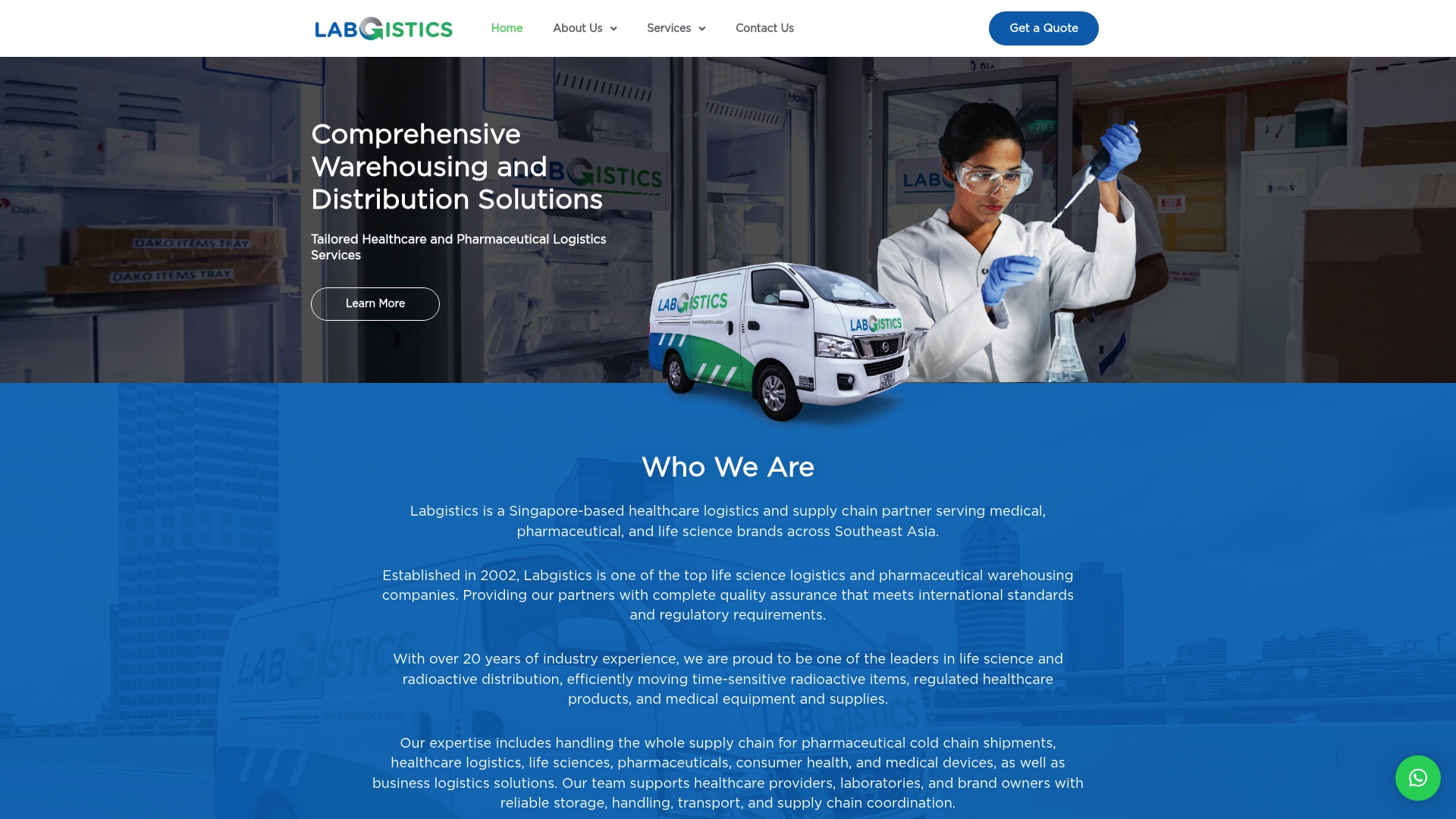
Whether you need temperature-controlled storage, cold chain distribution, regulatory compliance support, or end-to-end supply chain management, Labgistics provides tailored logistics solutions built specifically for the healthcare sector. The team also supports pharma logistics compliance across Singapore and the broader Southeast Asia region, helping clients meet HSA and PIC/S standards from day one. Contact Labgistics to discuss how its warehousing and distribution infrastructure can support your pharmaceutical supply chain.
FAQ
What is pharmaceutical warehousing?
Pharmaceutical warehousing is the controlled storage and handling of medicinal products under GMP or GDP conditions to preserve their quality, safety, and efficacy. It includes defined zones for receiving, quarantine, approved storage, rejected materials, and dispatch.
What is the difference between GMP and GDP in warehousing?
GMP governs storage conditions at or near the point of manufacture, while GDP covers distribution and storage after product release. Both require environmental controls and documentation, but GDP places additional emphasis on supply chain traceability and qualified persons responsible for distribution.
What temperature ranges are used in pharmaceutical cold chain storage?
Most biologics and vaccines require storage between 2°C and 8°C, while ultra-sensitive therapies such as mRNA products require ultra-cold storage at negative 60°C to negative 80°C. All cold storage must be temperature-mapped, continuously monitored, and supported by validated emergency procedures.
Does using a 3PL warehouse transfer compliance responsibility?
No. 3PL warehousing does not relieve the manufacturer of quality system responsibility. A quality agreement between the manufacturer and the 3PL must define shared documentation, inspection, and deviation investigation obligations.
What causes most pharmaceutical warehouse audit failures?
Segregation and inventory status discrepancies between physical stock and system records are among the most common audit findings. Misalignments in quarantine, approved, rejected, and returned goods categories trigger expanded regulatory scrutiny.