
Healthcare supply chain managers face a daily balancing act: move products fast, keep them safe, meet strict regulatory requirements, and do all of this at a cost that makes business sense. Transportation management sits at the center of this challenge, and organizations that treat it as a strategic function rather than a back-office task consistently outperform those that do not. This article breaks down the four core advantages of optimized transportation management in healthcare logistics and provides practical guidance you can apply to your operations across Southeast Asia and beyond.
Table of Contents
- Improved efficiency and cost savings
- Enhanced security and traceability
- Stronger sustainability practices
- Compliance with healthcare regulations
- Comparison: How these advantages work together
- Why most healthcare organizations underutilize transportation management
- Ready to elevate your healthcare transportation management?
- Frequently asked questions
Key Takeaways
| Point | Details |
|---|---|
| Boost efficiency | Smart transportation management cuts costs and accelerates delivery for healthcare supply chains. |
| Increase traceability | Integrated tracking protects medical shipments and supports compliance. |
| Enhance sustainability | Switching to greener transport modes reduces environmental footprint. |
| Maintain compliance | Structured transportation processes help avoid regulator penalties and disruptions. |
Improved efficiency and cost savings
Efficiency and cost control are the first reasons most supply chain managers look closely at transportation management, and the data backs up the business case. Intermodal transportation improves efficiency and reduces costs in pharma supply chains by leveraging multiple transport modes for the strengths of each. Intermodal logistics means using more than one type of transport, such as combining sea freight for long cross-border hauls with road transport for last-mile delivery, rather than relying on a single mode for the entire journey.
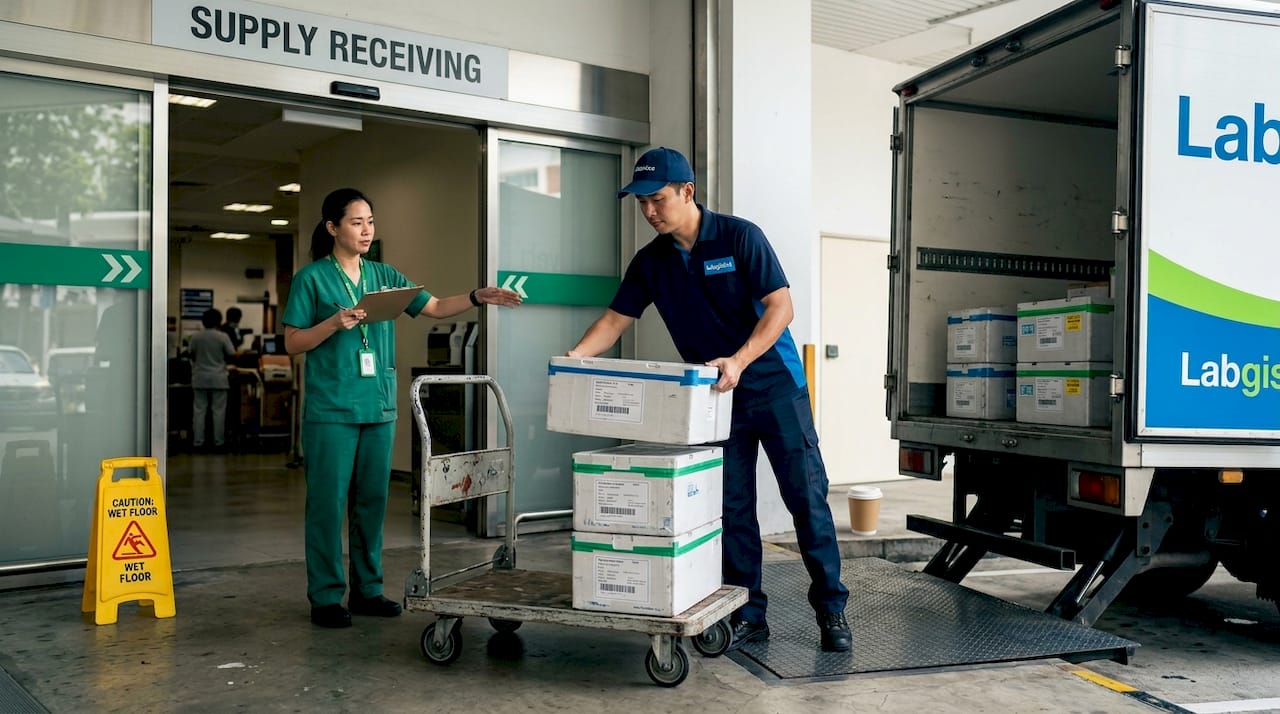
The practical impact is significant. Rail handles large volumes at lower fuel costs per unit. Sea freight moves bulk pharmaceutical ingredients across the region at a fraction of the cost of air. Trucks provide the flexibility needed for hospital deliveries and time-sensitive final-mile runs. When you optimize healthcare transportation to match shipment type, urgency, and route with the most suitable mode, unnecessary costs disappear.
Key actions that drive efficiency gains include:
- Conducting regular lane analysis to identify routes where switching modes would cut costs without affecting delivery timelines
- Negotiating volume-based contracts with carriers across multiple modes to lock in preferential rates
- Consolidating shipments where order frequencies allow, reducing the number of individual movements and associated administrative costs
- Standardizing fleet utilization metrics to avoid underloaded vehicles and identify capacity waste before it compounds
The advantages of supply chain management in healthcare extend well beyond simple freight savings. Efficient routing reduces product exposure to handling errors and temperature excursions, which translates directly into fewer write-offs and fewer stock-outs at the point of care.
“Logistics efficiency in pharmaceutical supply chains is not just a financial metric. It is a quality indicator. Every unnecessary delay or inefficient transfer point is an opportunity for product integrity to be compromised.”
Pro Tip: Track and analyze transportation KPIs monthly, including on-time delivery rate, cost per shipment lane, and carrier rejection rates. These metrics often reveal hidden inefficiencies that are invisible without structured review. Even a 5% improvement in lane utilization can return significant annual savings across a regional distribution network.
Enhanced security and traceability
Cost savings matter, but they must never come at the expense of product security. In pharmaceutical and medical device transport, a single traceability failure can result in regulatory action, product recall, or patient harm. This is why modern transportation management places a strong emphasis on visibility at every stage of the shipment journey.
Intermodal solutions provide enhanced security and traceability via modern tracking technologies embedded in containers. Real-time GPS tracking, tamper-evident seals, and temperature data loggers give supply chain managers continuous visibility over shipment status, regardless of which transport mode is currently carrying the product.
Robust healthcare logistics security practices in transportation management typically cover the following areas:
- Real-time location monitoring for all active shipments, with automated alerts for route deviations or unexpected stops
- Temperature and humidity logging that records excursion events with timestamps and geographic coordinates
- Electronic chain of custody documentation that records every handoff point, from manufacturer to final delivery
- Tamper detection using physical seals and digital verification at transfer nodes
Integrated traceability is not just a quality assurance tool. It is a compliance requirement under international standards such as Good Distribution Practices (GDP), as well as under national regulations across Southeast Asian markets. When you build strong pharma logistics into your transportation management system, you create an auditable record that satisfies regulators and gives your customers confidence.
“Enhanced traceability in intermodal pharma supply chains reduces regulatory risk while preserving product integrity.”
Theft and diversion are also real risks for high-value pharmaceutical shipments. Chain of custody controls, carrier vetting protocols, and facility access management at transshipment points reduce these risks materially. Safe distribution and compliance standards require that security is designed into the transportation process, not applied as an afterthought at the point of delivery.
Stronger sustainability practices
Environmental sustainability has moved from a corporate responsibility initiative to a procurement and regulatory requirement for many healthcare organizations. Governments across Southeast Asia are tightening emissions standards, and large pharmaceutical companies face increasing pressure from global customers and investors to demonstrate measurable progress on carbon reduction. As a result, businesses are also looking for regulatory services that can help them stay aligned with evolving compliance expectations while meeting sustainability goals.
Mode-shifting strategies achieve significant carbon reduction and sustainability gains in pharma logistics. The most direct path to lower emissions is reducing reliance on air freight for shipments that are not genuinely time-critical.
| Transport mode | Relative CO2 emissions | Relative cost | Average speed |
|---|---|---|---|
| Air freight | Very high | Very high | Fastest |
| Road (truck) | Medium | Medium | Fast |
| Rail | Low | Low to medium | Moderate |
| Sea freight | Very low | Lowest | Slowest |
This comparison shows the real trade-off supply chain managers face. Air freight offers speed but comes with the highest cost and the highest carbon footprint. Sea and rail are far more sustainable and cost-effective, but require more lead time. Effective transportation management is about matching the right mode to the actual urgency and sensitivity of each shipment.
Practical approaches to building greener logistics include:
- Reviewing your shipment data to identify lanes where air is being used out of habit rather than genuine necessity
- Working with eco-friendly pharma logistics providers who actively invest in lower-emission fleets and cold chain technologies
- Building longer planning horizons into procurement so that sea and rail become viable options for more shipment categories
- Measuring and reporting transportation emissions as part of your sustainable supply chain practices
Pro Tip: Evaluate each shipment lane quarterly to identify opportunities to consolidate loads or shift to greener modes. Even moving 15 to 20 percent of your current air freight volume to sea freight can produce a measurable reduction in your supply chain’s carbon output and significantly lower costs.
Sustainability is increasingly factored into supplier qualification criteria. Healthcare organizations that can demonstrate a structured approach to emissions reduction in their transportation operations are better positioned to win and retain contracts with major healthcare systems and global pharma companies.
Compliance with healthcare regulations
Regulatory compliance is non-negotiable in pharmaceutical and medical device logistics. A single documentation gap, an unvalidated transport lane, or a missed temperature excursion report can result in batch rejection, regulatory warning letters, or market access restrictions. Transportation management creates the structure needed to prevent these outcomes.
Intermodal strategies, with advanced tracking, support compliance with traceability and environmental regulations in healthcare logistics. But compliance requires more than technology. It requires standardized processes, trained personnel, and systematic verification at every step of the transportation chain.
Key steps to maintain compliance in healthcare transportation:
- Define and document transport SOPs (Standard Operating Procedures) for every product category, including temperature requirements, maximum transit times, and approved carrier lists
- Validate all transport lanes for temperature-sensitive products before commercial use, and revalidate after any significant change in route or carrier
- Implement real-time temperature monitoring with automatic excursion alerts and pre-defined response protocols
- Maintain complete, accessible documentation for every shipment, including carrier certifications, temperature records, and chain of custody logs
- Conduct regular carrier audits to verify that third-party logistics partners maintain the required standards, equipment condition, and staff training
- Integrate compliance checkpoints into your transportation management system so that non-conformances trigger corrective actions rather than being discovered during post-shipment review
Navigating pharma logistics challenges in Southeast Asia requires awareness of how regulatory expectations vary across markets. GDP guidelines from the World Health Organization provide a baseline, but national authorities in markets such as Indonesia, Vietnam, Thailand, and the Philippines each have specific requirements that affect transport documentation and carrier qualifications.
Pro Tip: Establish formal supplier audits for all transport partners and integrate compliance scoring into your quarterly performance reviews. Carriers who consistently score well on audit criteria are worth investing in through longer-term contracts. Those who fall below standard should have documented improvement plans or be replaced with safe distribution and compliance focused providers.
Digital documentation reduces the risk of human error and speeds up regulatory submissions. Moving from paper-based shipping records to validated electronic systems also makes it far easier to respond to regulatory queries and to conduct internal investigations when issues arise.
Comparison: How these advantages work together
The four advantages described above do not operate in isolation. They reinforce each other, and organizations that manage transportation as an integrated system extract far more value than those that optimize each element separately.
| Advantage | Primary benefit | Secondary benefit | Key trade-off |
|---|---|---|---|
| Efficiency and cost savings | Lower operational costs | Fewer handling touchpoints | Speed vs. cost on urgent lanes |
| Security and traceability | Regulatory compliance | Reduced theft and loss | Technology investment vs. manual processes |
| Sustainability | Lower emissions | Cost reduction on greener modes | Mode availability vs. environmental goals |
| Regulatory compliance | Market access protection | Reduced recall risk | Process rigor vs. operational agility |
Integrated healthcare transportation outcomes improve when your team manages these four dimensions together rather than addressing them through separate programs. For example, a decision to shift a shipment lane from air to sea freight simultaneously improves cost, reduces emissions, and often allows more time to complete compliance documentation. The benefits compound.
The most effective healthcare supply chain teams build transportation management into their core operating model. They assign ownership, set measurable targets, review performance consistently, and treat transportation as a source of competitive and operational advantage, not simply a cost to be minimized.
Why most healthcare organizations underutilize transportation management
Here is an uncomfortable reality: most healthcare organizations are not capturing the full value available from transportation management, even when they have access to the right tools and partners. The reason is almost always organizational, not technical.
Transportation is widely treated as a cost center. Budget is allocated, performance is measured against spend, and the primary objective becomes cost reduction. This framing misses the strategic value that transportation management delivers across quality, compliance, and sustainability dimensions. Organizations that break out of this mindset see transportation management as a lever for competitive differentiation, not just a line item to be managed.
The teams that perform best share several common characteristics. They invest in technology that gives them real-time visibility across all modes and lanes. They build integrated partnerships with logistics providers who understand healthcare regulations, not just freight operations. And they review transportation performance continuously, using data to make proactive decisions rather than reacting to problems after they occur.
Lessons from pharma logistics real-world solutions consistently show that the gap between good and great transportation management is not about infrastructure. It is about intent and accountability. When supply chain leaders treat transportation as a driver of innovation rather than a compliance checkbox, the operational results follow.
“True leaders treat transportation management as a driver of innovation, not just a compliance checkbox.”
Pro Tip: Identify one specific quick-win in your current operation. For example, review your top three highest-volume air freight lanes and assess whether any of them could shift to sea or rail with appropriate lead time adjustments. Measure the cost, emissions, and compliance impact of the change. A single successful lane optimization builds the internal case for broader transformation.
The path to better transportation management is not one large transformation project. It is a series of deliberate, data-driven decisions made consistently over time.
Ready to elevate your healthcare transportation management?
The advantages covered in this article are achievable for any healthcare organization that is willing to treat transportation management as a strategic priority.
Labgistics Asia brings over 20 years of specialized experience in pharmaceutical and healthcare logistics across Southeast Asia. Our transportation management solutions are designed specifically for the regulatory and operational demands of the healthcare sector. Whether you need to strengthen supply chain security, improve compliance documentation, reduce emissions, or build more resilient risk management strategies, our team has the infrastructure, expertise, and regional presence to support your goals. Contact us to discuss how we can help you improve performance across every dimension of your healthcare transportation operations.
Frequently asked questions
What is transportation management in healthcare supply chains?
Transportation management is the process of planning, executing, and optimizing the movement of medical and pharmaceutical goods to ensure timely, safe, and compliant delivery across all transport modes and routes.
How does using more than one transport mode help pharma supply chains?
Intermodal transportation improves efficiency and reduces costs in pharma supply chains by matching each shipment segment to the mode best suited for that leg, whether it is rail for long-haul volume or trucks for final delivery.
Why is traceability so important in pharmaceutical transportation?
Traceability ensures products meet safety and regulatory standards throughout transit, and modern tracking technologies embedded in containers enable fast identification and response when issues such as temperature excursions or route deviations occur.
What are the main environmental benefits of optimized transportation management?
Mode-shifting strategies achieve significant carbon reduction by moving shipments from high-emission modes like air freight to lower-emission alternatives such as sea or rail, reducing both costs and environmental impact at the same time.