
Quality assurance in pharma logistics: A compliance guide
A shipment of temperature-sensitive biologics sits at a Southeast Asian customs checkpoint for six hours longer than planned. The cold pack is failing. No one flagged the risk in advance, and by the time the product reaches the consignee, a temperature excursion has occurred. That scenario is not rare. Up to 20% of pharma shipments arrive compromised due to lapses in quality assurance (QA), costing the industry billions and, more critically, threatening patient safety. This guide walks pharmaceutical and medical logistics managers through a structured, step-by-step approach to implementing QA in pharma logistics across Southeast Asia, from foundational requirements to continuous improvement.
Table of Contents
- Understanding quality assurance in pharma logistics
- Preparing for quality assurance: Requirements and tools
- Executing quality assurance: Step-by-step process
- Verification and continuous improvement
- A new mindset for pharma logistics QA: Proactive, not reactive
- Optimize your pharma logistics with trusted solutions
- Frequently asked questions
Key Takeaways
| Point | Details |
|---|---|
| QA is vital in pharma logistics | Quality assurance prevents shipment damage and supports patient safety in Southeast Asia. |
| Preparation is key | Regulatory, personnel, and technology readiness are essential before starting QA processes. |
| Proactive risk management wins | Monitoring trends and embedding risk assessment helps prevent issues before they occur. |
| Continuous improvement matters | Regular audits and adapting processes based on feedback keep QA effective and compliant. |
Understanding quality assurance in pharma logistics
Quality assurance in pharmaceutical logistics refers to the system of planned and systematic activities designed to confirm that products are handled, stored, and transported under conditions that meet regulatory requirements and preserve their integrity. It is not a single checkpoint. It is an integrated framework that spans the entire supply chain, from manufacturer to patient.
In Southeast Asia, the regulatory landscape adds considerable complexity. The ASEAN Good Distribution Practice (GDP) guidelines set regional standards for pharmaceutical distribution, and enforcement is intensifying. ASEAN GDP enforcement is directly driving cold chain upgrades and pushing third-party logistics (3PL) providers to invest in specialized infrastructure. The 3PL cold chain segment is recording the highest growth in the region, largely because of biologics and cell and gene therapies that require strict temperature control.
Understanding cold chain importance is the foundation of any QA program in this region. Without it, QA efforts lack the context needed to prioritize risks and allocate resources correctly.
Traditional QA vs. integrated QA: A practical comparison
| Dimension | Traditional QA | Integrated QA |
|---|---|---|
| Approach | Reactive, checkpoint-based | Proactive, embedded across all operations |
| Data use | Post-incident reporting | Real-time monitoring and trend analysis |
| Compliance focus | Documentation-first | Risk-based, patient-safety-first |
| Incident response | Corrective action after the fact | Preventive action before failure occurs |
| Personnel role | QA team only | Cross-functional ownership |
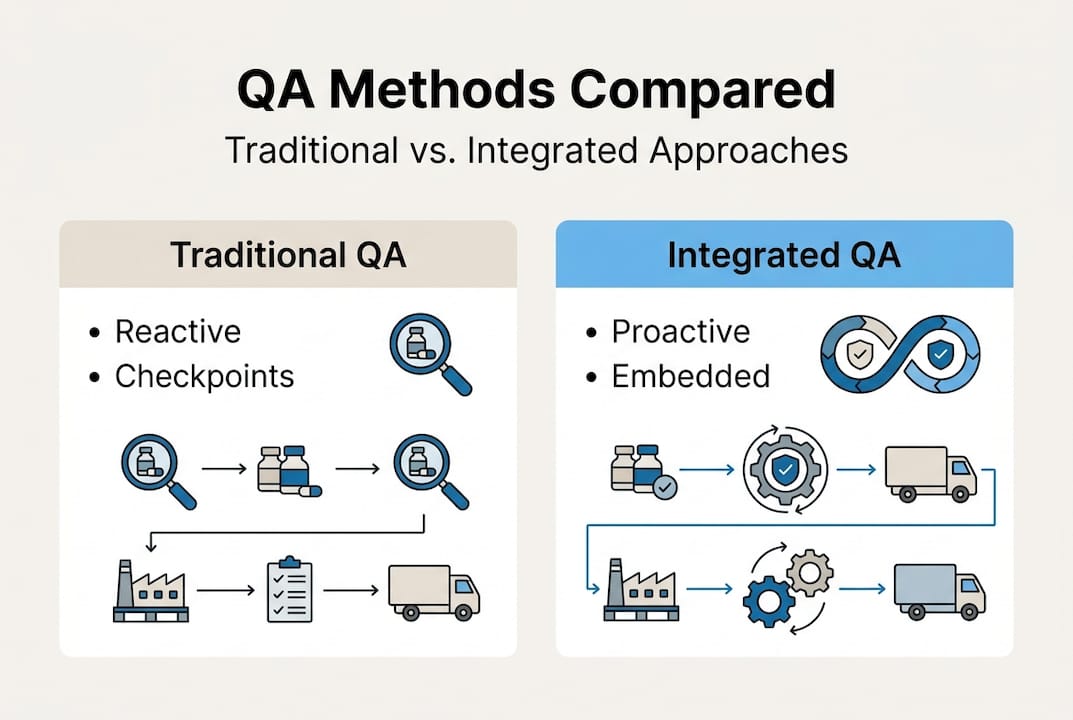
Most operations in Southeast Asia still rely on traditional QA frameworks. The shift to integrated QA is what separates compliant operations from truly resilient ones.
Key factors driving the need for stronger QA in Southeast Asian pharma logistics include:
- Regulatory pressure: ASEAN GDP and individual country requirements from agencies such as Thailand’s FDA, Indonesia’s BPOM, and Singapore’s HSA create a layered compliance environment.
- Product complexity: Biologics, vaccines, and oncology drugs have narrow temperature bands and zero tolerance for excursions.
- Infrastructure variability: Cold chain infrastructure quality varies significantly across the region, from Singapore’s world-class facilities to last-mile gaps in rural markets.
- Customs and border delays: Extended dwell times at customs in markets like Indonesia and the Philippines are a leading cause of temperature excursions.
The financial and clinical cost of QA failures is severe. Damaged shipments result in product write-offs, regulatory penalties, loss of distribution licenses, and, in the worst cases, patient harm. Getting QA right is not optional. It is a business and ethical obligation.
Preparing for quality assurance: Requirements and tools
Before any QA process can be executed, managers must ensure the right infrastructure, technology, and personnel are in place. Preparation is where most QA programs succeed or fail before they even start.
Regulatory standards and documentation
Every QA program in Southeast Asia must be anchored in the relevant regulatory frameworks. These typically include:
- ASEAN GDP guidelines for pharmaceutical distribution
- ICH Q10 Pharmaceutical Quality System guidelines
- Country-specific requirements from national health authorities
- International Air Transport Association (IATA) regulations for air freight of dangerous goods and temperature-sensitive products
- Standard Operating Procedures (SOPs) for all logistics processes, including receipt, storage, picking, packing, and dispatch
Documentation is the backbone of QA. Without accurate, real-time records, you cannot demonstrate compliance to regulators, identify root causes during investigations, or defend your processes in an audit. Logistics security tips also inform documentation best practices, particularly for high-value and controlled substances.
Critical technology for QA readiness
The right tools make the difference between a reactive and a proactive QA system. Core technology requirements include:
| Technology | Purpose | Application in SEA logistics |
|---|---|---|
| Real-time temperature loggers | Continuous excursion monitoring | Used in trucks, warehouses, and air cargo containers |
| Automated alarms | Immediate excursion notification | Triggered when set points are breached |
| Track-and-trace systems | Chain of custody visibility | Essential for high-value biologics and controlled items |
| Warehouse Management Systems (WMS) | Inventory accuracy and expiry control | Integrated with cold room sensors and batch records |
| CAPA software | Corrective and preventive action tracking | Documents incident resolution and prevents recurrence |
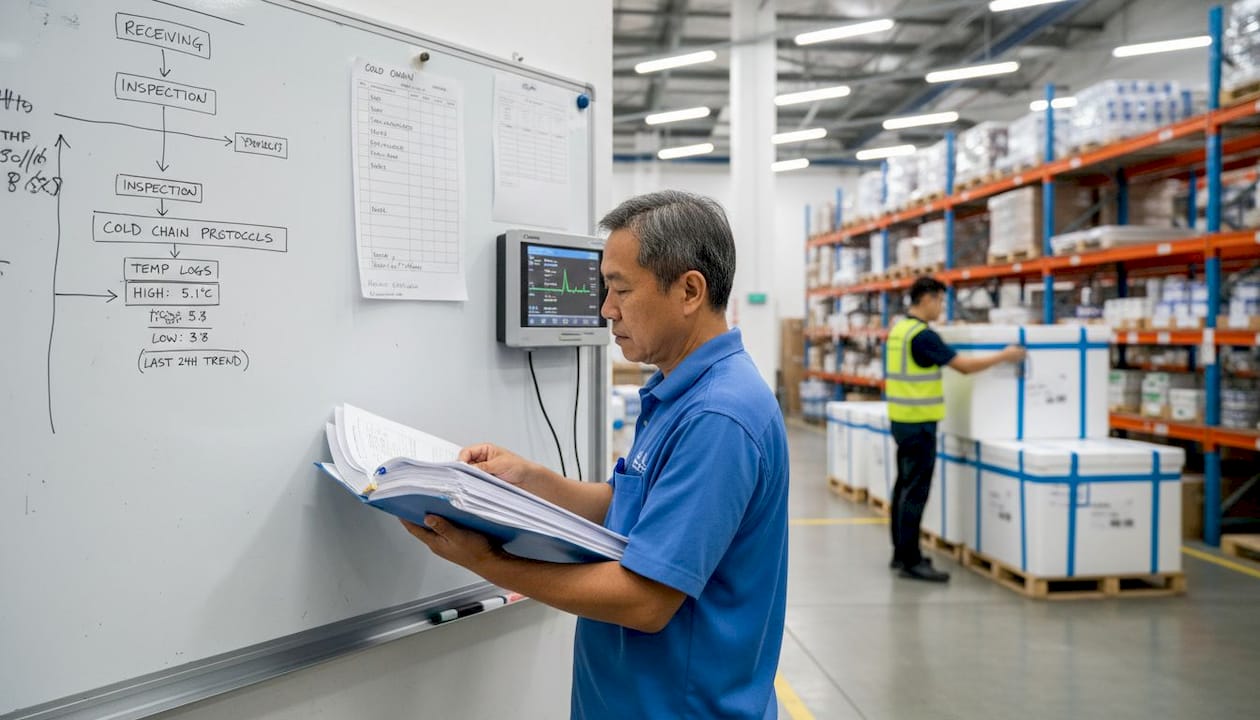
Temperature excursions affect up to 20% of shipments due to delays, equipment failure, and handling errors. These are most common during airfreight loading, last-mile delivery, and customs clearance in Southeast Asia. The only way to catch excursions before they result in product loss is through real-time monitoring with automated escalation protocols.
Personnel skills and training
Technology alone is insufficient. Personnel handling temperature-sensitive pharmaceuticals must be trained in GDP principles, cold chain handling procedures, alarm response, and incident reporting. Training records must be documented and refreshed regularly, particularly when SOPs are updated or new products are onboarded. The validation process steps for personnel and equipment qualification form a critical part of QA readiness.
Pro Tip: Invest in real-time temperature monitoring devices that transmit data to a centralized dashboard accessible to your QA and operations teams simultaneously. Early detection, even during a three-hour customs delay, gives you time to act before a product is compromised.
Executing quality assurance: Step-by-step process
With the right tools and requirements in place, execution becomes a structured, repeatable process. Here is a practical workflow for implementing QA in day-to-day pharmaceutical logistics operations.
-
Plan the QA scope and risk profile. Before a shipment moves, define the product’s temperature requirements, acceptable excursion limits, transit route risks, and escalation contacts. Map each leg of the journey against known risk points, including customs dwell times, transshipment hubs, and last-mile conditions. This planning step translates your regulatory knowledge into operational parameters.
-
Establish monitoring protocols. Configure temperature loggers to record at intervals appropriate for the product’s stability profile, typically every 5 to 15 minutes. Set alarm thresholds that provide enough lead time to intervene. Assign responsibility for monitoring to a named individual on every shift.
-
Conduct in-transit and in-warehouse checks. Physical checks at key handover points, such as airline loading, port receipt, and warehouse intake, must be documented on standard forms. Any deviation from expected conditions must be flagged immediately and entered into the QA system.
-
Perform root cause analysis (RCA) for any deviation. When an excursion or handling error occurs, RCA is mandatory. Common root causes in SEA logistics include equipment failure, inadequate packing for ambient conditions, customs delays beyond planned dwell times, and poor SOP adherence. RCA findings must be documented with supporting data, including temperature logs, shipping records, and personnel statements.
-
Assess product stability. Not every excursion results in product rejection. A qualified person (QP) or pharmacist must evaluate the excursion data against the product’s stability profile and manufacturer guidance. This assessment determines whether the product can be released, quarantined for further testing, or rejected.
-
Implement CAPA. Corrective and Preventive Actions (CAPA) address both the immediate failure and its systemic cause. A corrective action might involve retraining a packing team. A preventive action might involve revising the SOP to require pre-cooling of packing materials before use. All CAPAs must have owners, deadlines, and verification steps.
-
Review and close the incident. Once CAPA is implemented and verified, the incident record is closed. Closed records feed into trend analysis during periodic quality reviews.
“Embedding Quality Risk Management (QRM) per ICH Q9 into daily logistics decisions moves QA from a compliance function to a strategic capability. The focus should be on leading indicators and process trends, not just reactive CAPA.”
Pro Tip: Track process trends across shipments, not just individual incidents. If excursions are clustering around a specific route, carrier, or time of year, that pattern is your early warning system. Addressing it proactively is far more cost-effective than managing repeated failures. For further context on the most common obstacles you will face, review pharma logistics challenges in the region.
Verification and continuous improvement
Execution without verification is incomplete QA. Once your processes are running, you need structured mechanisms to confirm they are working and to improve them over time.
Audit and verification strategies
Internal audits, conducted quarterly or semiannually, are the primary tool for verifying QA effectiveness. Audits should cover documentation completeness, SOP adherence, equipment calibration records, training logs, and CAPA closure rates. External audits by regulatory authorities or third-party accreditation bodies provide an independent assessment of your QA maturity.
Verification also includes process qualification. When a new route, carrier, or cold chain solution is introduced, it should be validated before routine use. This involves temperature mapping studies, lane qualification runs, and equipment performance tests.
Reactive vs. proactive improvement
| Improvement Type | Trigger | Method | Outcome |
|---|---|---|---|
| Reactive | Incident or audit finding | RCA, CAPA, SOP revision | Addresses known failures |
| Proactive | Trend analysis, risk review | Process optimization, training updates | Prevents emerging failures |
Reactive improvement is necessary but insufficient on its own. The most resilient QA programs use incident data from excursion patterns to identify systemic vulnerabilities before they become repeated failures. This is particularly important in Southeast Asia, where route conditions and regulatory requirements can shift quickly.
Key metrics for ongoing QA performance
Tracking the right metrics keeps your QA program focused and measurable. The following indicators are essential for pharmaceutical logistics managers in Southeast Asia:
- Excursion rate: Percentage of shipments experiencing a temperature excursion, tracked by route, carrier, and product type
- CAPA closure rate: Percentage of open CAPAs resolved within the defined timeframe
- Audit score: Internal and external audit findings categorized by severity and recurrence
- On-time delivery rate: Correlated with excursion risk, since delays increase dwell time exposure
- Documentation compliance rate: Percentage of shipments with complete, accurate QA records at each handover point
- Incident repeat rate: Frequency of the same root cause appearing in multiple incidents, a key indicator of unresolved systemic issues
Reviewing these metrics monthly in a Quality Management Review (QMR) meeting allows your team to prioritize improvement efforts and allocate resources where they have the greatest impact. Maintaining cold chain and compliance standards in Southeast Asia requires consistent measurement and a willingness to act on what the data shows.
Continuous improvement is not a one-time project. It is an operating discipline embedded into your team’s daily work.
A new mindset for pharma logistics QA: Proactive, not reactive
Most QA programs in Southeast Asia are built to satisfy regulators. That is a reasonable starting point, but it is not sufficient for the complexity of the region’s pharmaceutical supply chain. The real gap is not in documentation or technology. It is in mindset.
Compliance-driven QA asks: “Did we meet the requirement?” Risk-based QA asks: “What could fail next, and how do we prevent it?” The difference in outcomes between these two approaches is significant. Embedding QRM per ICH Q9 into daily logistics decisions means that every team member, from warehouse operators to logistics coordinators, is thinking about risk as part of their normal work, not just when an incident occurs.
Leading indicators, such as increasing dwell times at a customs checkpoint or a carrier’s rising excursion frequency, tell you where the next failure is likely to come from. Lagging indicators, such as CAPA counts, tell you where it already came from. The managers who consistently outperform their peers on QA metrics are those who invest attention in the leading indicators. Understanding why cold chain discipline is non-negotiable is the first step toward building that proactive culture.
Shifting from a compliance-only posture to a risk-based, proactive QA culture is the single most impactful change a logistics manager can make in Southeast Asia today.
Optimize your pharma logistics with trusted solutions
Implementing a robust QA process across Southeast Asia’s complex logistics environment requires more than good intentions. It requires a partner with the regulatory knowledge, infrastructure, and technical capabilities to support every stage of the process.
Labgistics Asia brings over 20 years of experience in pharmaceutical and healthcare logistics across Southeast Asia. From cold chain logistics and real-time temperature monitoring to supply chain security and regulatory compliance support, Labgistics offers end-to-end solutions designed specifically for the demands of this market. Whether you are strengthening your existing QA framework or building one from the ground up, the team at Labgistics can provide the operational expertise and accredited infrastructure to help you meet regional and international standards with confidence.
Frequently asked questions
How do managers handle temperature excursions in pharma logistics?
Managers should conduct root cause analysis, assess product stability against the manufacturer’s specifications, and implement corrective and preventive actions. Excursions are most common during airfreight, last-mile delivery, and customs clearance in Southeast Asia.
What are the key requirements for effective quality assurance in Southeast Asia?
Effective QA requires regulatory compliance with ASEAN GDP standards, skilled and trained personnel, real-time temperature monitoring technology, and accurate documentation at every handover point. ASEAN GDP enforcement continues to raise the baseline requirements across the region.
What process indicators should managers monitor for early risk detection?
Managers should monitor leading indicators such as temperature fluctuation trends, carrier delay patterns, and customs dwell times. Embedding QRM principles into daily operations helps teams act on these signals before an excursion occurs.
How does ASEAN GDP enforcement impact pharma logistics QA?
ASEAN GDP enforcement sets the minimum standard for pharmaceutical distribution across the region, driving cold chain infrastructure upgrades and tighter documentation requirements. The 3PL cold chain segment has seen the highest growth in response, particularly for biologics and temperature-sensitive therapies.
Recommended
- Pharma logistics: Ensuring safe distribution and compliance
- Pharma logistics security: 5 ways to strengthen your supply chain
- Pharma Logistics Challenges and Smart Solutions | Labgistics
- How to validate medical logistics processes: 5 key steps