
Logistics security for healthcare: safeguarding SEA supply chains
A single month’s data tells a stark story: Southeast Asia recorded over $339,000 in pharma theft losses in July 2025 alone, and that figure only captures reported incidents. For healthcare procurement professionals and supply chain managers operating across the region, that number is a warning signal, not an anomaly. Regulatory compliance is necessary, but it is not sufficient to protect product integrity, patient safety, or business continuity. This article examines the specific risks facing pharmaceutical logistics in Southeast Asia, the frameworks designed to address them, and the practical tools and strategies that move organizations from reactive to proactive security.
Table of Contents
- Why logistics security matters in healthcare supply chains
- Frameworks and regulations: GDP, TAPA, and ISO standards
- Technology solutions: Traceability, monitoring, and resilient supply chains
- Regional challenges: Navigating Southeast Asia’s fragmented landscape
- Moving from reactive to proactive logistics security: Our expert take
- Secure your supply chain: Expert solutions for Southeast Asia healthcare logistics
- Frequently asked questions
Key Takeaways
| Point | Details |
|---|---|
| Security prevents losses | Robust logistics security lowers theft, counterfeiting, and compliance risks in pharma supply chains. |
| Frameworks drive compliance | GDP, TAPA, and ISO 28000 standards support quality, traceability, and operational safety in logistics. |
| Technology enables resilience | Utilizing traceability tools like RFID, IoT sensors, and real-time monitoring strengthens supply chain visibility and response. |
| Regional adaptation is key | Adapting to Southeast Asia’s diverse regulations and import dependencies protects against disruptions and shortages. |
| Proactive risk management | Transitioning from reactive controls to proactive, multi-layered strategies builds resilience and ensures patient safety. |
Why logistics security matters in healthcare supply chains
Pharmaceutical logistics is not standard freight. Products are time-sensitive, temperature-controlled, high-value, and life-critical. A disrupted shipment of insulin or a contaminated batch of vaccines does not just represent a financial loss. It can directly harm patients and trigger regulatory action. The stakes are categorically different from general cargo.
Southeast Asia’s healthcare supply chains face a distinct combination of pressures. Regional import dependencies, varying regulatory environments, and multi-modal transport networks create multiple points of vulnerability. Medical supply chain risks in Southeast Asia demonstrate that poor logistics security leads directly to product shortages, compliance failures, and patient safety risks, not as theoretical possibilities, but as documented outcomes.
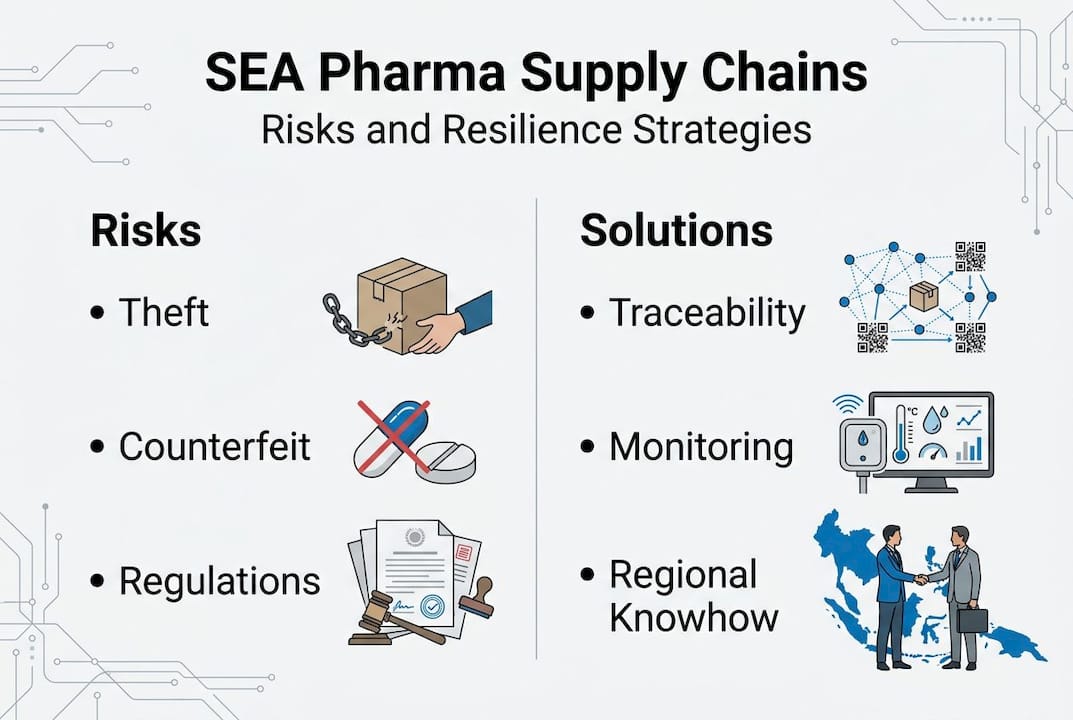
The threat landscape is specific and well-cataloged. According to pharma logistics security tips and regional intelligence, APAC pharmaceutical logistics faces four primary categories of risk:
- Theft and hijacking: High-value pharmaceutical cargo is a target, particularly during last-mile delivery in urban corridors.
- Counterfeiting: Falsified medicines enter supply chains through weak traceability and inadequate verification controls.
- Insider threats: Employees with access to warehouses or transport routes represent a significant and often underestimated risk.
- Regulatory non-compliance: Documentation gaps and inadequate handling procedures expose organizations to seizure, recall, and reputational damage.
“The APAC region continues to see theft, counterfeiting, hijacking, and insider threats as primary loss drivers in pharmaceutical logistics, with no single country immune to these risks.”
Each of these risks has an operational and a regulatory dimension. A stolen shipment is both a financial loss and a potential compliance breach. A counterfeit product reaching a patient is both a safety failure and a liability event. Organizations that treat logistics security as solely a compliance exercise miss the full scope of what is at stake.
With a clear view of the real risks, let’s examine the standards that underpin secure supply chains.
Frameworks and regulations: GDP, TAPA, and ISO standards
Three major frameworks define best practice for logistics security in pharmaceutical supply chains: Good Distribution Practice (GDP), the TAPA Pharmaceutical Freight Security Requirements (PFSR), and ISO 28000.
GDP compliance is the foundational standard for pharmaceutical distribution globally. It requires organizations to maintain rigorous quality management systems, control temperature throughout the supply chain, maintain accurate documentation, and train all personnel handling pharmaceutical products. Standards come from WHO, the EU, and PIC/S (Pharmaceutical Inspection Co-operation Scheme), and their requirements for product safety and traceability are increasingly adopted across Southeast Asia.
| Framework | Primary focus | Key requirement |
|---|---|---|
| GDP (WHO/EU/PIC/S) | Quality and traceability | Temperature control, documentation, training |
| TAPA PFSR | Physical security | Facility standards, vehicle security, theft prevention |
| ISO 28000 | Supply chain security | Risk assessment, security management systems |
TAPA PFSR specifically combats theft and counterfeiting through standardized facility and transit security requirements, while ISO 28000 addresses security management across the entire supply chain. These frameworks are complementary, not competing.
Serializaion and traceability mandates add another layer. GS1 standards and EPCIS (Electronic Product Code Information Services) enable end-to-end product visibility, supporting both anti-counterfeiting efforts and regulatory reporting. Implementation varies significantly by market, with more mature requirements in Singapore and Thailand compared to emerging markets.
Here is a practical sequence for aligning with these frameworks:
- Conduct a gap assessment against GDP requirements for your current distribution model.
- Map your facility security against TAPA PFSR criteria, including access controls and alarm systems.
- Implement serialization aligned with GS1/EPCIS where market regulations require it.
- Integrate ISO 28000 principles into your supply chain risk management framework.
- Ensure calibration and validation for temperature monitoring equipment at all critical control points.
Pro Tip: Do not treat GDP certification as a one-time event. Regulatory requirements across Southeast Asia are tightening, and quarterly internal audits against GDP criteria will surface gaps before regulators do.
Understanding regulations is crucial, but practical tools also drive compliance and risk reduction.
Technology solutions: Traceability, monitoring, and resilient supply chains
Compliance frameworks define what you must achieve. Technology defines how you achieve it at scale and with the consistency that pharmaceutical logistics demands.
Traceability technologies are the first line of defense against counterfeiting and loss. RFID (Radio Frequency Identification) tags and QR codes enable real-time product identification at every stage of distribution. Markets like Vietnam demonstrate that RFID and QR traceability are becoming baseline expectations for pharmaceutical supply chain compliance, not optional enhancements.
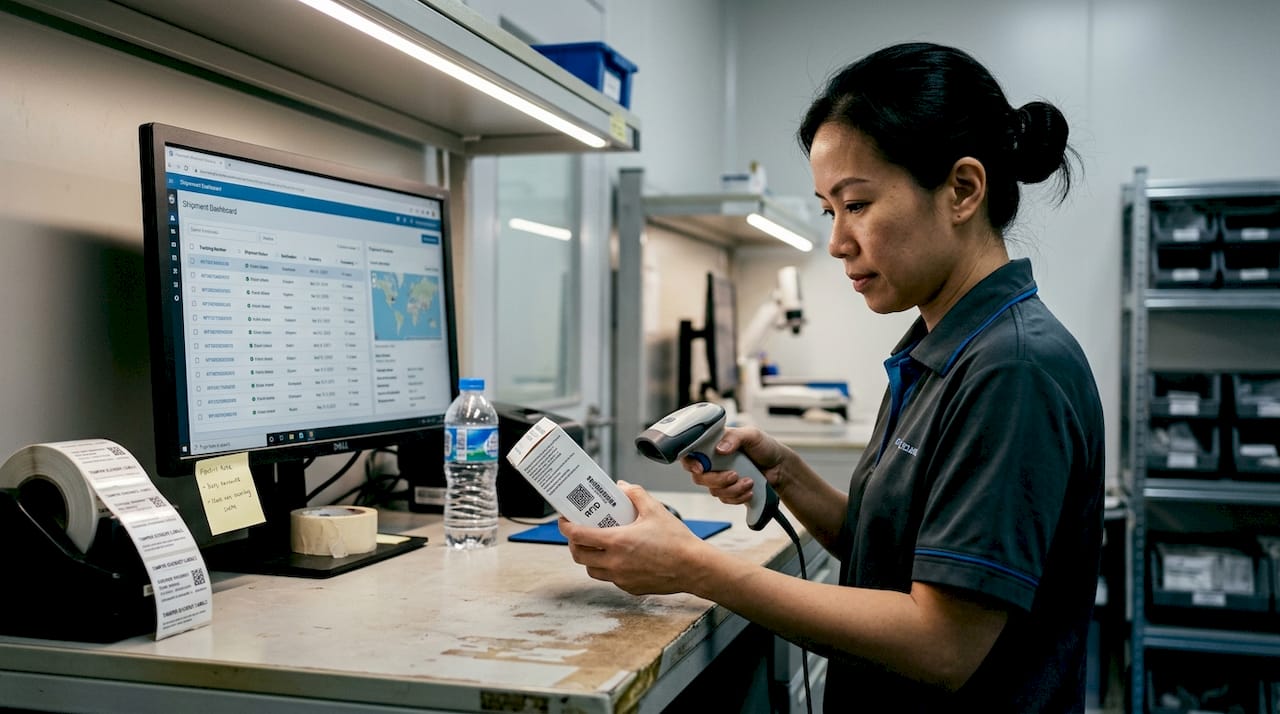
IoT temperature sensors provide continuous monitoring for cold chain products. For biologics and vaccines, maintaining 2 to 8 degrees Celsius throughout transit is non-negotiable. A single excursion outside this range can render an entire shipment unsaleable and create a patient safety incident. Real-time sensor data allows immediate corrective action rather than post-delivery discovery of failures.
| Technology | Application | Primary benefit |
|---|---|---|
| RFID tags | Product identification and tracking | Anti-counterfeiting, inventory accuracy |
| QR codes | Serialization and consumer verification | Traceability, regulatory compliance |
| IoT sensors | Temperature and humidity monitoring | Cold chain integrity, excursion alerts |
| EPCIS platforms | End-to-end supply chain visibility | Regulatory reporting, audit trails |
Beyond individual technologies, resilient supply chains require structural strategies:
- Multi-sourcing: Engage two or more qualified suppliers for critical products to eliminate single points of failure.
- Contingency planning: Define documented escalation protocols for supply disruptions, including alternative transport routes.
- 3PL partner audits: GDP-certified 3PL providers should be audited at least annually, with performance metrics reviewed quarterly.
- Cold chain logistics partnerships: Select partners with validated cold rooms, qualified vehicles, and documented SOPs for temperature excursion management.
Pro Tip: When evaluating 3PL warehouses for healthcare, request evidence of temperature mapping studies for storage areas and ask how IoT sensor alerts are escalated outside of business hours. The answer reveals operational maturity quickly.
With actionable technologies at your disposal, it’s vital to address Southeast Asia’s unique regional challenges.
Regional challenges: Navigating Southeast Asia’s fragmented landscape
Southeast Asia is not a single market. It is ten distinct regulatory environments, each with its own import requirements, documentation standards, and enforcement priorities. For healthcare logistics professionals, this fragmentation is one of the most persistent operational challenges.
Import dependency compounds the risk. Malaysia imports approximately 30% of its pharmaceutical products from India. Thailand maintains three to four months of emergency medical stock, but that buffer can be quickly depleted during sustained disruptions. When global events affect major producing countries, Southeast Asian healthcare systems feel the impact directly and rapidly.
Maritime disruptions illustrate how external shocks translate into supply chain vulnerabilities. Events like Strait of Hormuz disruptions have caused freight rate increases across Asia, affecting pharmaceutical import costs and timelines. Organizations relying on single-source, single-route supply chains are disproportionately exposed.
Practical adaptation strategies include:
- Buffer stock management: Maintain country-specific safety stock levels calibrated to lead times and historical disruption frequency.
- Alternate sourcing documentation: Pre-qualify secondary suppliers and keep their documentation current so switching can occur quickly.
- Document control rigor: Country-specific import permits, certificates of analysis, and regulatory approvals must be maintained accurately and updated proactively.
- Pharma logistics challenges awareness: Stay current on evolving import regulations and customs procedures across target markets.
Key data point: Thailand holds 3 to 4 months of emergency pharmaceutical stock, but Malaysia’s reliance on imported medicines, 30% from India alone, creates concentrated exposure that buffer stocks alone cannot fully address.
Navigating this landscape requires both regional expertise and strong business support in logistics, particularly for organizations managing multi-country distribution networks.
Pro Tip: Build a regulatory calendar for each country in your distribution network. Tracking renewal dates for import licenses and product registrations prevents avoidable disruptions that regulatory changes can cause without warning.
Armed with this knowledge, let’s examine an expert perspective on moving from reactive to proactive security.
Moving from reactive to proactive logistics security: Our expert take
The conventional approach to logistics security in healthcare is to respond to regulatory enforcement. An audit finding triggers a corrective action. A theft incident prompts a security review. This reactive model has a fundamental flaw: by the time the trigger event occurs, damage has already been done to product integrity, patient safety, or your organization’s compliance record.
The more effective model treats security as a continuous operational discipline. GDP-certified multi-sourcing, real-time IoT monitoring, and structured 3PL audits are not responses to incidents. They are systems that prevent incidents from occurring.
The contrarian insight here is that strong logistics security and supply chain resilience are the same investment. Organizations that build proactive security programs are simultaneously building the operational infrastructure that withstands geopolitical shocks, demand surges, and regulatory changes. Security is not a cost center. It is a competitive advantage, and strengthening your pharma supply chain through proactive measures delivers returns that reactive organizations can never access.
Secure your supply chain: Expert solutions for Southeast Asia healthcare logistics
For procurement professionals and supply chain managers ready to move from exposure to confidence, the next step is connecting with partners who specialize in the intersection of security, compliance, and cold chain logistics across Southeast Asia.
Labgistics Asia offers validated logistics solutions built specifically for pharmaceutical, medical, and life science products. Explore ways to strengthen your supply chain with proven operational strategies, optimize your healthcare transportation solutions for multi-country distribution, and access dedicated cold chain compliance services backed by over 20 years of regional expertise. The right partner does not just help you meet standards. They help you stay ahead of them.
Frequently asked questions
What are the biggest risks in pharmaceutical logistics in Southeast Asia?
Theft, counterfeiting, hijacking, insider threats, and regulatory fragmentation are the primary risks. The APAC region faces all of these simultaneously, with enforcement capacity varying significantly by country.
How do GDP and ISO standards improve logistics security?
GDP guarantees product safety through quality management, traceability, and temperature controls, while ISO 28000 secures the entire supply chain through structured risk assessment and security management systems.
What technologies help ensure traceability in pharma logistics?
RFID tags, QR codes, serialization systems, and IoT sensors enable real-time tracking and temperature assurance. Vietnam’s market shows these technologies are increasingly required, not just recommended, for pharmaceutical distribution compliance.
How can companies adapt to supply chain disruptions in Southeast Asia?
Multi-sourcing, buffer inventories, and real-time monitoring form the core resilience strategy. Maritime disruptions and import dependencies mean that alternate sourcing documentation must be maintained and ready to activate, not just planned in theory.
Is logistics security only about compliance?
No. Product shortages and patient risks arise from poor logistics security well before any regulatory penalty is issued. Security protects revenue, patient outcomes, and operational continuity as much as it satisfies regulatory requirements.
Recommended
- Healthcare logistics: cold chain and compliance in SE Asia
- Top medical supply chain risks in Southeast Asia 2026
- Pharma logistics security: 5 ways to strengthen your supply chain
- Business support in healthcare logistics: key functions explained