
Pharma Market Entry Checklist: 2026 Strategic Guide
A pharma market entry checklist is a structured sequence of tasks that pharmaceutical companies must complete to achieve regulatory approval, commercial readiness, and patient access. The standard launch planning horizon now spans 36 months, integrating clinical and commercial strategy from Phase II onward. Executives who treat regulatory, commercial, and logistics preparation as parallel workstreams, rather than sequential steps, consistently reach first approval faster. This guide covers every critical stage, from dossier preparation and EU GMP Annex 16 compliance to cold chain logistics and cross-functional launch coordination, giving you a complete market entry plan for drugs entering Southeast Asia and beyond.
1. What are the core regulatory compliance checklist items for pharma market entry?
Regulatory compliance is the foundation of every successful pharma launch. Without a complete, accurate dossier and properly registered manufacturing sites, approval timelines extend by months or years.
Key regulatory compliance checklist items include:
- Marketing Authorization Holder (MAH) designation. Every product entering the EU requires an EU-based MAH. This entity holds legal responsibility for the product’s lifecycle, labeling, and post-market surveillance.
- Qualified Person (QP) certification. Per EU GMP Annex 16, a certified QP must release each product batch. Non-EU companies must appoint a QP before submission.
- Dossier completeness review. Incomplete dossiers are among the most consistent causes of launch delays. Conduct a pre-submission gap analysis against the Common Technical Document (CTD) format and regional requirements.
- GMP certification alignment. Manufacturing sites must comply with EudraLex Volume 4 standards for EU entry, and with WHO-GMP or USFDA standards for emerging markets. Misalignment between standards is a frequent source of regulatory queries.
- Parallel manufacturing site registration. Registering facilities alongside dossier submission, rather than after, reduces approval timelines by up to 16 months. This single tactic has the highest return on investment of any regulatory action.
- Regulatory intelligence gathering. Map the specific requirements of each target country before submission. Requirements in Singapore (HSA), Indonesia (BPOM), and Thailand (FDA Thailand) differ significantly from EU frameworks.
Pro Tip: Assign a dedicated regulatory affairs lead per target market at least 18 months before your planned submission date. This person owns the country-specific dossier and tracks agency feedback in real time.
For a detailed breakdown of product registration steps across both mature and emerging markets, Labgistics has published a current 2026 guide covering both pharmaceutical and medical device pathways.
2. How to develop a scientific and commercial go-to-market strategy
A go-to-market strategy is an operating plan that connects clinical evidence to patients, prescribers, and payers. It is not a marketing presentation. Treating Phase III solely as a scientific exercise without commercial alignment leads to missed market access goals, because label claims and endpoint choices are commercial decisions that directly affect future reimbursement and access.
The core components of a pharmaceutical market strategy include:
- Target population and prescriber segmentation. Define the patient population by disease severity, treatment history, and biomarker profile. Segment prescribers by specialty, prescribing volume, and influence on formulary decisions.
- Value proposition and positioning. Articulate what your product does better than current standard of care, in terms payers and clinicians recognize. Clinical superiority, safety profile, and route of administration all factor into positioning.
- Pricing strategy grounded in evidence. Pricing must reflect clinical evidence and payer willingness to pay in each market. A price set without payer input during Phase III is almost always revised downward post-approval.
- Early payer messaging frameworks. Draft payer messages during Phase III, not after approval. Early HCP segmentation and payer messaging during Phase III significantly improve market access outcomes.
- Payer engagement timeline. Schedule formal payer advisory meetings at least 12 months before submission. Use these sessions to test your value dossier and refine your reimbursement arguments.
Pharma launch planning now spans a 36-month horizon, integrating commercial and clinical strategy from Phase II. Companies that adopt this extended horizon replace reactive launch sprints with coordinated, evidence-driven market preparation.
Avoiding the separation of science and commercial decisions is the single most impactful change a pharmaceutical executive can make to a launch plan. The two workstreams must share data, timelines, and leadership accountability from Phase II onward.
3. What specialized logistics and supply chain considerations belong in the checklist?
Specialized cold chain and last-mile logistics are frequently the most vulnerable links in pharmaceutical distribution. Assuming standard distribution suffices is a common and costly mistake, particularly in Southeast Asian emerging markets where infrastructure varies widely.
Your logistics checklist must address:
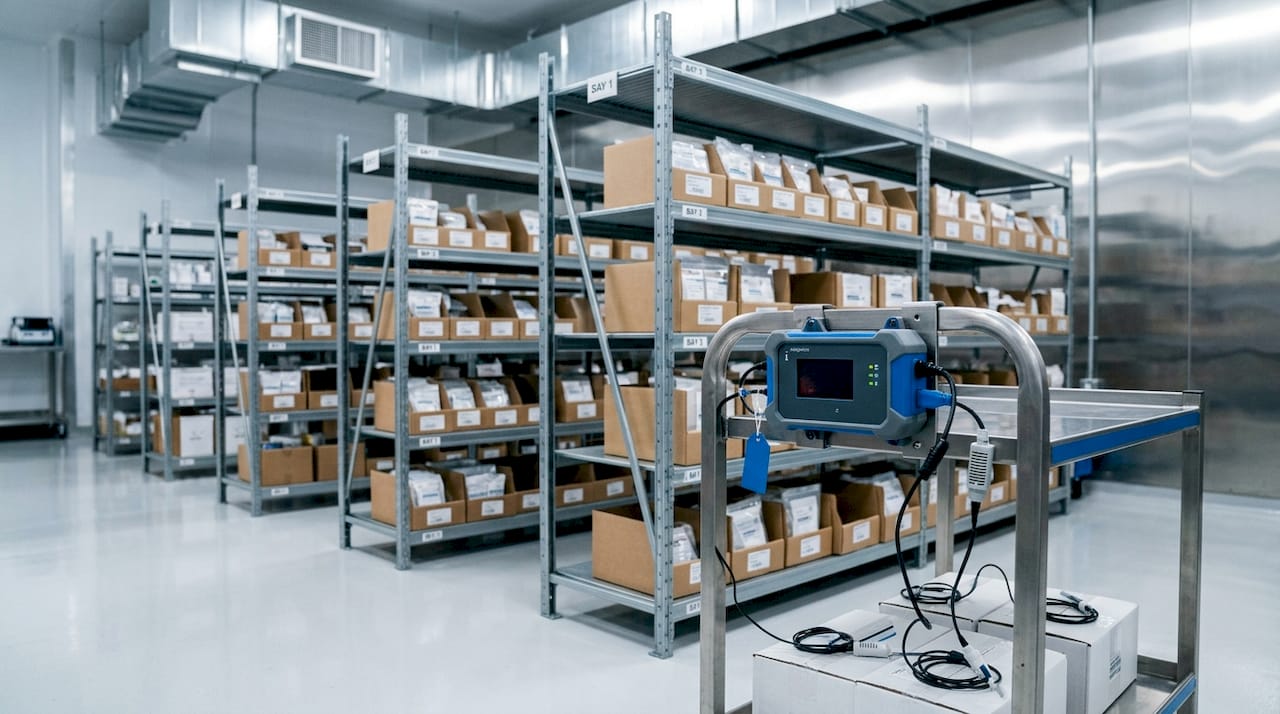
- Cold chain infrastructure validation. Confirm that every node in the supply chain, from port of entry to dispensing point, maintains validated temperature conditions. This includes warehouses, transport vehicles, and last-mile delivery containers.
- Temperature monitoring systems. Deploy continuous data loggers and real-time monitoring at all storage and transit points. Gaps in monitoring data create regulatory non-compliance risk during inspections.
- Last-mile delivery planning. Last-mile delivery in markets like Indonesia, Vietnam, and the Philippines requires country-specific routing strategies. Urban hospital delivery and rural clinic supply chains require different vehicle types, timing, and documentation.
- Validated storage conditions. Storage facilities must meet GDP (Good Distribution Practice) standards. In Singapore, Labgistics operates fully accredited distribution centers that meet international GDP requirements for temperature-sensitive pharmaceuticals.
- Logistics provider qualification. Qualify your 3PL partner against GDP standards before product launch. Audit their SOPs, equipment calibration records, and deviation management procedures.
Pro Tip: Select a logistics partner with documented experience in cold chain logistics across Southeast Asia, not just a single country. Regional expertise reduces the risk of cold chain failures at border crossings and transshipment hubs.
Cold chain integrity from port of entry to patient is a frequent vulnerability in pharmaceutical distribution. Failure at this stage risks both regulatory non-compliance and product integrity loss, two outcomes that can halt a launch entirely.
4. Which cross-functional launch readiness tasks are essential?
A cross-functional launch team must be assembled early, not in the final months before approval. Aligning HEOR, HCP, and payer engagement pre-launch is a proven driver of launch success. Each function has distinct deliverables that must be ready before the approval date.
Cross-functional launch readiness tasks include:
- Medical affairs alignment. Medical affairs must develop HCP education plans, publication strategies, and medical information resources at least 12 months before launch. These materials support prescriber confidence and formulary submissions.
- Sales force enablement. Train the sales team on the product’s clinical evidence, competitive positioning, and approved messaging before the first prescriber call. Uncoordinated sales messaging undermines payer negotiations.
- Patient support program design. Design patient adherence and access programs before launch. Programs that address affordability, administration support, and disease management improve both patient outcomes and real-world evidence generation.
- Health Economics and Outcomes Research (HEOR). HEOR evidence packages support reimbursement submissions in markets that require cost-effectiveness data. Commission HEOR studies during Phase III so results are available at submission.
- Regulatory and commercial milestone alignment. Map every regulatory milestone to a corresponding commercial action. Approval in Singapore triggers a different set of commercial actions than approval in Malaysia or Thailand.
- Stakeholder communication plan. Define who communicates what to payers, providers, and patients at each stage. Uncoordinated communication creates conflicting messages that slow formulary adoption.
5. How can timeline and risk management accelerate pharma market entry?
Market entry timelines for pharmaceutical products typically span 12 to 30 months, depending on product complexity, target market, and regulatory pathway. Parallel preparation is the most effective tool for compressing that range.
| Activity | Sequential timeline | Parallel timeline |
|---|---|---|
| Dossier preparation | Months 1–12 | Months 1–12 |
| Manufacturing site registration | Months 13–18 | Months 1–12 |
| Payer dossier preparation | Post-approval | Months 10–18 |
| HCP engagement | Post-approval | Months 14–24 |
| Logistics qualification | Post-approval | Months 12–20 |
Milestone-based investment planning replaces single static forecasts with adaptive resource allocation. Scaling launch investment based on market readiness indicators, such as formulary listings and prescriber adoption rates, reduces financial exposure when timelines shift.
The most common risk factors causing delays are documentation errors in regulatory dossiers, changes in agency requirements mid-submission, and logistics qualification failures. Each of these is preventable with early planning and dedicated accountability. Assign a risk owner to each category and review risk status at every launch steering committee meeting.
Pro Tip: Build a 90-day buffer into every regulatory submission milestone. Agencies in Southeast Asia frequently issue clarification requests that require 30–60 working days to resolve. A buffer prevents a single query from cascading into a six-month delay.
For pharma regulatory services that cover submission preparation and agency liaison across Southeast Asia, Labgistics provides technical and regulatory support as part of its market entry offering.
Key Takeaways
A successful pharma market entry requires parallel execution across regulatory, commercial, and logistics workstreams, starting no later than 36 months before the target launch date.
| Point | Details |
|---|---|
| Start regulatory work early | Appoint an MAH and QP, and begin dossier preparation at least 24 months before submission. |
| Register manufacturing sites in parallel | Parallel facility registration reduces time-to-first-approval by up to 16 months. |
| Align commercial and clinical strategy | Draft payer messages and HCP segmentation plans during Phase III, not after approval. |
| Validate cold chain end-to-end | Qualify every logistics node from port of entry to patient before product launch. |
| Use milestone-based planning | Scale investment and resources based on market readiness indicators, not a single static forecast. |
The overlooked discipline in pharma market entry planning
Most launch failures I have observed share a common pattern. The regulatory team and the commercial team operate on separate timelines, share data late, and treat logistics as a final-stage operational detail. By the time the approval arrives, the payer dossier is incomplete, the 3PL has not been qualified, and the sales team is still in training. The product launches six to twelve months late, and the window for first-mover advantage closes.
The pharma market entry checklist that actually works is not a linear sequence. It is a parallel operating model where regulatory, commercial, medical affairs, and logistics teams share a single master timeline and report to a unified launch governance structure. This is not a new idea. What is new in 2026 is the pressure to execute it faster, because AI-driven commercial models and direct-to-patient approaches are compressing the competitive window in every therapeutic category.
The checklist items that executives most consistently overlook are logistics qualification and HEOR evidence generation. Both are treated as downstream tasks. Both are, in practice, long-lead activities that must begin during Phase III. A pharmaceutical distribution partner who has not been audited and qualified before approval cannot be onboarded in four weeks. A health economics model that has not been built and validated cannot support a reimbursement submission on day one of approval.
My recommendation is direct. Build your launch checklist backward from your target patient access date, not forward from your Phase III readiness date. Every workstream, including cold chain logistics, payer engagement, and HCP education, gets a deadline derived from that patient access date. Then hold every team accountable to it.
— Brandcore
Labgistics: a logistics partner built for pharma market entry
Pharmaceutical executives entering Southeast Asian markets need a logistics partner who understands GDP compliance, cold chain validation, and last-mile delivery across diverse regulatory environments. Labgistics brings over 20 years of experience in specialized healthcare logistics across Singapore and the broader Southeast Asia region.

Labgistics operates fully accredited distribution centers with validated temperature-controlled storage, continuous monitoring systems, and documented SOPs aligned to international GDP standards. Its market entry support services cover product registration, regulatory liaison, and end-to-end supply chain setup for pharmaceutical companies entering Singapore and neighboring markets. Whether your product requires standard ambient storage or strict cold chain management, Labgistics provides the infrastructure and compliance expertise to support a compliant, on-time launch.
FAQ
What is a pharma market entry checklist?
A pharma market entry checklist is a structured list of regulatory, commercial, and logistics tasks that a pharmaceutical company must complete before launching a product in a new market. It covers dossier preparation, manufacturing site registration, payer engagement, and supply chain qualification.
How long does pharma market entry typically take?
Market entry timelines range from 12 to 30 months depending on the product, regulatory pathway, and target market. Parallel preparation of regulatory and commercial workstreams reduces time-to-first-approval by up to 16 months.
Why is cold chain logistics critical for pharma market entry?
Cold chain logistics maintains product integrity from port of entry to patient. Failures in temperature-controlled storage or last-mile delivery risk regulatory non-compliance and product loss, both of which can halt a launch.
When should payer engagement begin in the market entry process?
Payer engagement should begin during Phase III clinical development, at least 12 months before regulatory submission. Early engagement allows companies to align clinical endpoints with payer evidence requirements and refine reimbursement arguments before approval.
What regulatory standards apply to pharma market entry in Southeast Asia?
Key standards include WHO-GMP for manufacturing compliance, GDP guidelines for distribution, and country-specific requirements from agencies such as HSA in Singapore and BPOM in Indonesia. EU-bound products must also meet EudraLex Volume 4 and EU GMP Annex 16 requirements.
Recommended
- Pharma Regulatory Services: A 2026 Professional Guide
- Product Registration for Pharma and Medical Devices: 2026 Guide