
Calibration Services for Healthcare: A QA Guide
Professional calibration services sit at the intersection of regulatory obligation and patient safety. For quality assurance managers and compliance officers in healthcare and life sciences, a missed calibration or a poorly documented out-of-tolerance finding can stall a regulatory audit, invalidate a batch record, or worse, compromise clinical outcomes. Yet many organizations still treat equipment calibration as a routine checkbox rather than a disciplined, risk-based process. This guide cuts through the confusion, covering accreditation standards, delivery models, provider selection criteria, and cost management strategies that matter most to QA teams operating in regulated healthcare environments.
Table of Contents
- Key takeaways
- Understanding calibration standards and accreditation
- Calibration process workflows and delivery models
- Selecting calibration service providers
- Managing calibration costs and efficiency
- Why calibration is a strategic asset, not a compliance task
- How Labgistics supports your calibration program
- FAQ
Key takeaways
| Point | Details |
|---|---|
| Accreditation determines audit weight | ISO/IEC 17025 accredited calibration carries regulatory authority that NIST-traceable verification alone cannot replace for critical assets. |
| Delivery model affects compliance readiness | On-site calibration reduces downtime and maintains traceability without removing equipment from the controlled environment. |
| Risk-based scheduling saves resources | Prioritizing critical instruments for accredited calibration while using traceable verification for non-critical tools optimizes both compliance and budget. |
| Out-of-tolerance findings need separate action | Calibration certificates document status only; documented corrective actions are a separate mandatory step before returning equipment to service. |
| Provider expertise is a strategic asset | Calibration companies that analyze drift trends and support preventive maintenance deliver more value than those that simply issue certificates. |
Understanding calibration standards and accreditation
Not all calibration certificates carry the same weight in a regulatory audit. The distinction between accredited and non-accredited calibration is one of the most consequential decisions a quality manager makes when designing a calibration program.
ISO/IEC 17025 accreditation is the global benchmark for laboratory technical competence. It is mandatory for calibration in highly regulated sectors such as healthcare and life sciences, where data integrity, traceability, and audit defensibility are non-negotiable. Laboratories holding this accreditation have demonstrated they meet rigorous requirements for measurement uncertainty, reference standard traceability, personnel competency, and quality management. When a regulatory body like the Health Sciences Authority (HSA) or an international audit team reviews your calibration records, an ISO/IEC 17025 accredited certificate provides a level of assurance that a basic in-house or non-accredited certificate cannot replicate.
NIST-traceable calibration, by contrast, confirms that the calibration was performed using standards traceable to national or international measurement references, but it does not verify the laboratory’s overall technical competence or quality system. This distinction matters enormously for risk-based calibration programs. NIST traceability is appropriate for non-critical instruments where measurement deviations carry low patient safety or product quality risk. Applying it across the board to save cost on complex or patient-facing equipment is a compliance vulnerability.
Accreditation types and appropriate use cases
| Calibration type | Accreditation basis | Appropriate use case | Regulatory weight |
|---|---|---|---|
| ISO/IEC 17025 accredited | Full laboratory competence | Critical instruments in GxP environments | High, accepted by HSA and international bodies |
| NIST-traceable verification | Reference standard traceability only | Non-critical tools, general lab equipment | Moderate, sufficient for lower-risk assets |
| In-house calibration | Internal SOPs against reference standards | Monitoring devices with defined internal limits | Low, requires strong internal documentation |
| Manufacturer calibration | OEM test protocols | Post-repair or warranty service | Variable, depends on OEM accreditation status |
Pro Tip: Request a copy of a provider’s accreditation scope before engaging their services. An ISO/IEC 17025 accreditation certificate is instrument-specific. A provider accredited for temperature and humidity instruments is not automatically qualified to calibrate your pressure gauges or analytical balances.
Calibration process workflows and delivery models
Understanding how calibration actually works, step by step, helps quality managers set expectations with providers, write accurate SOPs, and identify gaps in their current programs. The process is more structured than most organizations realize.
- Preparation. The instrument is reviewed against its last calibration record and service history. Environmental conditions such as temperature, humidity, and vibration at the calibration location are documented, as these directly affect measurement accuracy.
- As-found measurement. The instrument is tested against a certified reference standard without any adjustment. This step captures the true condition of the equipment at the time of submission and is critical for identifying drift trends over time.
- Comparison and tolerance check. Measured values are compared against the manufacturer’s stated tolerances or the user-defined acceptance criteria in the quality system. Instruments that fall outside tolerance are flagged immediately.
- Adjustment (where applicable). If the instrument is within the scope of adjustment and the client authorizes it, the technician corrects the output. Out-of-tolerance findings require separate documented corrective actions before the equipment is returned to service. This is a mandatory compliance step, not optional.
- As-left measurement. Post-adjustment performance is documented. Both as-found and as-left values appear on the final certificate.
- Documentation and certificate issuance. The accredited certificate includes measurement data, uncertainty values, environmental conditions, reference standard identifiers, and technician credentials.
In-lab vs. on-site calibration
The choice between sending equipment to a laboratory and bringing the calibration technician on-site has real operational consequences. In-lab calibration is appropriate for complex instruments requiring controlled environmental conditions or specialized equipment that cannot be transported safely. The limitation is downtime. Removing a critical instrument from a production or clinical environment, even for a day, introduces scheduling risk and potential compliance gaps.
On-site calibration addresses this directly. The technician arrives with portable reference standards and performs calibration in the equipment’s operating environment. This approach is particularly valuable in healthcare settings where instruments such as temperature-controlled storage units, cleanroom monitoring devices, and infusion pumps cannot be practically removed. On-site calibration also preserves traceability integrity, since the calibration environment matches the operating environment.
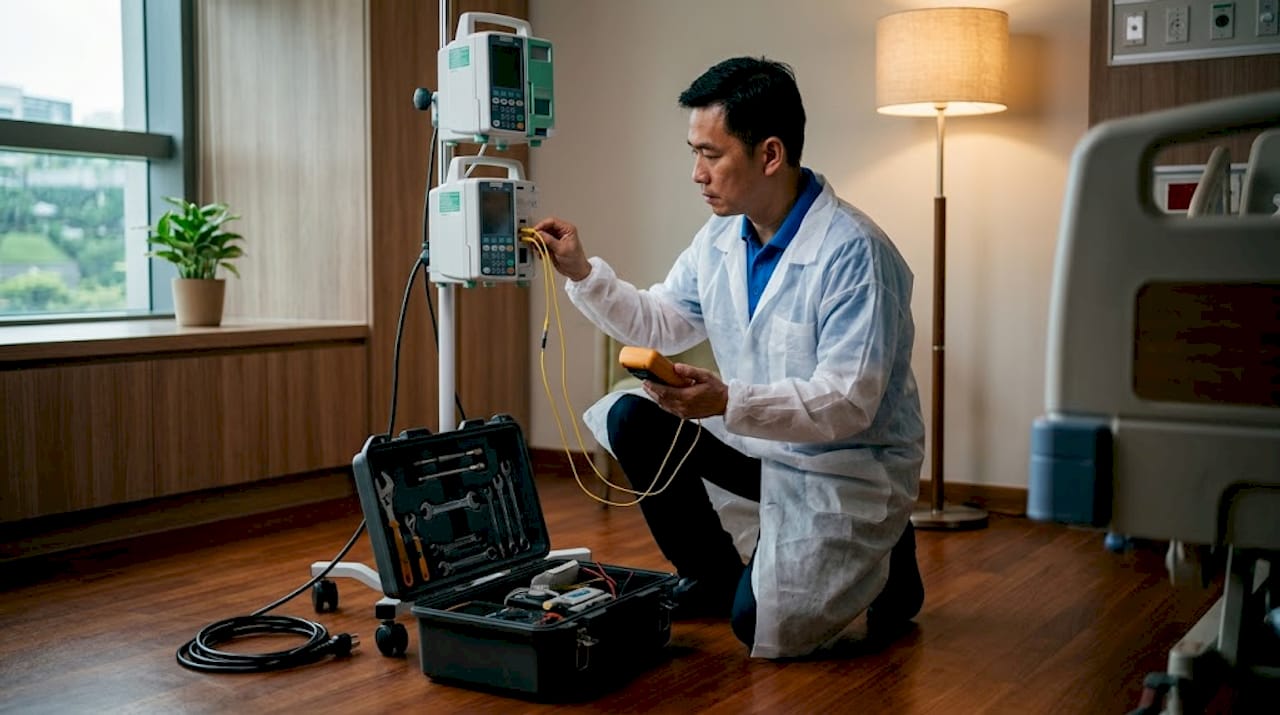
Pro Tip: For instruments that are both complex and operationally critical, consider scheduling in-lab calibration during planned maintenance windows rather than treating it as an unplanned event. Coordinating calibration with your preventive maintenance calendar reduces unplanned downtime by design.
Selecting calibration services Singapore providers
The market for calibration solutions in Singapore and across Southeast Asia includes a wide range of providers, from generalist metrology labs to specialized healthcare calibration companies. The quality of your calibration program depends heavily on which type of partner you engage.
When evaluating calibration companies, the following criteria separate high-value providers from those who simply issue paper:
- Healthcare-specific expertise. General industrial calibration experience does not automatically translate to healthcare competency. Providers should demonstrate direct experience with GxP environments, GDP requirements, and the specific instrument types common in pharmaceutical, medical device, and clinical laboratory settings.
- Accreditation scope depth. Confirm that the provider’s ISO/IEC 17025 accreditation covers the exact instrument types and measurement parameters in your facility. Scope limitations are common and frequently overlooked during vendor qualification.
- Drift trend analysis. Specialized calibration services that use dense test point grids and tighter acceptance thresholds can identify performance degradation before it becomes a compliance event. Providers with access to proprietary product specifications deliver measurably higher confidence for critical assets.
- Documentation quality and format. Certificates should include all data required for a GDP or GxP audit without requiring supplementary requests. Review a sample certificate before engaging a new provider.
- Corrective action support. When an instrument is found out of tolerance, the provider should be equipped to support your investigation process, including impact assessment documentation for the period the instrument was potentially out of specification.
- Integration with your quality management system. Providers who can align calibration scheduling, certificate delivery, and recall notifications with your QMS reduce the administrative burden on your QA team significantly.
- On-site capability. For a healthcare environment in Singapore or across Southeast Asia, providers offering on-site calibration services reduce logistical risk and maintain continuous equipment availability.
Quality managers should treat calibration providers as strategic partners, not transaction-based vendors. Providers who analyze usage patterns and flag equipment that drifts consistently between calibration cycles are supporting your predictive maintenance program. That insight has real cost value, as it prevents unplanned failures and supports corrective action documentation that satisfies regulatory bodies.
The healthcare regulatory compliance requirements in 2026 place increasing emphasis on data integrity and audit trail completeness. Providers who cannot demonstrate electronic record keeping aligned with 21 CFR Part 11 or equivalent standards are a risk to your compliance posture.
Managing calibration costs and efficiency
Calibration budgets in healthcare organizations are frequently managed reactively. The cost of a calibration failure, whether that means failed audit findings, product recalls, or patient safety events, dwarfs the cost of a well-structured preventive calibration program. Understanding the two cost categories helps build a defensible business case.
Prevention costs include the fees for scheduled calibration services, provider qualification, documentation management, and staff training. These are predictable and controllable.
Failure costs include the expenses associated with out-of-tolerance discoveries during audits, product quarantine, batch invalidation, regulatory remediation, and reputational damage. These are neither predictable nor controllable once the event occurs.
Optimized calibration workflows can reduce cycle times by up to 72% while maintaining quality rates above 98.8%. The gains come not from cutting corners but from redesigning handling procedures. Standard one-by-one loading methods introduce ergonomic inefficiencies that accumulate across large instrument fleets. Bundled handling protocols and fixture redesigns reduce throughput time without automation investment.
Cost optimization by instrument tier
| Instrument tier | Risk level | Calibration approach | Frequency guidance |
|---|---|---|---|
| Tier 1: Critical | Direct patient safety or batch release impact | ISO/IEC 17025 accredited, on-site where possible | Per manufacturer recommendation or risk assessment |
| Tier 2: Supporting | Indirect quality impact | Accredited or NIST-traceable, in-lab acceptable | Annually or per SOPs |
| Tier 3: Non-critical | Minimal quality impact | NIST-traceable verification | Extended intervals acceptable with risk justification |
Risk-based calibration scheduling prioritizes Tier 1 instruments for full accredited calibration while applying lighter-touch verification to Tier 3 assets. This tiered strategy allows QA teams to focus both budget and attention where the compliance and patient safety stakes are highest. Applying the same calibration protocol uniformly across all instrument tiers is a resource allocation error that many organizations do not discover until an audit reveals over-spending on low-risk assets and under-investment in critical ones.
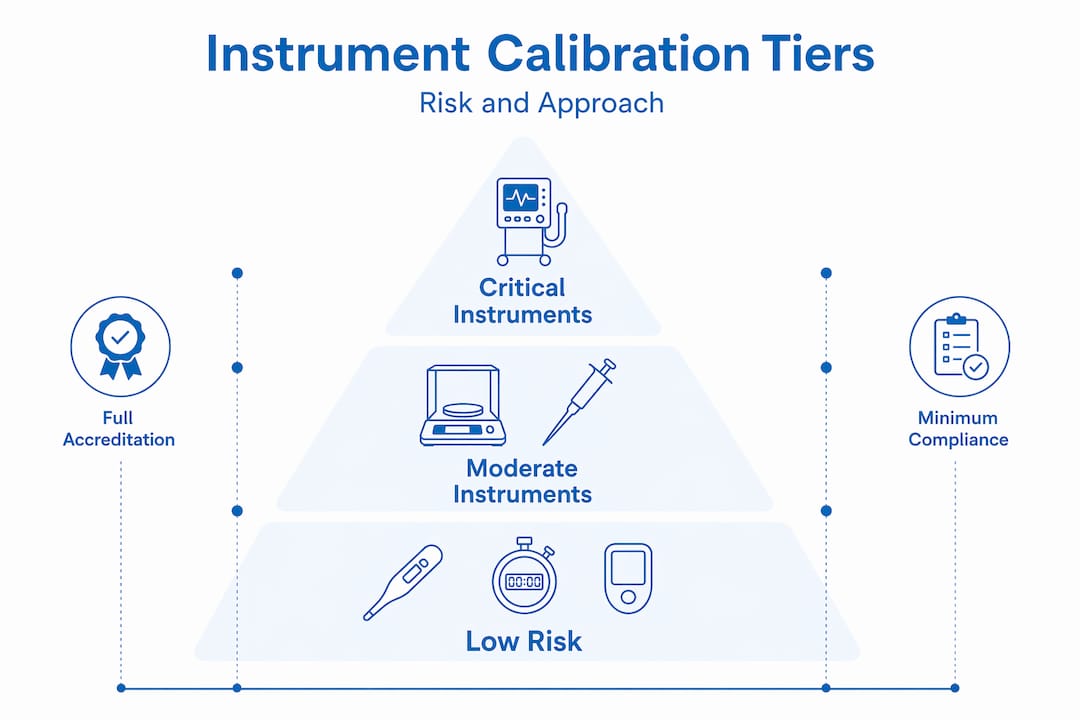
Pro Tip: When an instrument shows repeated out-of-tolerance findings, do not simply increase calibration frequency. Frequent drift signals root causes such as environmental stress, hardware degradation, or operator misuse. Address the root cause through a documented corrective action before the next scheduled calibration.
Why calibration is a strategic asset, not a compliance task
I’ve worked with quality teams across healthcare logistics and life sciences operations, and the pattern I see most often is this: calibration programs that were designed around audit preparation rather than operational risk management. The resulting programs pass inspections on paper but fail to deliver the data integrity and equipment reliability that actually protect the organization.
What I’ve learned is that the most effective calibration programs treat every instrument in the fleet as part of a risk-based lifecycle. Not every thermometer or pressure gauge carries the same consequence if it drifts out of specification. Calibration is not a one-size-fits-all activity. Organizations that recognize this invest their calibration budget where the risk is highest and extract genuine operational value from the data their providers generate.
The misconception I encounter repeatedly is that calibration fixes faulty devices. It does not. Calibration verifies and documents accuracy. If an instrument needs adjustment, that is a separate technical intervention. If it needs it repeatedly, that is a maintenance problem. Conflating calibration with repair leads to programs that generate certificates without improving equipment reliability.
My perspective is that quality managers should select calibration providers the way they select any critical supplier: based on documented competence, sector-specific expertise, and the ability to contribute to the organization’s quality objectives beyond just issuing paperwork. Providers that analyze drift trends across your fleet and present that data as part of a quarterly review are not just calibration vendors. They are part of your quality infrastructure.
— Labgistics
How Labgistics supports your calibration program
For healthcare logistics operations in Singapore and across Southeast Asia, maintaining audit-ready calibration records while managing instrument fleets across multiple sites is a genuine operational challenge. Labgistics brings more than 20 years of specialized experience in healthcare compliance, and its calibration and validation services are designed specifically for the regulatory demands of pharmaceutical, medical device, and life sciences environments.

Labgistics offers both in-lab and on-site calibration options, reducing operational downtime while maintaining the traceability documentation required for GDP, GDPMDS, and ISO compliance. Its calibration solutions integrate directly with quality management documentation workflows, so your audit records are current and accessible when inspection teams arrive. For temperature and humidity instruments, Labgistics provides dedicated temperature instrument calibration services covering the full range of monitoring equipment used in cold chain and controlled storage environments. Organizations looking to align calibration management with broader logistics compliance can explore tailored healthcare logistics solutions that connect equipment qualification, cold chain management, and regulatory documentation under one accountable partner.
FAQ
What is ISO/IEC 17025 accreditation in calibration?
ISO/IEC 17025 is the international standard for testing and calibration laboratory competence. Laboratories holding this accreditation have been independently verified for technical capability, measurement traceability, and quality management, making their certificates defensible in regulatory audits.
When should on-site calibration be used instead of in-lab?
On-site calibration is preferred for instruments that cannot be safely removed from their operating environment, such as fixed temperature monitoring systems, cleanroom sensors, and large analytical equipment. It also reduces downtime and preserves the traceability integrity of the calibration environment.
What happens when an instrument fails calibration?
An out-of-tolerance finding requires a documented corrective action separate from the calibration certificate. The equipment must not return to service until the root cause is investigated, the instrument is repaired or adjusted, and the corrective action is formally recorded in the quality system.
How often should medical equipment be calibrated?
Calibration frequency should be determined by a risk-based assessment that considers the instrument’s impact on patient safety, product quality, and regulatory compliance. Tier 1 critical instruments typically follow manufacturer recommendations or annual schedules, while lower-risk assets may qualify for extended intervals with documented justification.
What should a calibration certificate include?
A compliant calibration certificate should include as-found and as-left measurement data, measurement uncertainty values, environmental conditions at the time of calibration, reference standard identifiers, technician credentials, and the accreditation body reference. Missing any of these elements creates an audit vulnerability.