
Lab Supply Chain Trends 2026: What Professionals Need to Know
Lab supply chain trends in 2026 are defined by five converging forces: AI-driven procurement automation, digital twin orchestration, full DSCSA serialization enforcement, verified sustainability standards, and just-in-time logistics redesign. These are not incremental improvements. They represent a structural shift in how laboratory supply chains are planned, executed, and audited. For supply chain professionals, logistics managers, and industry analysts operating in healthcare and life sciences, understanding these developments is no longer optional. The organizations that adapt early will gain measurable advantages in compliance, cost control, and operational resilience across Southeast Asia and beyond.
1. AI-driven procurement is redefining lab supply management
AI-driven procurement tools in 2026 analyze consumption patterns, automate reorder triggers, and optimize vendor pricing before stockouts occur. This means procurement teams spend less time on manual purchase orders and more time on strategic vendor relationships and exception management. The shift is significant: AI does not just accelerate existing processes, it changes which decisions humans need to make at all.
The core capabilities now available to lab procurement teams include:
- Predictive purchasing: AI models analyze historical usage data and seasonal demand patterns to trigger reorders at the optimal moment, reducing both stockouts and excess inventory.
- Automated vendor comparison: Systems aggregate pricing, lead times, and shipping costs across multiple suppliers simultaneously, identifying volume discounts that manual processes routinely miss.
- Lot matching for quality control: AI cross-references Certificates of Analysis data to match incoming lots against specification requirements, reducing manual review time.
- Budget forecasting: Consolidated spend data feeds directly into financial planning tools, giving procurement managers real-time visibility into budget utilization.
Pro Tip: If your lab operates on an ERP platform such as SAP or Oracle, check whether your existing license includes AI procurement modules before investing in standalone tools. Many organizations already own this capability and have not activated it.
The broader implication is that AI in supply chain is expanding from planning into execution, with agentic AI enabling autonomous operations under defined risk controls. Laboratory supply chain innovation in this area requires redesigned workflows, not just new software.

2. Digital twins and control towers transform supply chain visibility
A digital twin is a real-time virtual model of a physical supply chain, fed by IoT sensors, ERP data, and partner feeds. A control tower is the decision layer that sits on top, translating that data into orchestration actions. Together, they represent the most significant infrastructure investment in 2026 lab logistics strategies.
Digital twins connected with control towers transform data into orchestration rather than passive observation. This distinction matters. Visibility alone tells you a shipment is delayed. Orchestration reroutes it, revises the ETA in your LIMS, and triggers a backup order from a secondary supplier, all before a stockout occurs.
Key orchestration actions enabled by this architecture include:
- Rerouting cold chain shipments when a carrier reports temperature excursion risk
- Revising expected delivery windows across downstream lab schedules automatically
- Flagging serialization data gaps before a shipment reaches a custody transfer point
- Alerting procurement teams to supplier lead time changes that affect upcoming production runs
The pharmaceutical cold chain monitoring market is projected to grow from $23 billion in 2025 to $82 billion by 2031, driven by biologics and advanced IoT monitoring technologies. That growth rate signals where capital is flowing and which capabilities will become table stakes within the next two years.
Pro Tip: Build human oversight checkpoints into any AI orchestration system. Autonomous rerouting is valuable, but decisions that affect regulatory custody records or cold chain validation should require human confirmation before execution.
Labgistics applies control tower principles in its healthcare logistics operations across Southeast Asia, integrating real-time shipment data with regulatory compliance requirements.
3. What DSCSA full enforcement means for serialization compliance
The Drug Supply Chain Security Act reached full enforcement in early 2026, and its requirements now apply to every logistics provider handling pharmaceutical products in the U.S. supply chain. For lab supply chain professionals managing cross-border pharmaceutical flows, the compliance burden is direct and immediate.
Full DSCSA enforcement requires interoperable unit-level serialization, electronic transaction data exchange using EPCIS 2.0 and GS1 standards, and cold chain temperature monitoring integrated with serialization records. The word “interoperable” is critical here. It is not sufficient to generate serialized barcodes. Every trading partner in the chain must be able to read, verify, and respond to that data in machine-readable format.
The compliance requirements break down into four operational areas:
- Unit-level serialization: Every saleable unit must carry a unique identifier scannable at each custody transfer point.
- EPCIS 2.0 adoption: Electronic Product Code Information Services version 2.0 is the required standard for real-time data exchange between trading partners.
- Cold chain integration: Temperature monitoring records must link to serialization data, creating a unified audit trail for regulated products.
- Exception management: Systems must detect, flag, and resolve data discrepancies before products move to the next custody point.
Successful DSCSA implementation requires not just data receipt but full interoperability and machine-readable standards with rigorous data-quality management across all trading partners.
Failure to achieve DSCSA compliance risks operational shutdown, major liability exposure, and loss of pharmaceutical handling certifications. RFID technology and automated scanning systems at loading docks are the most practical path to compliance for high-volume operations, reducing manual scanning errors that create data gaps in serialization records.
4. Sustainability standards shift from aspiration to accountability
Sustainability in laboratory supply chains has moved from voluntary commitment to verifiable performance. The My Green Lab ACT Ecolabel program now certifies over 2,200 products, providing standardized, third-party verified environmental impact data that procurement teams can use directly in purchasing decisions. This is the shift from sustainability ambition to procurement accountability.
The ACT Ecolabel covers three dimensions of product impact: manufacturing, use, and end-of-life disposal. Each certified product carries a score that allows direct comparison across suppliers. For procurement managers, this means sustainability is no longer a qualitative judgment. It is an auditable data point.
Key developments shaping sustainable lab procurement in 2026:
- Industry-aligned supplier standards: Major laboratory suppliers are converging on common environmental disclosure frameworks, reducing the inconsistency that previously made supplier comparison difficult.
- Product-level impact disclosures: Third-party verified disclosures replace self-reported sustainability claims, enabling auditable and comparable purchasing decisions.
- Environmental monitoring integration: Platforms that centralize hygiene testing, corrective actions, and contamination pattern detection now feed into supply chain compliance records.
Centralized environmental monitoring accelerates response to contamination risks and supports preventive controls across laboratory supply chains. For logistics managers, this means sustainability and quality assurance are increasingly managed through the same data infrastructure.
| Sustainability metric | How it is used in 2026 procurement |
|---|---|
| ACT Ecolabel score | Direct product comparison across certified suppliers |
| Third-party verification | Replaces self-reported claims in supplier audits |
| Environmental monitoring data | Feeds into compliance records and corrective action logs |
| Supplier standard alignment | Reduces inconsistency in cross-supplier sustainability assessment |
5. Just-in-time lab logistics and dock-adjacent staging
The traditional model of centralized laboratory stockpiling is giving way to frequent micro-deliveries timed to actual consumption. Just-in-time delivery in laboratory settings reduces holding costs, minimizes waste from expired reagents, and improves traceability by reducing the volume of inventory in transit at any given time.
JIT lab logistics in 2026 favor dock-adjacent staging areas where incoming supplies are scanned directly into Laboratory Information Management Systems upon arrival. This eliminates the intermediate step of moving goods to a central storage area before recording receipt, which is a common source of data latency and traceability gaps. The facility design change is as important as the delivery frequency change.
| Logistics model | Inventory holding cost | Traceability accuracy | Waste from expiry | Replenishment speed |
|---|---|---|---|---|
| Centralized stockpiling | High | Moderate | Higher risk | Slower |
| JIT micro-delivery | Low | High | Lower risk | Faster |
The operational benefits extend to regulatory compliance. When serialized products are scanned at the dock and immediately recorded in LIMS, the custody transfer data required by DSCSA is captured at the point of physical transfer rather than reconstructed later. This alignment between physical logistics design and digital compliance requirements is one of the clearest examples of how future lab supply chain developments are converging across multiple domains simultaneously.
Labgistics supports JIT inventory strategies for healthcare and life science clients across Singapore and Southeast Asia, integrating dock-level scanning with cold chain validation and serialization compliance.
Key takeaways
Lab supply chain trends in 2026 require simultaneous investment in AI procurement automation, digital twin orchestration, DSCSA serialization compliance, verified sustainability standards, and JIT logistics design to achieve measurable gains in efficiency and regulatory standing.
| Point | Details |
|---|---|
| AI procurement automation | Deploy AI modules within existing ERP systems to automate reorder triggers and vendor comparison before stockouts occur. |
| Digital twin orchestration | Connect real-time IoT and ERP data to a control tower layer that acts on disruptions, not just reports them. |
| DSCSA serialization compliance | Adopt EPCIS 2.0 and GS1 standards now; non-compliance risks operational shutdown and loss of pharma handling certifications. |
| Sustainability accountability | Use ACT Ecolabel certified products to replace self-reported supplier claims with auditable, third-party verified data. |
| JIT logistics redesign | Redesign dock-adjacent staging to scan serialized products directly into LIMS, reducing holding costs and traceability gaps. |
What these trends mean for logistics managers on the ground
From where Labgistics sits, managing pharmaceutical and life science supply chains across Southeast Asia, the 2026 trends are not abstract. They are arriving as specific operational demands from clients, regulators, and trading partners simultaneously.
The AI procurement shift is real, but its value depends entirely on data quality. Organizations feeding poor consumption data into AI models get poor reorder recommendations. The technology amplifies whatever data discipline already exists in the operation, which means the first investment is often in data hygiene, not software.
Digital twins are genuinely transformative, but the gap between a visibility dashboard and a true orchestration system is wider than most vendors acknowledge. Labgistics has seen clients invest in control tower platforms and still manage disruptions manually because the integration between the platform and their 3PL warehouse systems was incomplete. The technology works when the integrations work.
On DSCSA compliance, the complexity is not the serialization itself. It is the interoperability requirement. Every trading partner must be able to exchange EPCIS 2.0 data in real time, and the weakest link in that chain determines the compliance status of the entire network. Logistics managers should audit their partner ecosystem, not just their own systems.
Sustainability is becoming a competitive differentiator faster than most supply chain teams expected. Clients in regulated industries are now asking for ACT Ecolabel data as part of supplier qualification, not as a bonus criterion. The organizations that built verified sustainability records early are winning procurement decisions that their competitors cannot match on price alone.
— Labgistics
How Labgistics supports your 2026 lab supply chain strategy
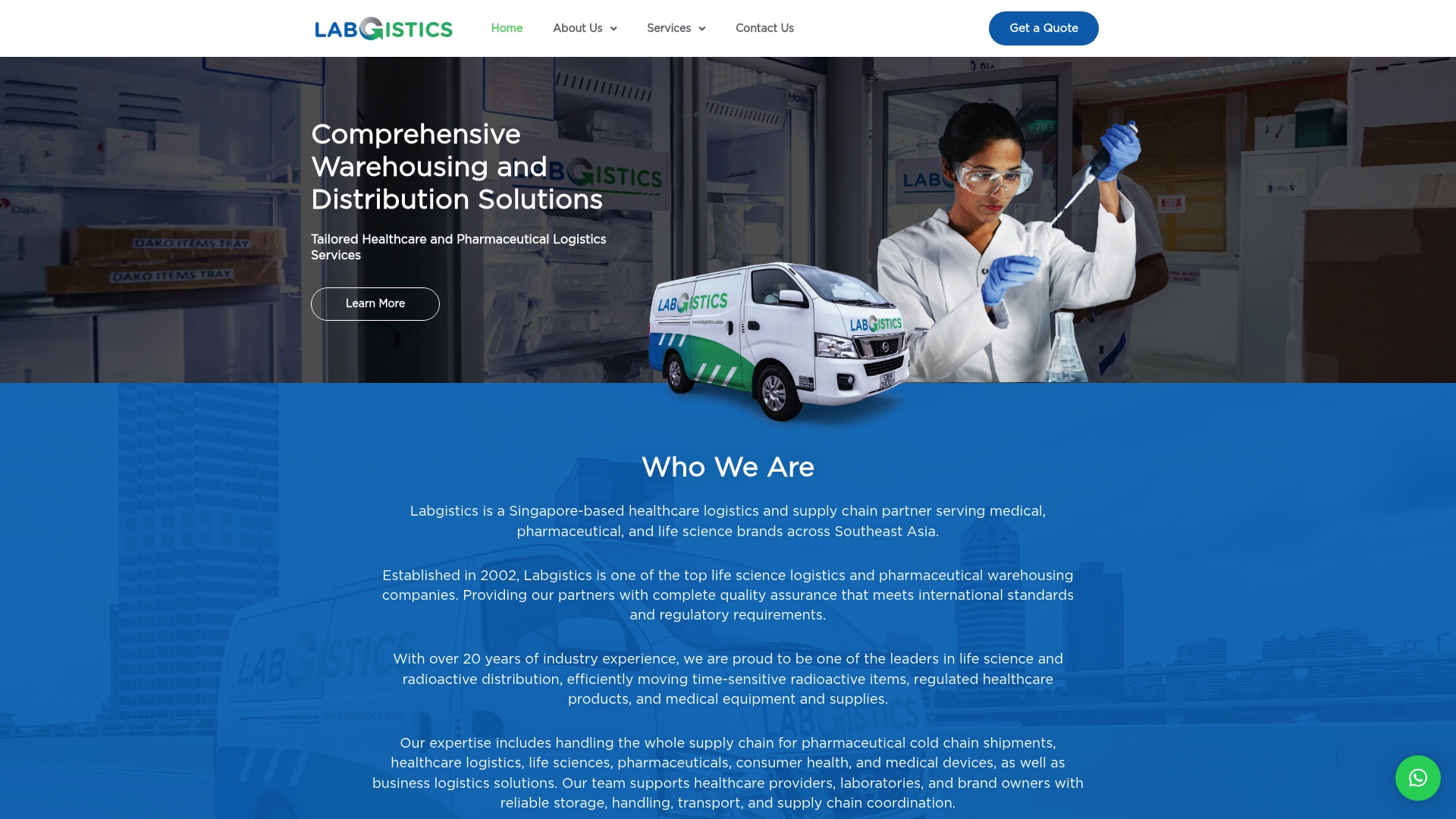
Labgistics delivers tailored logistics solutions for pharmaceutical, medical, and life science supply chains across Southeast Asia, with over 20 years of experience in cold chain logistics, serialization compliance, and vendor managed inventory. As a leading Singapore 3PL provider, Labgistics integrates cold chain validation, EPCIS-compatible serialization tracking, and sustainability-aligned warehousing into a single end-to-end service model. Whether you are managing DSCSA compliance for cross-border pharmaceutical flows, implementing JIT delivery programs, or building digital visibility into your laboratory supply chain, Labgistics provides the infrastructure, regulatory expertise, and technical support to execute with precision. Contact Labgistics to discuss how its healthcare logistics services align with your 2026 supply chain priorities.
FAQ
What are the top lab supply chain trends for 2026?
The leading lab supply chain trends in 2026 are AI-driven procurement automation, digital twin and control tower orchestration, full DSCSA serialization enforcement, verified sustainability standards through programs like the ACT Ecolabel, and just-in-time logistics redesign with dock-adjacent staging.
How does DSCSA enforcement affect lab logistics providers in 2026?
Full DSCSA enforcement requires unit-level serialization, EPCIS 2.0 data exchange, and cold chain monitoring integrated with serialization records at every custody transfer point. Non-compliance risks operational shutdown and loss of pharmaceutical handling certifications.
What is the ACT Ecolabel and why does it matter for lab procurement?
The ACT Ecolabel, administered by My Green Lab, certifies over 2,200 laboratory products with standardized, third-party verified environmental impact data. It replaces self-reported sustainability claims with auditable scores that procurement teams can use directly in supplier qualification and purchasing decisions.
How do digital twins improve pharmaceutical cold chain management?
Digital twins ingest real-time IoT sensor data, ERP records, and partner feeds to create a live model of the supply chain. When connected to a control tower, they enable proactive orchestration such as rerouting shipments and triggering backup orders before temperature excursions or stockouts occur.
What is just-in-time logistics design in a laboratory context?
JIT lab logistics replaces centralized stockpiling with frequent micro-deliveries timed to actual consumption. Dock-adjacent staging areas allow incoming supplies to be scanned directly into LIMS upon arrival, reducing holding costs, minimizing expiry waste, and capturing serialization data at the point of physical custody transfer.
Recommended
- Elevate your pharma supply chain: Best practices for SEA
- Pharma Regulatory Services: A 2026 Professional Guide
- Optimize your lab supply chain for maximum efficiency