
SE Asia healthcare logistics: key drivers and strategies
Most healthcare executives assume that moving pharmaceuticals across Southeast Asia is simply a matter of booking freight and tracking shipments. The reality is far more demanding. The region spans eleven countries, each with its own import licensing requirements, temperature thresholds, and distribution standards. A single cold chain breach or documentation error can mean product destruction, regulatory fines, or delayed patient care. The complexity of healthcare logistics in Southeast Asia is driven by regulatory variability, climate exposure, and infrastructure constraints that catch even seasoned supply chain teams off guard. Understanding these dynamics is not optional for healthcare decision-makers. It is the foundation of every compliant, cost-efficient distribution strategy in the region.
Table of Contents
- Understanding the SE Asia healthcare logistics landscape
- Critical challenges and risks in regional healthcare supply chains
- Strategic solutions for efficient and compliant logistics
- Future trends: technology and sustainability in healthcare logistics
- A fresh perspective on building robust SE Asia healthcare supply chains
- How Labgistics can help optimize your SE Asia healthcare logistics
- Frequently asked questions
Key Takeaways
| Point | Details |
|---|---|
| Regional diversity | Southeast Asia requires logistics strategies tailored to varying regulations and infrastructure. |
| Managing risks | Cold chain, compliance, and last-mile delivery are critical supply chain challenges. |
| Strategic solutions | Partnering with 3PLs and using digital tools improve logistics efficiency and compliance. |
| Future focus | AI and green logistics will shape Southeast Asia’s healthcare supply chains. |
| Local expertise matters | Leveraging regional knowledge yields more resilient and effective logistics outcomes. |
Understanding the SE Asia healthcare logistics landscape
To understand why logistics are so complex here, you first need to map the environment. Southeast Asia is not a single market. It is a mosaic of regulatory bodies, infrastructure quality levels, and market maturity stages that can shift dramatically within a few hundred kilometers.
Consider the contrast between Singapore and Myanmar. Singapore operates a world-class healthcare supply chain with rigorous Health Sciences Authority (HSA) oversight, modern cold storage facilities, and efficient port infrastructure. Myanmar, by comparison, presents significant transport gaps, less predictable import processes, and limited cold chain capacity outside major urban centers. Both countries sit within the same regional bloc, yet demand entirely different logistics playbooks.
Regulatory frameworks and infrastructure capacity vary dramatically across Southeast Asia, creating compounding risks for organizations managing multi-country distribution networks. These are not minor administrative differences. They affect product registration timelines, approved carrier requirements, acceptable packaging standards, and even the cold chain temperature ranges regulators will accept.
Key supply chain risks in the region include:
- Regulatory uncertainty: Policy changes with short notice periods, inconsistent enforcement, and evolving import licensing requirements across individual country health authorities.
- Climate exposure: High ambient temperatures and humidity accelerate product degradation and increase the frequency of temperature excursions during transit.
- Infrastructure variability: Port congestion, limited last-mile cold chain infrastructure in rural areas, and inconsistent road network quality in developing markets.
- Market fragmentation: Local distributor networks often lack the systems, training, or equipment to maintain product integrity at the final delivery stage.
Organizations that succeed in this environment typically share two qualities. They invest in cold chain and compliance challenges planning before market entry, not after. And they rely on partners who understand the core logistics functions that underpin regional distribution at the country level, not just the regional level. Efficient healthcare logistics in Southeast Asia requires both strategic foresight and granular local knowledge.
Critical challenges and risks in regional healthcare supply chains
With context established, let’s examine the most pressing obstacles leaders encounter with regional logistics.
Four risk categories consistently emerge as the most damaging to healthcare supply chain performance across Southeast Asia.
1. Compliance failures and documentation errors
Healthcare products moving across multiple borders require accurate, current documentation for every jurisdiction. A misclassified product code or an expired certificate of analysis can trigger customs holds, mandatory inspections, or outright product rejection. In regulated markets, compliance failures carry financial penalties and reputational consequences that extend well beyond a single shipment.
2. Temperature excursions
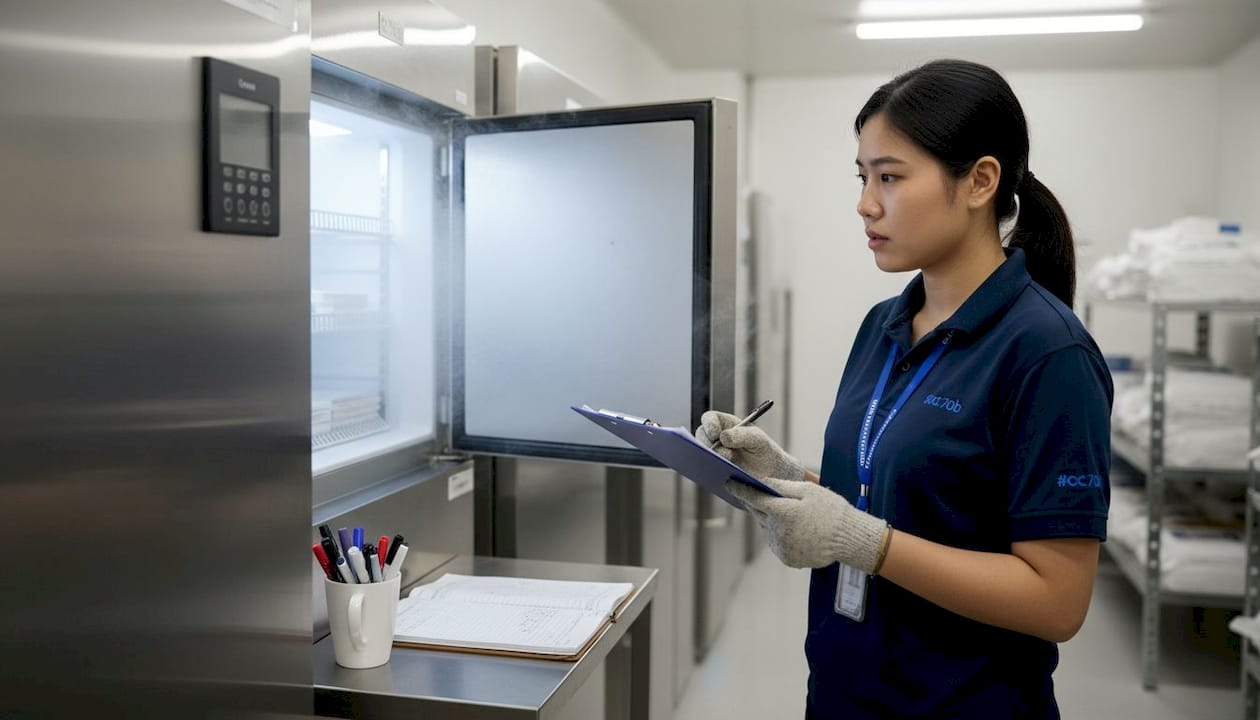
Cold chain lapses account for as much as 20% of vaccine loss in the tropics. Biologics, vaccines, and temperature-sensitive pharmaceuticals are particularly vulnerable during last-mile delivery, when products move from climate-controlled warehouses into the ambient heat and humidity of the region. Even brief excursions can compromise efficacy and render entire batches unusable.
3. Counterfeit and diversion risk
The more complex a distribution network, the more entry points exist for counterfeit products or unauthorized diversion. Multi-country supply chains with multiple handoff points create vulnerabilities that quality-focused organizations must actively manage through serialization, chain-of-custody documentation, and partner vetting.
4. Rural last-mile delivery gaps
Urban distribution hubs are well-served in most Southeast Asian countries. Rural delivery is a different matter. Inconsistent road infrastructure, limited cold storage at end-point facilities, and a shortage of trained logistics personnel in remote areas create bottlenecks that affect product integrity and delivery reliability.
Organizations that treat last-mile delivery as a secondary concern often discover it is where product quality is most frequently compromised.
A comparison of key risk factors across market tiers illustrates the challenge clearly:
| Risk factor | Mature markets (SG, MY) | Developing markets (MM, KH) |
|---|---|---|
| Regulatory clarity | High | Variable |
| Cold chain infrastructure | Robust | Limited |
| Last-mile reliability | Consistent | Inconsistent |
| Counterfeit exposure | Moderate | Higher |
| Documentation complexity | Standardized | Fragmented |
Managing regional supply chain threats effectively requires organizations to build risk response protocols that are calibrated to market tier, not applied uniformly across the region. Addressing cold chain logistics best practices at every distribution tier remains one of the highest-value investments a healthcare logistics leader can make.
Strategic solutions for efficient and compliant logistics
Facing these challenges, what works best in practice for forward-thinking organizations?
The most effective strategies combine digital infrastructure, strong partnerships, and process discipline. None of these elements works in isolation. Together, they create a logistics system that is resilient enough to absorb regional variability without compromising product quality or compliance.
Digitization and real-time monitoring
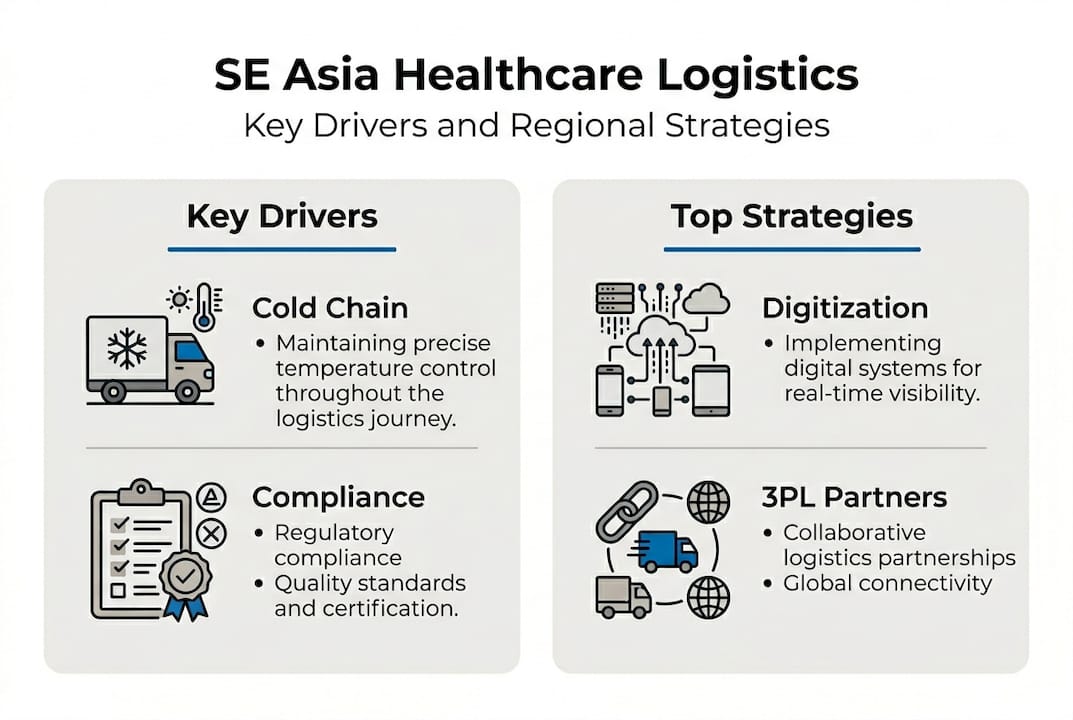
Integrated digital tracking and qualified 3PL partners can reduce delays and errors by up to 30%. Real-time temperature monitoring devices, IoT-enabled cold storage units, and cloud-based shipment tracking give supply chain teams the visibility needed to intervene before an excursion becomes a loss event.
Effective 3PL partnerships
A capable third-party logistics provider (3PL) serves as the operational heart of a regional healthcare supply chain. Selecting partners with country-level regulatory expertise, validated cold chain facilities, and established carrier networks removes the need to rebuild operational infrastructure in every market.
Tailored standard operating procedures (SOPs)
Generic SOPs inherited from global headquarters rarely reflect the realities of Southeast Asian logistics. SOPs need to be adapted to local import requirements, carrier capabilities, and handling conditions. This applies especially to cold chain handover protocols between distribution tiers.
A practical framework for strategic execution:
| Strategy | Primary benefit | Implementation priority |
|---|---|---|
| Real-time cold chain monitoring | Prevents excursion losses | High |
| Qualified 3PL partnerships | Country-level regulatory coverage | High |
| Localized SOPs | Reduces compliance failures | Medium |
| GDP staff training | Consistent handling standards | Medium |
Pro Tip: When evaluating a regional 3PL partner, request evidence of country-specific regulatory approvals and ask for documented temperature excursion response protocols. A partner who cannot produce these is a compliance liability.
Building smart inventory management solutions into your distribution infrastructure improves both accuracy and responsiveness, reducing carrying costs while maintaining product availability across markets. Understanding cold chain requirements at the product level, not just the network level, ensures that storage and transport decisions protect efficacy from origin to patient.
Future trends: technology and sustainability in healthcare logistics
Staying ahead means understanding not just today’s solutions but also tomorrow’s logistics innovations.
The next phase of healthcare logistics in Southeast Asia will be shaped by three converging forces: artificial intelligence, sustainability mandates, and resilience planning.
AI and predictive analytics
AI is beginning to move from pilot programs to operational deployment in healthcare supply chains. Route optimization algorithms that factor in traffic patterns, border crossing wait times, and weather conditions are already reducing transit times for regional distributors. Predictive risk models flag potential cold chain vulnerabilities before shipments depart, enabling proactive intervention. These tools are becoming accessible to mid-size healthcare distributors, not just large multinationals.
Green and sustainable cold chain practices
AI and eco-friendly logistics approaches are transforming cost structures and regulatory compliance in the region. Governments across Southeast Asia are tightening environmental regulations on refrigerants and energy consumption in cold storage. Natural refrigerant systems, solar-assisted cold storage, and optimized delivery routing to reduce fuel consumption are no longer just corporate social responsibility initiatives. They are becoming regulatory requirements and competitive differentiators.
Key trends to monitor:
- AI-driven demand forecasting to reduce overstock and waste
- Eco-friendly refrigerant adoption driven by regulatory timelines
- Carbon tracking integration into logistics reporting
- Blockchain-enabled chain-of-custody verification for high-value products
- Regional consolidation hubs to reduce last-mile inefficiency
Pro Tip: Organizations building sustainability into their logistics strategy now will face fewer compliance costs and transition disruptions as environmental regulations tighten across the region over the next three to five years.
Building an eco-friendly cold chain strategy that aligns with both regulatory direction and operational efficiency goals positions your organization ahead of regulatory timelines rather than scrambling to catch up.
Business continuity and adaptive resilience
The COVID-19 pandemic exposed how fragile single-source, single-route supply chains can be. Forward-thinking organizations are now building redundant supplier networks, multi-route distribution plans, and scenario-tested contingency protocols. Adaptive resilience is not a one-time project. It is an ongoing operational discipline.
A fresh perspective on building robust SE Asia healthcare supply chains
Looking beyond the data and trends, here is a sharper take on what truly delivers reliability in Southeast Asian healthcare logistics.
The most common mistake organizations make is importing a supply chain model that works in Europe or North America and applying it to Southeast Asia with minimal adaptation. Advanced technology, rigorous SOPs, and global GDP compliance are necessary but not sufficient. What often determines success or failure is local knowledge: understanding which customs broker actually moves shipments efficiently in Vietnam, which cold storage facility in the Philippines consistently maintains validated temperatures, and which regulatory pathway in Indonesia saves three months of approval time.
Technology amplifies capability. It does not replace the judgment that comes from operating in a market for years. Organizations that pair digital tools with deep local partnerships and regulatory fluency consistently outperform those that rely on technology alone.
For regional logistics insights grounded in operational experience, the gap between a strategy that looks correct on paper and one that performs in the field often comes down to whether local partners were involved in designing it, not just executing it. True resilience is built from the inside out.
How Labgistics can help optimize your SE Asia healthcare logistics
If your organization is ready to tackle these logistics challenges, specialized support is available.
Labgistics Asia brings over 20 years of operational experience to pharmaceutical and medical device supply chains across Southeast Asia. From validated cold chain storage to country-specific regulatory compliance support, the team is equipped to help you optimize logistics outcomes at every stage of your distribution network.
Whether you are entering a new market or strengthening an existing supply chain, Labgistics offers tailored solutions covering cold chain and compliance services designed specifically for the region’s regulatory and environmental demands. Explore the full range of capabilities and see all logistics solutions to identify where specialized support can reduce risk, improve efficiency, and keep your products compliant from origin to patient.
Frequently asked questions
What are the main regulatory challenges in SE Asia healthcare logistics?
Regulatory frameworks and infrastructure capacity vary dramatically across Southeast Asia, with each country maintaining distinct import licensing requirements, product registration processes, and compliance standards that require market-specific expertise to navigate effectively.
Why is cold chain management crucial in SE Asia?
Cold chain lapses account for as much as 20% of vaccine loss in the tropics, making robust temperature control essential for protecting product efficacy across the region’s high-heat, high-humidity operating conditions.
How can technology improve healthcare logistics efficiency?
Integrated digital tracking and qualified 3PL partnerships can reduce delays and errors by up to 30%, with AI-enabled routing and automated inventory systems further improving speed, accuracy, and cost control.
What trends are shaping the future of healthcare logistics in SE Asia?
AI and eco-friendly logistics approaches are transforming cost structures and regulatory compliance in the region, alongside growing demand for resilient, tech-driven supply chain architectures built for long-term operational continuity.
Recommended
- Healthcare logistics: cold chain and compliance in SE Asia
- How Singapore 3PL Providers Are Powering Asia’s Healthcare Logistics | Labgistics
- Business support in healthcare logistics: key functions explained
- Smart 3PL Warehouses and Inventory Management | Labgistics